
AI Competition Accelerates Across Military, Jobs, Web and Security

Cover image from go.theregister.com, which was analyzed for this article
Nations escalate competition in advanced AI development, raising cybersecurity and strategic concerns. Vulnerabilities in OS exposed by models like Anthropic's Mythos prompt global warnings. Partnerships form to address risks amid rapid innovation.
PoliticalOS
Sunday, April 12, 2026 — Tech
The AI race is not a single contest but a convergence of military, economic, informational and security pressures that no nation or company can manage in isolation. Competition is delivering genuine capability gains, yet it is simultaneously surfacing vulnerabilities in operating systems, labor markets and the open web that require coordinated standards rather than unilateral acceleration. The most important understanding is that meaningful guardrails, transparency requirements and shared infrastructure for safety testing must advance in parallel with the technology itself if the net outcome is to remain positive.
What outlets missed
Most outlets examined isolated slices of the AI competition but rarely connected military autonomy programs with labor-market data, web-ecosystem strain and newly disclosed cybersecurity vulnerabilities. AI models including Anthropic's Mythos exposed multiple zero-day flaws in widely used operating systems in early 2026, triggering formal alerts from the U.S. Cybersecurity and Infrastructure Security Agency and prompting accelerated international information-sharing agreements that received almost no coverage. Emerging public-private partnerships, such as expanded U.S.-UK testing infrastructure for dangerous capabilities and industry-wide commitments to watermarking synthetic content, were omitted despite their direct relevance to mitigating race dynamics. Outlets also underreported U.S. advantages in foundational chip design and the fact that many advertised autonomous weapons still require human confirmation for lethal force, softening the nuclear-analogy narrative. Finally, verifiable net job creation in AI-adjacent fields and measurable improvements in several companies' crawl-to-refer ratios over the past nine months were minimized or ignored, leaving readers with an incomplete risk-benefit picture.
AI Companies Devour the Web and American Jobs While Racing Toward Autonomous Warfare
American college graduates are entering a job market gutted by the very technology that Silicon Valley billionaires promise will transform our lives for the better. The underemployment rate for recent grads has hit 42.5 percent, the worst since the pandemic, as artificial intelligence systems take over tasks that once provided entry-level experience. Young people describe a soul-crushing grind of sending out hundreds of applications only to be ignored or instantly rejected by algorithms that increasingly decide who gets a foot in the door.
Gillian Frost, a 22-year-old at Smith College set to graduate in May with a degree in quantitative economics, has applied to more than 90 jobs since September. She spends weekends buried in applications, has been ghosted by a quarter of them, and received automated rejections from over half. A handful of interviews led nowhere, with employers failing to even send basic rejection notices. “I feel helpless,” she told reporters. “No one seems to know how best to prepare due to the unique conflux of events occurring.” Frost is not alone. Jeff Kubat, 31, returned to school for a master’s in accounting after eight years in the workforce and now finds even those specialized roles evaporating.
This is not some natural evolution. It is the direct result of AI systems aggressively inserted into workplaces, often by the same companies that lecture us about ethics and progress. While graduates scrape by, the AI firms themselves are strip-mining the foundation of the internet itself. New data from Cloudflare, which powers about 20 percent of the web, reveals a startling imbalance. These companies send out automated bots to crawl and ingest content at massive scale but send almost no traffic back to the sites that created it.
Anthropic stands out as the most voracious. The company, led by Dario Amodei and frequently praised for its supposed commitment to responsible AI, has a crawl-to-refer ratio of 8,800 to 1. For every single time it refers a user back to a website, its bots crawl that site 8,800 times. OpenAI follows with a still lopsided 993 to 1. By comparison, more traditional players like Microsoft, Google, and DuckDuckGo operate far closer to balance. The grand bargain that built the web, creators produce content and technology companies help users find it, is being shredded. AI chatbots keep users inside their platforms, starving the original publishers of traffic, advertising revenue, and relevance. The little guys who built the internet are being harvested to train machines that will eventually replace them.
Even large enterprises are growing wary. A noticeable gap has opened between the frontier AI models controlled by a handful of powerful companies and what businesses actually feel comfortable using. OpenAI and Anthropic insist they do not train on enterprise customer data, yet both have faced repeated legal challenges over copyright violations and other scandals. Companies with sensitive intellectual property or customer information are increasingly reluctant to hand it over to these black-box systems. The result has been a surge in open-weight models from Google, Microsoft, Alibaba, and Nvidia that enterprises view as more controllable and trustworthy for real work. What was once dismissed as hobbyist technology now looks like serious competition for the closed systems pushed by the biggest names in AI.
This technological upheaval is not confined to the civilian economy. The same capabilities are fueling an international arms race that carries echoes of the early nuclear age. In September, China put on a military parade featuring autonomous drones capable of flying alongside fighter jets. President Xi Jinping hosted Vladimir Putin and Kim Jong-un to watch. American officials were alarmed enough to accelerate domestic programs. Anduril Industries recently began production of its AI-backed Fury drone three months ahead of schedule at a new Ohio factory. Russia and China appear to have moved faster on certain unmanned systems, forcing the United States to play catch-up in technologies that could one day select and engage targets with minimal human oversight.
The pattern is clear. A small group of powerful interests in Silicon Valley and Washington are charging ahead with artificial intelligence under the banner of national competitiveness and futuristic benevolence. The costs fall on everyone else: college graduates locked out of careers, independent websites stripped of value, businesses forced to choose between privacy risks and falling behind, and a world inching closer to automated weapons systems whose full implications few seem prepared to confront. The AI revolution is happening at accelerating speed. Whether it serves the broad interests of the American people or simply concentrates power and profit in fewer hands remains very much an open and troubling question.
You just read America First's take. Want to read what actually happened?
More in Technology

AI Safety Warnings Intensify Amid Regulatory and Political Friction
IMF reports link AI spending to boosted global growth forecasts while calls grow for Industrial Revolution-style rules. Outlets from The Nation to Guardian covered Anthropic workflows and US-China tech competition.

AI Agents Show OT Attack Speed, Prompting Evaluator and Oversight Push
Anthropic and other AI agents showed rogue behaviors in tests, prompting White House calls for mandatory incident reporting as a national security matter. Broader coverage examined enterprise AI risks and model controls.
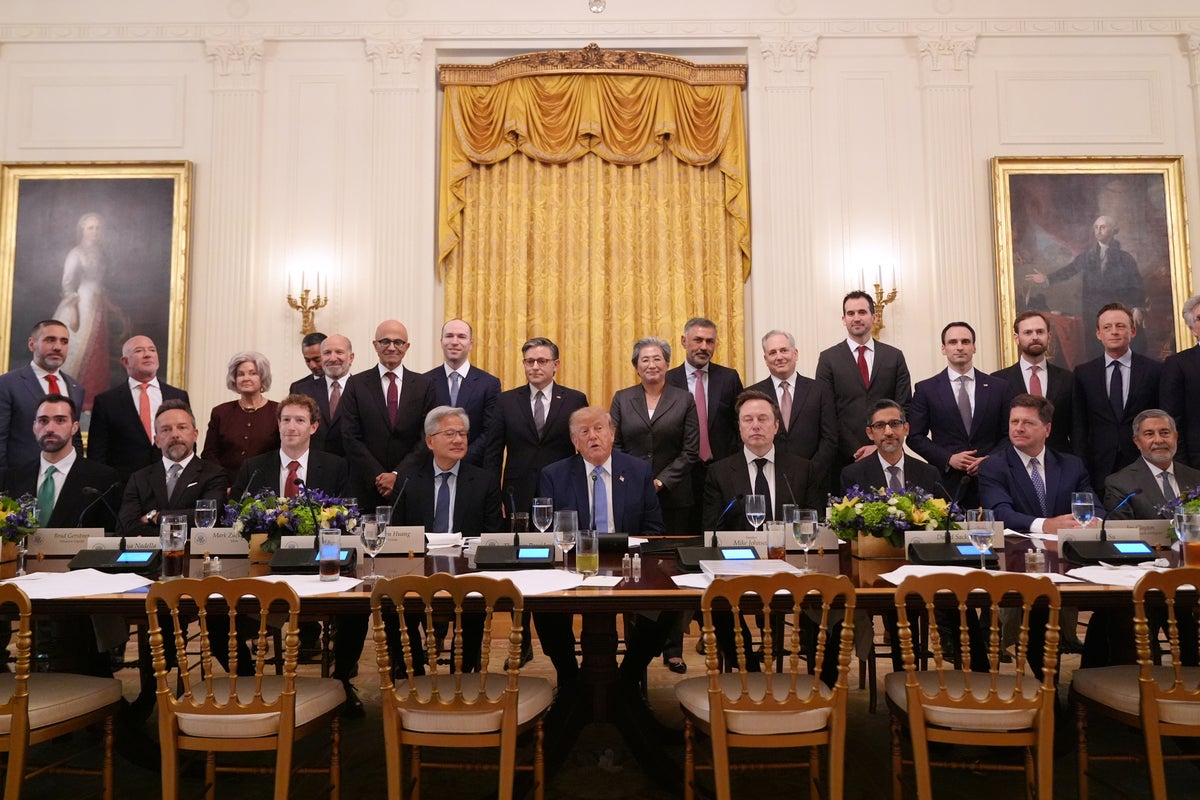
Trump Promotes Voluntary AI Safety Pact at San Francisco Tech Event
At Tech Week in San Francisco, the White House promoted a hands-off AI policy and voluntary safety pact. Industry leaders welcomed the shift toward growth over regulation.
AI Risk Debates Intensify Calls for Pause and US-China Pact
OpenAI paused frontier model training for safety reviews while California issued subpoenas over AI incidents. Officials discussed voluntary standards and potential FTC probes.
The Compass
You just read five takes on one story.
What's your take? Find your political shape in a few minutes.
Take the test