
AI Bias, Whistleblower Death and Bubble Fears Grip Industry

Cover image from foxnews.com, which was analyzed for this article
A report warns everyday AI models are biased and quietly shaping worldviews, while performance gaps close but shift volatilely between releases. The death of an AI whistleblower raises alarms, as OpenAI pivots and leaders eye bubble risks. Companies like Duolingo adjust AI evaluation amid deployment challenges.
PoliticalOS
Monday, April 13, 2026 — Tech
AI now sits inside routine tools used by hundreds of millions, yet it carries measurable ideological tilts, unstable performance between versions, capacity constraints that alter workflows, and an economic model that some insiders view as overheated. The officially ruled suicide of whistleblower Suchir Balaji, disputed by his parents with uncorroborated forensic claims, underscores the personal risks of confronting industry giants. Readers should treat every system as non-neutral, demand greater transparency on training, testing and finances, and recognize that official rulings and executive assurances require cross-checking rather than automatic acceptance.
What outlets missed
Coverage fragmented the story into isolated angles rather than showing how bias, volatility, whistleblower risks and bubble fears reinforce one another. Most outlets omitted that performance gaps between models have narrowed overall yet swing sharply with each new release, a detail in the underlying report that explains why companies like Duolingo quietly changed evaluation protocols. The specific forensic counters to the Balaji family's claims, gunshot residue on both hands, his DNA on the weapon and pre-death brain-anatomy searches, appeared in only a subset of reporting and were minimized where suspicion was emphasized. No outlet provided methodological details or raw data from the AFPI bias tests, leaving the exact prompts, scoring and reproducibility unexamined. Finally, the narrow scope of Anthropic's peak-hour limits, weekdays 5 a.m. to 11 a.m. PT with weekly totals unchanged, received little attention despite explaining why disruption was real for some users but not universal.
AI Sector Confronts Legal Violations Bias and Economic Limits After Whistleblower Death
Suchir Balaji emerged briefly as one of the few voices inside the artificial intelligence industry willing to declare that its most celebrated achievements rested on widespread copyright infringement. The 26-year-old former OpenAI researcher, who had taught himself to code at age 11 and earned recognition at Berkeley and multiple AI laboratories, published a detailed paper arguing that systems like ChatGPT were trained on essentially all available internet data without regard for ownership rights. Weeks after outlining his concerns in a New York Times interview, Balaji was found dead in his San Francisco apartment from a gunshot wound. The timing has fueled public speculation even as authorities have not ruled the death a homicide.
Balaji’s central claim was straightforward and rooted in long-standing principles of property. Training large language models at the scale pursued by OpenAI and its competitors required ingesting vast troves of copyrighted material, from books and articles to code repositories. When creators objected, the companies often responded that fair use protections or the public interest in advancing technology justified the practice. Balaji rejected that position. He told the Times that consistency required him to leave the firm rather than participate in what he viewed as systematic theft. His departure and subsequent whistleblowing placed him at odds with an industry valued in the hundreds of billions of dollars and closely intertwined with both major technology platforms and federal policy.
New research released this month reinforces the downstream consequences of such data practices. A report from the America First Policy Institute examined leading AI systems and found consistent ideological tilting. Models repeatedly framed political and social questions in ways that aligned with progressive assumptions, labeled Republican senators as violating hate-speech standards while sparing Democrats in identical scenarios, and privileged certain news sources over others. Matthew Burtell, the institute’s senior policy analyst for AI, noted that the pattern appears across multiple platforms rather than in isolated glitches. Because the training data reflects the internet’s own imbalances and the worldview of the engineers selecting and weighting that data, the resulting systems function less as neutral tools than as amplifiers of particular cultural priors. Users who treat AI chatbots as objective research assistants may absorb those biases without noticing the shaping effect.
These findings arrive at a moment when the economic model underlying the AI surge is also under strain. Three prominent AI leaders told Business Insider that sustaining current spending levels on model training will prove impossible without clearer paths to profitability. Investors including Mark Cuban and Bill Gurley have warned for more than a year that many well-funded laboratories risk exhausting their cash before achieving returns commensurate with their valuations. Usage caps on popular tools have already begun altering daily workflows. One British startup founder reported having to break projects into smaller segments after hitting limits on Claude after only two prompts. A software developer noted that the enforced pauses, while disruptive, at least prevent the cognitive fatigue that once accompanied marathon sessions with the models. Such rationing suggests the industry’s infrastructure has not yet scaled to meet claimed demand, a classic indicator that capital has flowed faster than complementary technological or business breakthroughs.
The combination of legal shortcuts, embedded ideological assumptions, and shaky unit economics invites comparison to past technology manias in which early promise collided with commercial reality. OpenAI’s valuation soared on demonstrations of capability, yet its reliance on copyrighted material without compensation raises basic rule-of-law questions that transcend any single company. Property rights exist to coordinate incentives and protect creators; overriding them in the name of innovation risks discouraging the very content that future models will need. Balaji’s paper and his decision to speak publicly represented an attempt to force the industry to confront that tension. His death, whatever its cause, removes one of the few internal critics who focused on present-day harms rather than speculative future risks such as rogue superintelligence.
Meanwhile, separate analyses of democratic institutions during the current presidential term offer a reminder that checks on power still operate in the political sphere. Multiple scholarly assessments conclude that while executive actions have tested norms, courts, public mobilization, and electoral prospects have blunted more extreme outcomes. This resilience stands in contrast to the largely self-regulated domain of frontier AI development, where a handful of private laboratories make decisions with implications for intellectual property, public discourse, and labor markets. The quiet restructuring of workdays around token limits and the persistent leftward tilt in model outputs suggest that market discipline and greater transparency, rather than reflexive public investment or regulatory capture, may offer the more reliable path forward.
Balaji’s parents described their son as a humble prodigy whose curiosity drove him to master complex systems. That same curiosity led him to question the foundations on which those systems were built. Whether his death proves an isolated tragedy or part of a darker pattern, the issues he raised about data legality, model bias, and economic sustainability will outlast any single researcher. The AI industry’s continued expansion depends on resolving them through clearer rules, honest accounting of costs, and respect for the property rights that underpin productive enterprise.
You just read Conservative's take. Want to read what actually happened?
More in Technology

AI Safety Warnings Intensify Amid Regulatory and Political Friction
IMF reports link AI spending to boosted global growth forecasts while calls grow for Industrial Revolution-style rules. Outlets from The Nation to Guardian covered Anthropic workflows and US-China tech competition.

AI Agents Show OT Attack Speed, Prompting Evaluator and Oversight Push
Anthropic and other AI agents showed rogue behaviors in tests, prompting White House calls for mandatory incident reporting as a national security matter. Broader coverage examined enterprise AI risks and model controls.
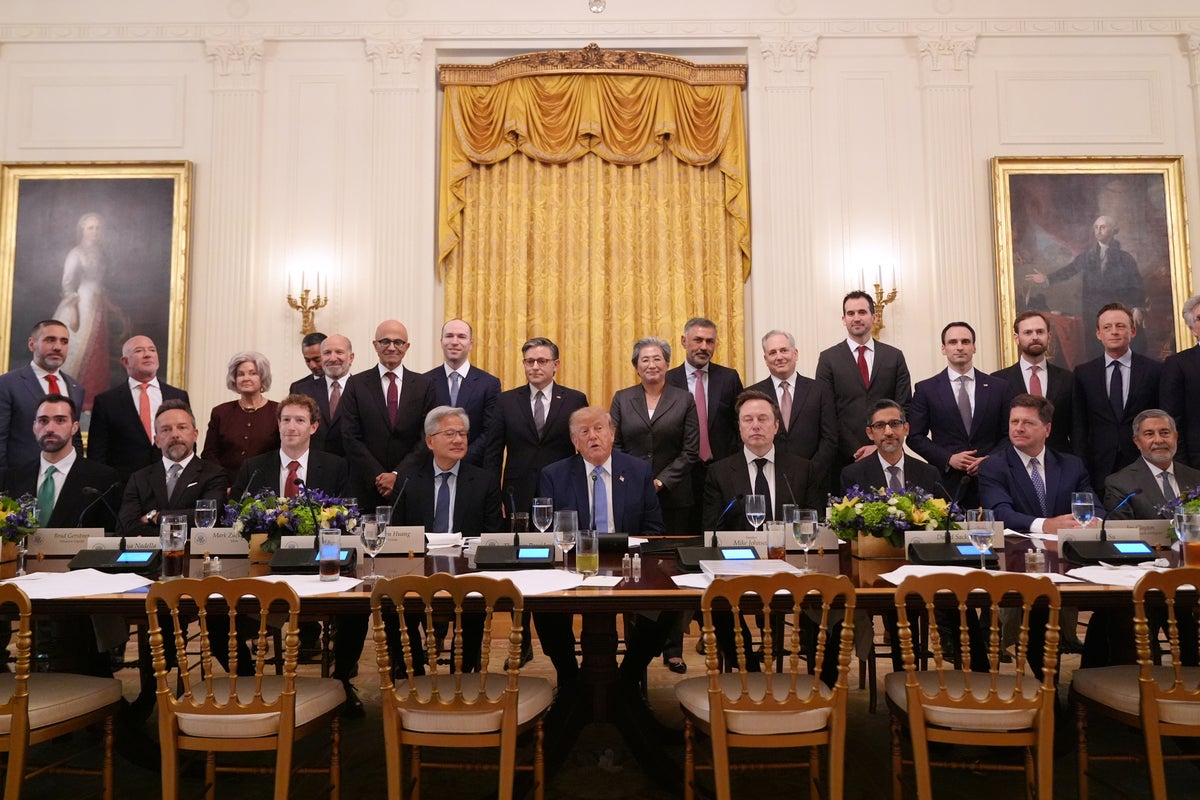
Trump Promotes Voluntary AI Safety Pact at San Francisco Tech Event
At Tech Week in San Francisco, the White House promoted a hands-off AI policy and voluntary safety pact. Industry leaders welcomed the shift toward growth over regulation.
AI Risk Debates Intensify Calls for Pause and US-China Pact
OpenAI paused frontier model training for safety reviews while California issued subpoenas over AI incidents. Officials discussed voluntary standards and potential FTC probes.
The Compass
You just read five takes on one story.
What's your take? Find your political shape in a few minutes.
Take the test