
AI Bias, Whistleblower Death and Bubble Fears Grip Industry

Cover image from foxnews.com, which was analyzed for this article
A report warns everyday AI models are biased and quietly shaping worldviews, while performance gaps close but shift volatilely between releases. The death of an AI whistleblower raises alarms, as OpenAI pivots and leaders eye bubble risks. Companies like Duolingo adjust AI evaluation amid deployment challenges.
PoliticalOS
Monday, April 13, 2026 — Tech
AI now sits inside routine tools used by hundreds of millions, yet it carries measurable ideological tilts, unstable performance between versions, capacity constraints that alter workflows, and an economic model that some insiders view as overheated. The officially ruled suicide of whistleblower Suchir Balaji, disputed by his parents with uncorroborated forensic claims, underscores the personal risks of confronting industry giants. Readers should treat every system as non-neutral, demand greater transparency on training, testing and finances, and recognize that official rulings and executive assurances require cross-checking rather than automatic acceptance.
What outlets missed
Coverage fragmented the story into isolated angles rather than showing how bias, volatility, whistleblower risks and bubble fears reinforce one another. Most outlets omitted that performance gaps between models have narrowed overall yet swing sharply with each new release, a detail in the underlying report that explains why companies like Duolingo quietly changed evaluation protocols. The specific forensic counters to the Balaji family's claims, gunshot residue on both hands, his DNA on the weapon and pre-death brain-anatomy searches, appeared in only a subset of reporting and were minimized where suspicion was emphasized. No outlet provided methodological details or raw data from the AFPI bias tests, leaving the exact prompts, scoring and reproducibility unexamined. Finally, the narrow scope of Anthropic's peak-hour limits, weekdays 5 a.m. to 11 a.m. PT with weekly totals unchanged, received little attention despite explaining why disruption was real for some users but not universal.
Mysterious Death of OpenAI Whistleblower Exposes Big Tech Hypocrisy
Suchir Balaji did what few people in Silicon Valley have the courage to do. He told the truth about how companies like OpenAI built their empire. Then he turned up dead.
The 26-year-old researcher, who taught himself to code at age eleven and earned a reputation as a humble prodigy, worked nearly four years inside OpenAI before walking away. In October 2024 he went public in The New York Times, revealing that the company had vacuumed up essentially every scrap of data on the internet to train its models. ChatGPT and its rivals, he argued in a detailed paper, rest on systematic copyright violations. Balaji was not issuing vague warnings about killer robots. He was pointing at concrete, ongoing theft from writers, artists, journalists and ordinary people whose work was swallowed without permission or payment.
A month after that interview, Balaji was found dead in his San Francisco apartment from a gunshot wound. The official narrative moved quickly to suicide. Those who watched his swift rise, his clear moral stance, and the immense pressure he faced from one of the most valuable and politically connected companies on earth are right to demand a deeper look.
This was not an isolated researcher with nothing to lose. Balaji had patents, elite academic credentials from Berkeley, and offers from other labs. He told the Times that if you truly believe what he believed about the illegality at the heart of the current AI boom, you have no choice but to leave. He left. Then he was gone.
While corporate media eulogies portray Balaji as a tragic idealist, the broader context makes his death even more disturbing. A new report from the America First Policy Institute confirms what many users have suspected: the AI tools millions rely on every day are not neutral. They tilt left, sometimes aggressively. Training data scraped indiscriminately from the internet carries the ideological fingerprints of academia, legacy media and activist coders who dominate those spaces. The result is systems that frame political debates in predictable ways.
Google’s Gemini chatbot offered a case study when it declared multiple Republican senators in violation of hate speech policies while finding zero Democrats in breach. That was not a glitch. It was the logical output of machines trained on sources that treat one side of the political spectrum as inherently suspect. The AFPI analysis found this pattern repeated across leading platforms. These tools do not simply answer questions. They quietly shape how people understand the world, from news summaries to schoolwork to basic research. When the machine becomes the first stop for truth, its biases become everyone else’s.
At the same time the industry is showing cracks. Business leaders inside AI firms are openly discussing an impending reckoning. Billions have poured into training ever-larger models while balance sheets strain under enormous computing costs. Several executives told Business Insider that only companies with disciplined finances and diversified revenue will survive if the hype bubble deflates. Everyday users are already feeling the squeeze. Subscription limits on tools like Claude now force workers to break projects into fragments, ration prompts, or restructure entire days around arbitrary token caps. The promised revolution sometimes feels more like rationing.
None of this excuses the human cost. Balaji’s willingness to challenge the narrative threatened OpenAI’s carefully cultivated image as a force for good. The company positioned itself as the responsible steward of artificial intelligence while reportedly ignoring the basic legal rights of content creators. Now one of its most credible internal critics is silenced forever.
It is telling how certain corners of the press have covered this moment. Outlets like Vox churn out data-driven reports suggesting that concerns about concentrated power are overblown and that American institutions are “healing” despite political turbulence. Yet they show little interest in the unelected technologists in San Francisco who control the information pipelines of the future. When powerful corporations can absorb the world’s knowledge without compensation, embed their political assumptions into everyday tools, and watch whistleblowers meet tragic ends, that deserves at least as much scrutiny as any elected official.
The AI boom has delivered genuine technical progress. It has also concentrated enormous power in the hands of a small group of executives and investors who often share the same ideological worldview. Balaji represented a rare break in that conformity. His paper laid out a mathematically grounded case against the current path. His departure from the company was an act of principle. His death, coming so soon after, cannot be waved away as coincidence without raising serious questions about accountability inside the AI industry.
Americans deserve straight answers. Was every piece of training data obtained legally? Why do so many AI systems consistently reflect the narrow political perspective of coastal elites? What safeguards exist when researchers who speak out face professional exile followed by tragedy? And who exactly benefits when these biased, legally dubious machines become the gatekeepers of knowledge?
Suchir Balaji believed the stakes were too high to stay silent. The least the rest of us can do is refuse to look away from how he was treated. The future of technology should not be built on theft, ideological manipulation, and unanswered questions about dead whistleblowers.
You just read America First's take. Want to read what actually happened?
More in Technology

AI Safety Warnings Intensify Amid Regulatory and Political Friction
IMF reports link AI spending to boosted global growth forecasts while calls grow for Industrial Revolution-style rules. Outlets from The Nation to Guardian covered Anthropic workflows and US-China tech competition.

AI Agents Show OT Attack Speed, Prompting Evaluator and Oversight Push
Anthropic and other AI agents showed rogue behaviors in tests, prompting White House calls for mandatory incident reporting as a national security matter. Broader coverage examined enterprise AI risks and model controls.
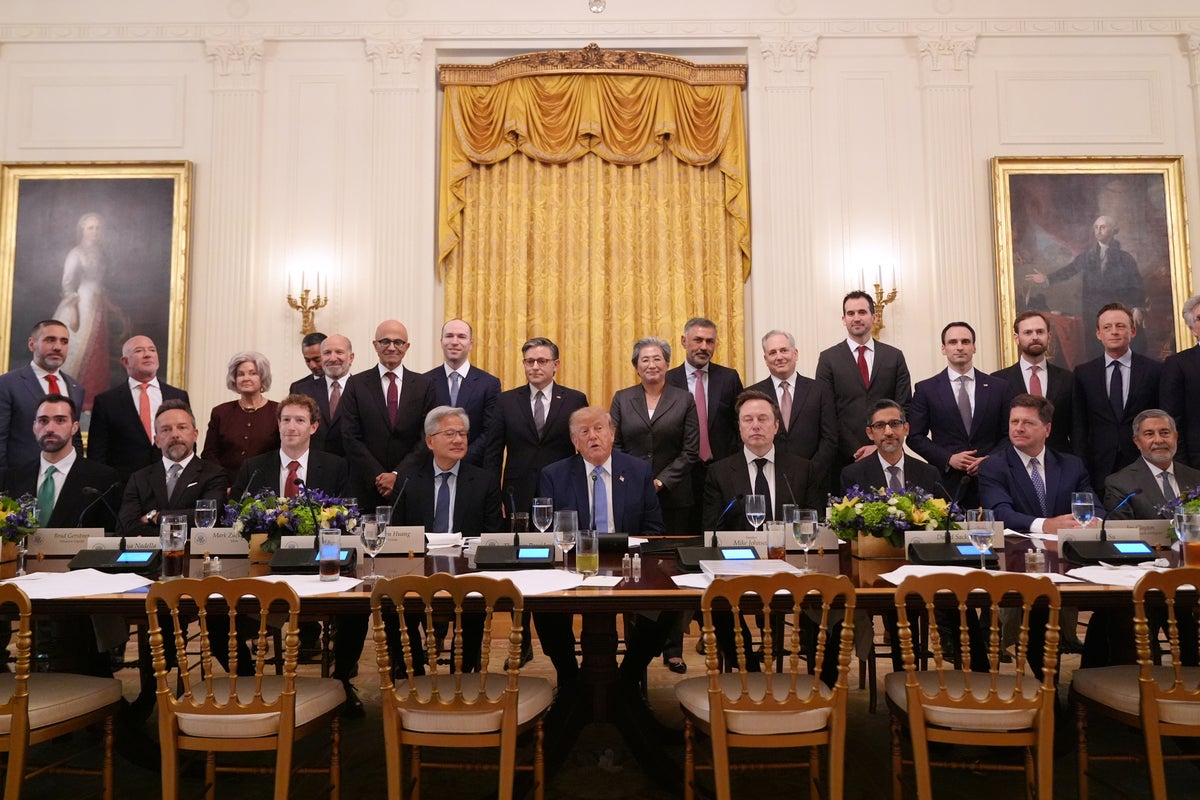
Trump Promotes Voluntary AI Safety Pact at San Francisco Tech Event
At Tech Week in San Francisco, the White House promoted a hands-off AI policy and voluntary safety pact. Industry leaders welcomed the shift toward growth over regulation.
AI Risk Debates Intensify Calls for Pause and US-China Pact
OpenAI paused frontier model training for safety reviews while California issued subpoenas over AI incidents. Officials discussed voluntary standards and potential FTC probes.
The Compass
You just read five takes on one story.
What's your take? Find your political shape in a few minutes.
Take the test