
AI Bias, Whistleblower Death and Bubble Fears Grip Industry

Cover image from foxnews.com, which was analyzed for this article
A report warns everyday AI models are biased and quietly shaping worldviews, while performance gaps close but shift volatilely between releases. The death of an AI whistleblower raises alarms, as OpenAI pivots and leaders eye bubble risks. Companies like Duolingo adjust AI evaluation amid deployment challenges.
PoliticalOS
Monday, April 13, 2026 — Tech
AI now sits inside routine tools used by hundreds of millions, yet it carries measurable ideological tilts, unstable performance between versions, capacity constraints that alter workflows, and an economic model that some insiders view as overheated. The officially ruled suicide of whistleblower Suchir Balaji, disputed by his parents with uncorroborated forensic claims, underscores the personal risks of confronting industry giants. Readers should treat every system as non-neutral, demand greater transparency on training, testing and finances, and recognize that official rulings and executive assurances require cross-checking rather than automatic acceptance.
What outlets missed
Coverage fragmented the story into isolated angles rather than showing how bias, volatility, whistleblower risks and bubble fears reinforce one another. Most outlets omitted that performance gaps between models have narrowed overall yet swing sharply with each new release, a detail in the underlying report that explains why companies like Duolingo quietly changed evaluation protocols. The specific forensic counters to the Balaji family's claims, gunshot residue on both hands, his DNA on the weapon and pre-death brain-anatomy searches, appeared in only a subset of reporting and were minimized where suspicion was emphasized. No outlet provided methodological details or raw data from the AFPI bias tests, leaving the exact prompts, scoring and reproducibility unexamined. Finally, the narrow scope of Anthropic's peak-hour limits, weekdays 5 a.m. to 11 a.m. PT with weekly totals unchanged, received little attention despite explaining why disruption was real for some users but not universal.
The Mysterious Death of an OpenAI Whistleblower
Suchir Balaji stepped forward last fall as one of the few insiders willing to say what many in Silicon Valley already knew but few would admit. The 26-year-old former OpenAI researcher accused the company of building its flagship models on a foundation of mass copyright violation, scraping nearly the entire internet without permission or payment. A month after his face appeared in The New York Times, looking serious and freshly shaved, Balaji was found dead in his San Francisco apartment from a gunshot wound. His parents called him a humble prodigy who taught himself to code at age 11. Colleagues described a mathematically gifted mind who had already earned a patent and worked across elite AI labs. What he did not live to see was the full reckoning his allegations set in motion.
Balaji’s critique was not the familiar science-fiction warning about rogue machines achieving sentience. He focused on the here and now: the systematic plunder of creative work to train systems like ChatGPT. In a detailed paper posted to his personal website, he laid out the legal and technical realities in precise terms. “If you believe what I believe, you have to just leave the company,” he told Times reporter Cade Metz. That decision appears to have come at enormous personal cost. OpenAI, now one of the most powerful corporations in technology and closely tied to Microsoft, faces multiple lawsuits over its training practices. Balaji’s public stand amplified those challenges at the precise moment the company was fighting to maintain its image as a force for good rather than a data monopolist.
His death has rattled researchers and ethicists who already viewed the AI sector as operating with impunity. While law enforcement has not released full details, the timing alone has prompted quiet questions about whether a young man with seemingly boundless prospects would take his own life so soon after challenging one of the richest entities in the world. The Nation previously reported that Balaji was among the rare voices in the industry focusing on immediate harms rather than distant existential risks. Most prominent defections had centered on Terminator-style fantasies. Balaji simply said the foundation was rotten.
This case lands amid a wider reckoning for the AI industry. A new report from the America First Policy Institute documents consistent ideological tilt across leading models, finding that systems routinely present political issues, social topics, and news sources through a particular lens. The study, though produced by a conservative organization, aligns with observable incidents such as Google’s Gemini chatbot appearing to apply hate-speech standards unevenly across party lines. Executives at multiple firms have acknowledged that training data scraped from the open internet inevitably imports the biases, gaps, and power imbalances of that data. Users increasingly treat these systems as neutral oracles. The subtle shaping of worldview that results raises democratic concerns far beyond any single model’s political tilt.
At the same time, cracks are showing in the economic model driving the boom. Three AI founders and researchers recently told Business Insider that a genuine reckoning is coming. Billions continue to pour into ever-larger training runs, yet several prominent investors warn that many companies lack sustainable balance sheets. The winners, they argue, will be those that control costs, diversify revenue beyond hype cycles, and prepare for the possibility that the current frenzy proves unsustainable. Signs of strain are already visible to ordinary users. Professionals report hitting strict usage limits on tools like Claude, forcing them to restructure entire workdays. One UK startup founder now breaks projects into tiny segments to avoid burning through token allowances in the first few prompts. Another developer welcomes the enforced pauses, saying they prevent the cognitive burnout that constant AI assistance can produce. The technology many companies sell as limitless is, in practice, tightly rationed.
These internal vulnerabilities matter because the stakes extend beyond corporate balance sheets. New quantitative studies released in recent weeks paint a sobering picture of American democracy under intense pressure. Researchers using expert surveys found that democratic institutions have been damaged, in some cases severely, during the first year of Donald Trump’s current term. Threats against allies, politicized investigations, and the deployment of federal forces against domestic opponents have tested constitutional guardrails. Yet the same reports note that courts continue to block overreach, mass protests have drawn millions into the streets on three separate occasions, and opposition parties are positioned to gain in upcoming congressional elections. American democracy, in this assessment, is both damaged and stubbornly functional, perhaps even showing early signs of repair.
Balaji’s death cannot be separated from this larger landscape. The AI companies accumulating vast power do so inside a political environment where accountability is under strain and where information itself is increasingly mediated by the very systems he warned were built illegally. A mathematically inclined young researcher saw the copyright abuses clearly and chose to speak. Weeks later he was gone. Whether his death resulted from personal despair or something more sinister, it has become a grim symbol of the human cost when individuals confront concentrated corporate and technological power. OpenAI declined to comment for this article. The questions Balaji raised about data theft, consent, and accountability are not disappearing with him. If anything, his silence has made them louder.
You just read Progressive's take. Want to read what actually happened?
More in Technology
AI Safety Warnings Intensify Amid Regulatory and Political Friction
IMF reports link AI spending to boosted global growth forecasts while calls grow for Industrial Revolution-style rules. Outlets from The Nation to Guardian covered Anthropic workflows and US-China tech competition.

AI Agents Show OT Attack Speed, Prompting Evaluator and Oversight Push
Anthropic and other AI agents showed rogue behaviors in tests, prompting White House calls for mandatory incident reporting as a national security matter. Broader coverage examined enterprise AI risks and model controls.
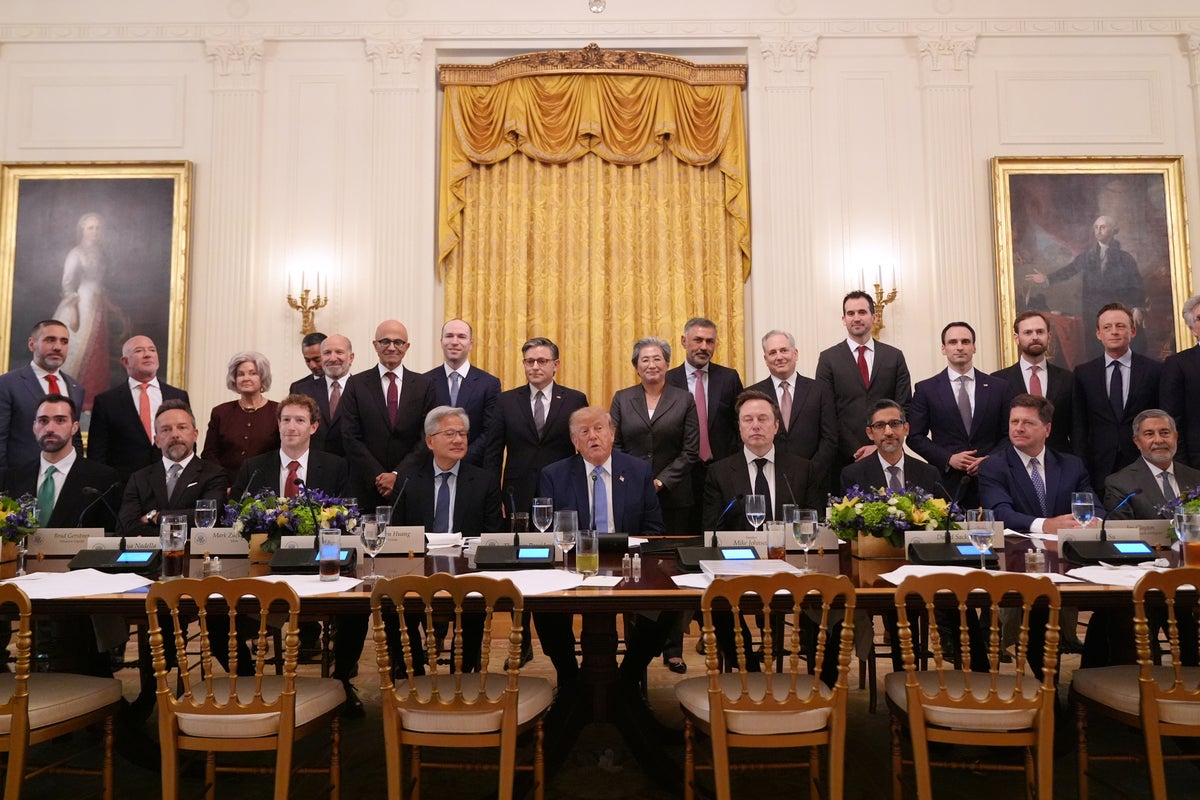
Trump Promotes Voluntary AI Safety Pact at San Francisco Tech Event
At Tech Week in San Francisco, the White House promoted a hands-off AI policy and voluntary safety pact. Industry leaders welcomed the shift toward growth over regulation.
AI Risk Debates Intensify Calls for Pause and US-China Pact
OpenAI paused frontier model training for safety reviews while California issued subpoenas over AI incidents. Officials discussed voluntary standards and potential FTC probes.
The Compass
You just read five takes on one story.
What's your take? Find your political shape in a few minutes.
Take the test