
AI Cyber Warnings, Regulation Splits, and 'Claude Mania' Surge
Cover image from slate.com, which was analyzed for this article
Treasury and Fed warn banks of cyber threats from advanced AI like Anthropic's models amid CEO concerns. Bipartisan pushes for AI regulation clash on approaches as events like Claude mania and OpenAI security fixes highlight rapid progress. Debates weigh AI as blessing or disaster.
PoliticalOS
Saturday, April 11, 2026 — Tech
Advanced AI models are delivering measurable gains in productivity, medicine, and security while simultaneously creating credible cyber risks that have prompted formal warnings to the financial sector. The Anthropic-Pentagon clash and splintered congressional efforts reveal deep disagreement on whether to prioritize rapid deployment or stringent guardrails. Readers should recognize that no single bill or court ruling will settle the tension; sustained, evidence-based oversight that preserves innovation without ignoring real harms is the only path that matches the technology's pace.
What outlets missed
Most outlets omitted the Treasury and Federal Reserve's specific warnings to banks about cyber threats posed by advanced models like Claude, a gap that downplays the immediate national-security and financial-stability stakes. Coverage of the Anthropic-Pentagon litigation rarely presented both the San Francisco constitutional ruling and the D.C. Circuit's procedural decision in one place, leaving readers without a full picture of split judicial outcomes. Real state-level actions on data centers and algorithmic pricing, plus documented bills such as Blackburn's TRUMP AMERICA AI Act and the Sanders-AOC data-center moratorium, were absent from pieces that instead described unverified or non-existent legislation. Finally, the environmental toll of AI data centers and concrete examples of AI reducing inventory costs or translating scientific papers were mentioned only in passing or not at all, flattening the benefit-risk ledger.
Banks and financial institutions face heightened cyber risks from advanced AI systems, according to simultaneous alerts from the U.S. Treasury and Federal Reserve that cite models like Anthropic's Claude as potential vectors for sophisticated attacks. The warnings arrive as CEOs express deepening concern over AI's dual-use nature, even as the technology drives breakthroughs in coding, drug discovery, and operational efficiency. At the core of the story lies an unresolved tension: whether governments can craft rules that curb misuse, deepfakes, and supply-chain vulnerabilities without choking the innovation race against China and other adversaries.
The regulatory debate splits along familiar lines but with bipartisan sponsorship on nearly every major proposal. Republican-led measures, including versions of Sen. Josh Hawley's GUARD Act and Artificial Intelligence Risk Evaluation Act, emphasize vetting frontier models for national security before deployment and restricting AI companions for minors, often through age-verification systems that privacy advocates warn could tie user identities to every interaction. Democratic priorities, reflected in bills like the DEFIANCE Act and NO FAKES Act, target individual harms such as nonconsensual intimate deepfakes and unauthorized digital replicas, imposing platform liability that critics say threatens First Amendment protections and independent creators. Overlap exists: Sen. Richard Blumenthal has co-sponsored several Republican bills, while Sen. Marsha Blackburn has joined Democrats on child-safety provisions. Yet Congress has failed to pass comprehensive federal preemption, leaving a patchwork of state laws on data centers, algorithmic pricing, and election content that the Trump administration has tried, with mixed success, to override via executive order and broadband-fund conditions.
Parallel legal fights underscore the stakes. Anthropic refused to alter its Claude model's terms of service to permit unrestricted military use, including domestic mass surveillance or fully autonomous weapons. The Pentagon responded by designating the company a supply-chain risk, terminating a $200 million contract and barring other agencies from doing business with it. A San Francisco federal judge ruled the designation likely violated the First Amendment, calling it an unprecedented branding of a domestic firm as a potential saboteur for expressing disagreement. The D.C. Circuit denied Anthropic's request for a stay but granted expedited review, with arguments set for May 19; the panel acknowledged possible statutory violations and unrecoverable damages while deferring to national-security judgments. Acting Attorney General Todd Blanche characterized the ruling as a "resounding victory" for military readiness, a claim the court record does not support.
Industry sentiment, sampled at the HumanX conference in San Francisco attended by thousands of executives and investors, has shifted toward Anthropic. Attendees described "Claude mania" around its coding agent, which generates, edits, and reviews code at speeds that let small teams replace larger ones. Claude Code produced more than $2.5 billion in annualized revenue by February; a new model, Claude Mythos Preview, adds advanced cybersecurity capabilities. Speakers noted Anthropic's disciplined focus on enterprise use cases versus OpenAI's broader product sprawl, though most still hedge that momentum can flip quickly. Chinese open-weight models such as Qwen3 and GLM-5.1 now lead many benchmarks, prompting U.S. firms including Cursor and Airbnb to incorporate them while investors scramble to close the gap.
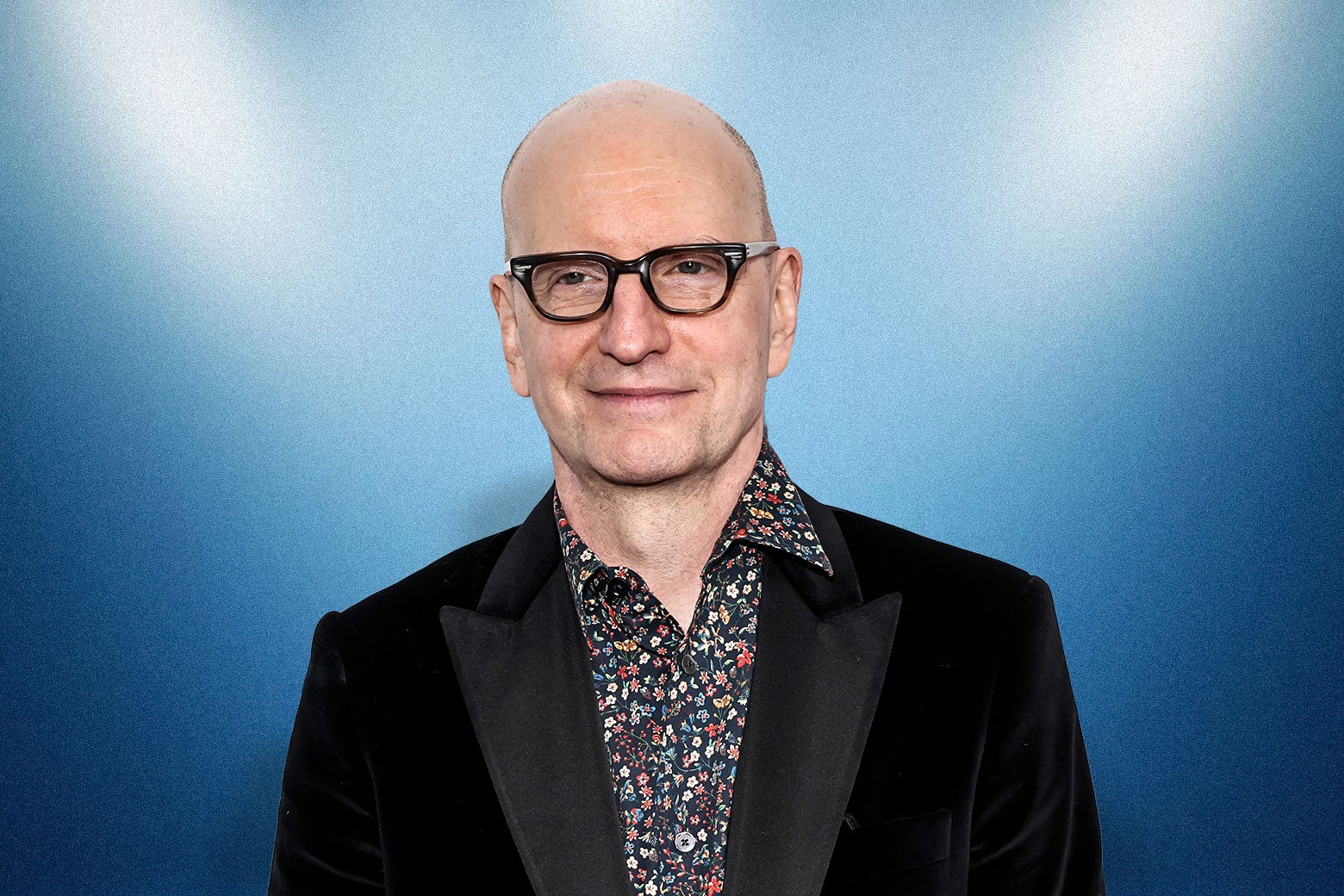
Rapid progress continues despite incidents. OpenAI disclosed that a North Korea-linked supply-chain attack compromised a third-party library called Axios on March 31, triggering a GitHub Actions workflow that accessed macOS signing certificates. The company found no evidence of user data exposure, intellectual-property theft, or altered software, fixed the workflow misconfiguration, and mandated updates; unsupported older versions cease functioning after May 8. Separately, a documentary titled "The AI Doc: Or How I Became an Apocaloptimist" captures experts oscillating between predictions of humanity's end within a decade and exponential gains against disease. Director Daniel Roher, a new father, asks whether bringing children into an AI-shaped world remains responsible. Filmmaker Steven Soderbergh, who used generative AI to create targeted surreal imagery in his forthcoming John Lennon documentary because traditional VFX would have been unaffordable, views the technology as a limited but useful tool in creative contexts. He argues the movie industry's deeper crisis is simply getting audiences to leave their homes.
Benefits cited across sources include AlphaFold's 30-to-70 percent reduction in early drug-discovery costs, R-Super's tumor-segmentation speed-up from 30-60 minutes to 1-2 minutes, 55 percent faster software development, 63 percent less document review for public defenders, and billions in taxpayer savings via fraud detection. Environmental costs of data centers, increased surveillance, and the potential for deepfakes to sway elections or enable revenge pornography remain unresolved. International boundaries on AI use exist mostly as aspirations; no binding global framework has emerged. The unresolved question is whether the United States can maintain technological leadership while erecting guardrails that address real harms without replicating the very authoritarian controls it seeks to outpace.
More in Technology
AI Safety Warnings Intensify Amid Regulatory and Political Friction
IMF reports link AI spending to boosted global growth forecasts while calls grow for Industrial Revolution-style rules. Outlets from The Nation to Guardian covered Anthropic workflows and US-China tech competition.

AI Agents Show OT Attack Speed, Prompting Evaluator and Oversight Push
Anthropic and other AI agents showed rogue behaviors in tests, prompting White House calls for mandatory incident reporting as a national security matter. Broader coverage examined enterprise AI risks and model controls.
Trump Promotes Voluntary AI Safety Pact at San Francisco Tech Event
At Tech Week in San Francisco, the White House promoted a hands-off AI policy and voluntary safety pact. Industry leaders welcomed the shift toward growth over regulation.
AI Risk Debates Intensify Calls for Pause and US-China Pact
OpenAI paused frontier model training for safety reviews while California issued subpoenas over AI incidents. Officials discussed voluntary standards and potential FTC probes.
The Compass
You just read five takes on one story.
What's your take? Find your political shape in a few minutes.
Take the test