
AI Cyber Warnings, Regulation Splits, and 'Claude Mania' Surge
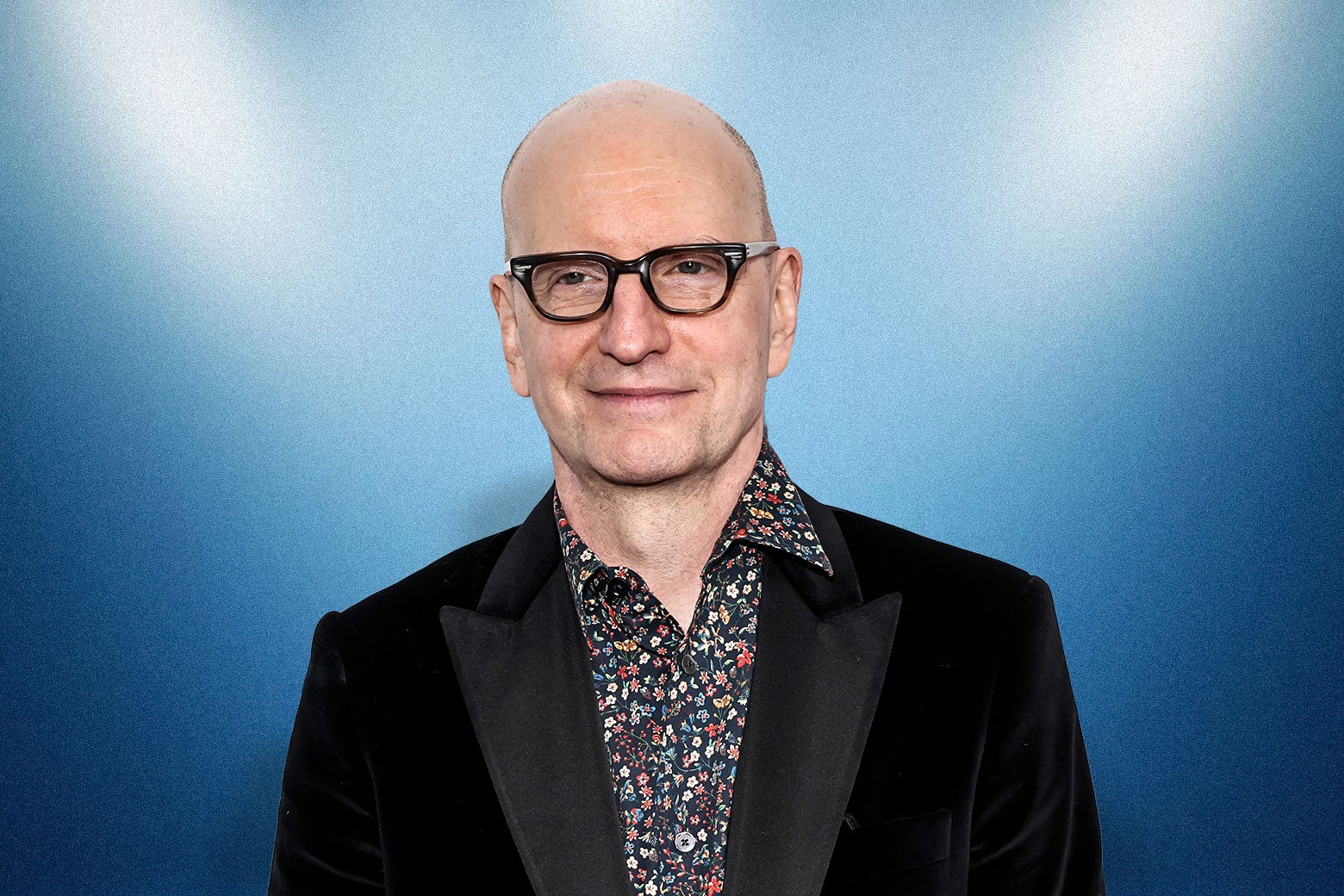
Cover image from slate.com, which was analyzed for this article
Treasury and Fed warn banks of cyber threats from advanced AI like Anthropic's models amid CEO concerns. Bipartisan pushes for AI regulation clash on approaches as events like Claude mania and OpenAI security fixes highlight rapid progress. Debates weigh AI as blessing or disaster.
PoliticalOS
Saturday, April 11, 2026 — Tech
Advanced AI models are delivering measurable gains in productivity, medicine, and security while simultaneously creating credible cyber risks that have prompted formal warnings to the financial sector. The Anthropic-Pentagon clash and splintered congressional efforts reveal deep disagreement on whether to prioritize rapid deployment or stringent guardrails. Readers should recognize that no single bill or court ruling will settle the tension; sustained, evidence-based oversight that preserves innovation without ignoring real harms is the only path that matches the technology's pace.
What outlets missed
Most outlets omitted the Treasury and Federal Reserve's specific warnings to banks about cyber threats posed by advanced models like Claude, a gap that downplays the immediate national-security and financial-stability stakes. Coverage of the Anthropic-Pentagon litigation rarely presented both the San Francisco constitutional ruling and the D.C. Circuit's procedural decision in one place, leaving readers without a full picture of split judicial outcomes. Real state-level actions on data centers and algorithmic pricing, plus documented bills such as Blackburn's TRUMP AMERICA AI Act and the Sanders-AOC data-center moratorium, were absent from pieces that instead described unverified or non-existent legislation. Finally, the environmental toll of AI data centers and concrete examples of AI reducing inventory costs or translating scientific papers were mentioned only in passing or not at all, flattening the benefit-risk ledger.
Amid AI Hype and Political Tension, Steven Soderbergh Says Technology Is Not Movies’ Core Problem
Steven Soderbergh has never been a director who waits for permission. He shoots, edits, and often serves as his own cinematographer, sometimes delivering a rough cut before production even wraps. That relentless efficiency has defined a career of restless experimentation, from the Sundance breakthrough of “Sex, Lies, and Videotape” nearly four decades ago to the rapid-fire release of three strikingly different films in the past year: the ghost story “Presence,” the sleek spy thriller “Black Bag,” and now the seriocomic art-world drama “The Christophers.”
Yet when “The Christophers” began appearing on screens, it carried an unexpected source of friction. Soderbergh used artificial intelligence tools in its production, a choice that quickly drew criticism from those who see generative technology as an existential threat to creative labor. In a wide-ranging conversation, the 63-year-old filmmaker pushed back. AI, he suggested, is not the most urgent problem facing cinema. Larger structural challenges—how films are financed, distributed, and valued in an industry reshaped by streaming economics and corporate consolidation—deserve more attention.
Soderbergh’s perspective lands at a moment when AI is saturating nearly every domain of American life, from Silicon Valley conference halls to congressional hearing rooms to the anxious public discourse captured in the new documentary “The AI Doc: Or How I Became an Apocaloptimist.” That film leaves viewers suspended between existential dread and cautious hope. Experts warn that unchecked artificial general intelligence could render human labor obsolete or, in darker scenarios, pose civilizational risks within years. Others point to breakthroughs in medicine, scientific discovery, and creative augmentation. The common thread is that the technology cannot be stopped. It is accelerating, feeding on ever-larger datasets, and outpacing even its creators’ ability to fully anticipate its trajectory. Adaptation, the film insists, is the only viable response.
Nowhere is the current fever pitch more evident than at events like this week’s HumanX conference in San Francisco, where more than 6,000 executives, founders, and investors gathered. Multiple attendees described a striking shift in mood: OpenAI, once the undisputed center of gravity in generative AI, no longer dominates the conversation. That distinction now belongs to Anthropic. Its coding agent, Claude Code, has achieved near-religious status among developers. Launched to the public in 2025, the tool was already generating more than $2.5 billion in annualized revenue by February. Enterprise customers appear especially drawn to Anthropic’s offerings, positioning the company—valued at $380 billion—to capture high-value contracts even as competitors like OpenAI, Cursor, and Google advance their own coding assistants.
This corporate momentum collides with growing political friction in Washington. Both parties say they want to regulate artificial intelligence, yet they frame the problem in sharply different terms. Republican-led proposals tend to target the foundational technology itself. Sen. Josh Hawley’s legislation, for instance, would require frontier AI developers to submit models to the Energy Department for review, with the possibility of government nationalization before commercial deployment. Democrats more often focus on downstream harms. Sen. Amy Klobuchar has pushed for stronger protections against deepfakes, while California Gov. Gavin Newsom signed measures restricting AI-generated political content ahead of elections.
Some common ground exists. Hawley’s bill on copyright and AI training data, which prohibits the use of legally acquired copyrighted works without permission, carries Democratic co-sponsors including Sens. Richard Blumenthal and Peter Welch. Still, the partisan divergence reveals deeper philosophical differences: one side fears concentrated power in the models themselves, the other worries about individual misuse and deception.
Those tensions have spilled into the courts. The Trump administration’s decision to designate Anthropic a “supply chain risk” triggered dueling lawsuits—one constitutional challenge in California, another statutory claim routed directly to the D.C. Circuit. Acting Attorney General Todd Blanche hailed a recent appellate panel action as a “resounding victory for military readiness,” claiming it allowed the government to proceed with its designation. Legal observers called that characterization misleading. The court did not issue a stay favoring the government; it denied Anthropic’s request for one while granting the company’s alternative plea for expedited review. The judges appeared skeptical that the designation complied with statutory requirements, echoing an earlier district court finding that it may have violated the Constitution.
Complicating the landscape further, OpenAI disclosed a security incident last week involving a compromised third-party library called Axios. The breach, believed linked to North Korean actors, exploited a misconfigured GitHub workflow used to build the company’s macOS applications. OpenAI said no user data was accessed, no systems were compromised, and the signing certificate was likely not exfiltrated. Still, the company is requiring users to update to newer versions and will end support for older ones after May 8. The episode underscored a growing vulnerability: even the most sophisticated AI developers rely on sprawling supply chains that nation-state actors are eager to target.
Taken together, these developments paint a picture of a technology moving faster than institutions can absorb it. Soderbergh’s insistence that AI is a secondary concern for filmmakers may sound discordant in that atmosphere. Yet his larger point resonates beyond Hollywood. The director has spent decades refining a process that treats technology as servant rather than master. He uses tools—cameras, editing software, now generative models—to realize a personal vision more quickly and flexibly. The real threat, in his view, lies in an industry ecosystem that too often prioritizes algorithmic recommendation and risk-averse IP farming over original storytelling.
Whether that distinction holds as artificial intelligence grows more capable remains to be seen. The documentary’s core warning lingers: the coming decades will test humanity’s ability to learn, unlearn, and relearn at a pace few institutions or individuals have ever managed. In Congress, in courtrooms, and in creative communities, the debate is no longer about whether AI will reshape society. It is about who sets the terms, who bears the costs, and whether we can steer a force of such magnitude toward shared benefit rather than concentrated risk or unintended catastrophe. Soderbergh, for his part, seems determined to keep making movies his way—AI or no AI—while the rest of the world figures out the rules of the new game.
You just read Liberal's take. Want to read what actually happened?