
Data Center Backlash Emerges as Bipartisan Midterm Flashpoint
Cover image from thefederalist.com, which was analyzed for this article
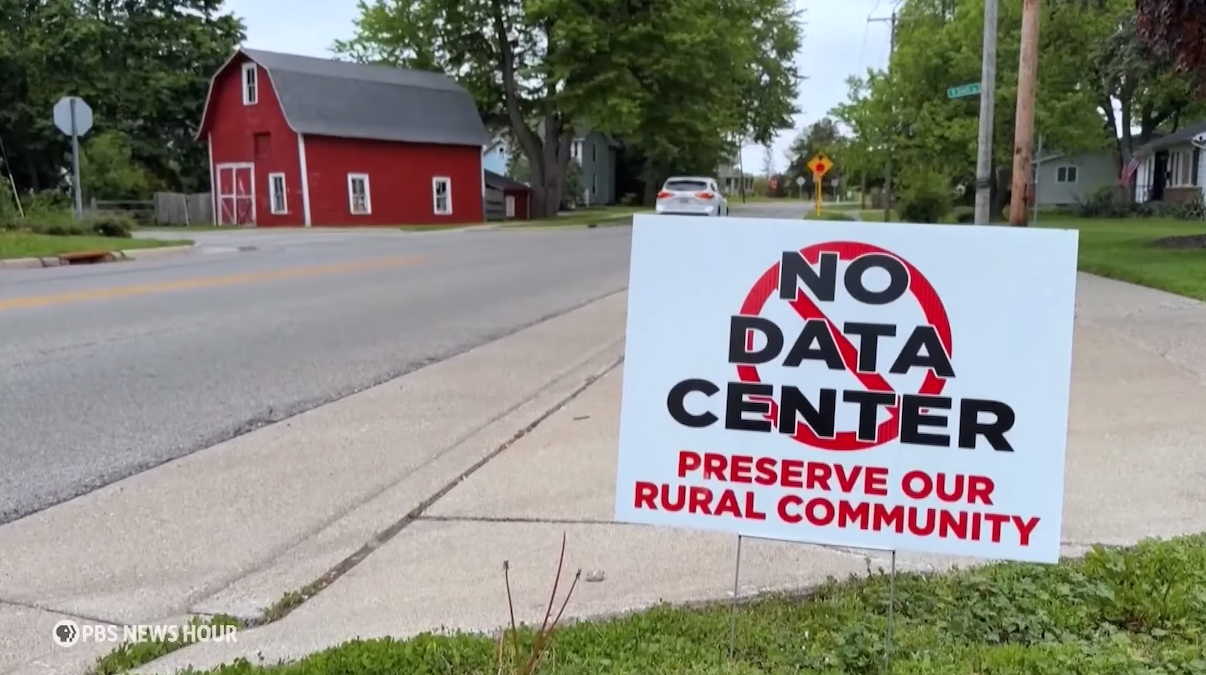
Local opposition to data center energy use and noise is emerging as a bipartisan midterm issue. Companies and candidates face pressure over land and power costs.
PoliticalOS
Tuesday, April 14, 2026 — Tech
Local noise, power, and water complaints are generating bipartisan candidate positions in multiple districts, yet the scale of any foreign amplification and the precise engineering mitigations at individual sites remain only partially documented across available reporting.
What outlets missed
No outlet supplied independent verification of actual megawatt-hour consumption or water-gallon figures for the Vineland project itself. County testing records on vibration versus airborne sound were referenced by plaintiffs but not released. Candidate fundraising tied to data-center opposition and any counter-donations from tech firms remain unreported. The 42 percent and 125 percent growth in Flock data-sharing networks cited by Wired has no documented connection to energy or noise complaints.
Big Techs Heartland Takeover Runs Into Voter Backlash
The artificial intelligence frenzy is redrawing the map of American infrastructure, with sprawling data centers sprouting across the Midwest and Texas as Silicon Valley giants chase cheap power away from the clogged suburbs of Northern Virginia. What once looked like an unstoppable building boom now faces delays, cancellations, and a populist revolt from ordinary communities asked to subsidize the whole project with their land, their electricity rates, and their tax dollars.
Industry analysts at Synergy report that Texas and the Midwest represented one-third of hyperscale data center capacity at the end of 2025. In the coming years those two regions are projected to absorb 53 percent of all new capacity. Construction is already visible. Meta has broken ground on a large campus in Beaver Dam, Wisconsin. Similar projects from Oracle, OpenAI, and others have targeted farmland and small towns where power lines still have spare capacity. The shift inland is driven by a simple reality: Northern Virginia has run out of juice. The biggest hyperscalers need uninterrupted gigawatts to run the graphics processors that train the latest chatbots, image generators, and whatever surveillance or advertising tools come next.
Yet the projects are hitting turbulence. Bloomberg recently reported that nearly half of the 12 gigawatts worth of data centers planned for this year have already been delayed or canceled. Only about a third are under construction. Equipment shortages, particularly transformers and backup batteries, explain some of the slowdown. The bigger problem is political. A bipartisan backlash is spreading through state legislatures and town halls, as residents realize these windowless warehouses consume staggering amounts of electricity while delivering little obvious benefit to the people who live nearby.
Maine became the first state to hit the brakes, passing a statewide moratorium on data centers larger than 20 megawatts. The pause lasts until November 2027. Lawmakers cited grid strain, water usage for cooling, and the noise from massive diesel backup generators. At least a dozen other states have seen similar bills introduced. In the Milwaukee suburb of Port Washington, voters approved a referendum by a two-to-one margin requiring public approval before city officials can hand out tax incentives on any project worth $10 million or more. The vote came directly after the city approved breaks for a $15 billion Oracle and OpenAI facility. That project survives for now, but the message was clear: locals are no longer content to watch their taxes underwrite OpenAI’s latest valuation bump.
The revolt turned even sharper in Festus, Missouri. Last week every single incumbent who had voted to greenlight a $6 billion data center proposal from developer CRG was voted out of office. The campaign was straightforward. Opponents argued that the massive power draw would eventually raise residential rates and that the promised construction jobs were temporary while the long-term tax abatements were permanent. They won.
Not every data center is strictly for artificial intelligence. The International Energy Agency estimates that roughly half the new electricity demand from projects through 2030 will go to facilities supporting generative AI tools like ChatGPT. The other half still serves more traditional cloud computing, much of which powers everything from online banking to streaming video. Critics have long pointed out that a sizable share of internet traffic has always been pornography and, in certain government contracts, tools that support military operations. Those uses powered the original data center expansion. Now the AI layer sits on top, promising to revolutionize everything while consuming even more power.
The irony is hard to miss. While families in these Midwestern towns wrestle with inflation and rising utility bills, hyperscalers receive preferential tax treatment and priority access to the grid. The same political class that lectures citizens about conserving energy rolls out the red carpet for facilities that will run thousands of GPUs around the clock. Many of those GPUs are training models whose primary public demonstrations so far have been writing term papers, generating deepfake videos, and producing ever more creative ways to keep people glued to their screens.
Supporters claim data centers bring jobs, tax revenue, and a stake in the future. In practice the jobs are often short-term construction gigs, and the revenue is sharply reduced by the very tax breaks used to lure the projects. The future being built looks increasingly like one in which a handful of coastal corporations own the computational infrastructure while heartland communities supply the power and absorb the strain on roads, water tables, and transmission lines.
The delays and cancellations suggest markets are beginning to price in these political and physical limits. Shortages of electrical equipment are real, but so is the growing realization in state capitols and county boards that handing blank checks to Big Tech is not the same as economic development. Voters in Port Washington and Festus are not Luddites. They are simply insisting that the people who actually live in these places should have some say before their landscape is remade to train the next round of corporate algorithms.
Whether this backlash slows the AI gold rush remains to be seen. What is already clear is that the industry’s inland march is no longer an uncontested victory lap. In the places asked to host these power-hungry monuments to Silicon Valley ambition, residents have started pushing back, and they are winning more battles than the hyperscalers would like to admit.
You just read America First's take. Want to read what actually happened?
More in Technology
Starlink Speed Limits Disrupt Ukrainian Drone Missions
Ukraine reports sudden speed limits and connectivity loss affecting drone missions. Tensions rise as Russia strikes energy infrastructure.

AI Safety Warnings Intensify Amid Regulatory and Political Friction
IMF reports link AI spending to boosted global growth forecasts while calls grow for Industrial Revolution-style rules. Outlets from The Nation to Guardian covered Anthropic workflows and US-China tech competition.

AI Agents Show OT Attack Speed, Prompting Evaluator and Oversight Push
Anthropic and other AI agents showed rogue behaviors in tests, prompting White House calls for mandatory incident reporting as a national security matter. Broader coverage examined enterprise AI risks and model controls.

Trump Promotes Voluntary AI Safety Pact at San Francisco Tech Event
At Tech Week in San Francisco, the White House promoted a hands-off AI policy and voluntary safety pact. Industry leaders welcomed the shift toward growth over regulation.
The Compass
You just read five takes on one story.
What's your take? Find your political shape in a few minutes.
Take the test