
Data Center Backlash Emerges as Bipartisan Midterm Flashpoint
Cover image from thefederalist.com, which was analyzed for this article
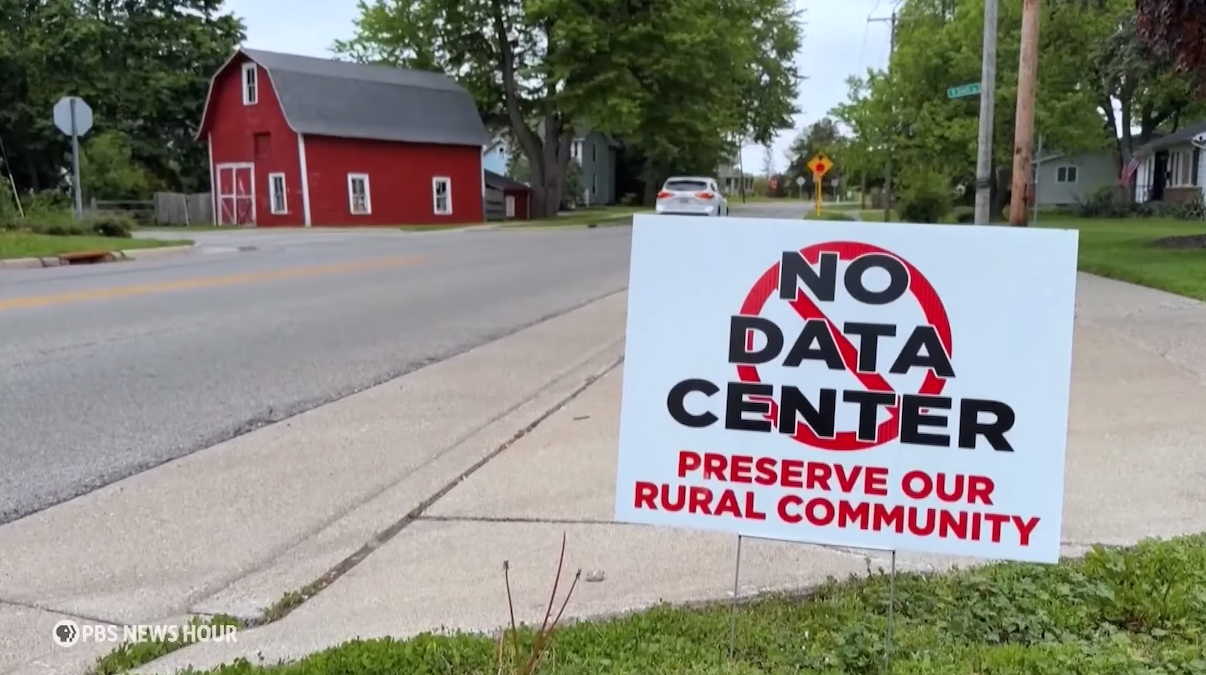
Local opposition to data center energy use and noise is emerging as a bipartisan midterm issue. Companies and candidates face pressure over land and power costs.
PoliticalOS
Tuesday, April 14, 2026 — Tech
Local noise, power, and water complaints are generating bipartisan candidate positions in multiple districts, yet the scale of any foreign amplification and the precise engineering mitigations at individual sites remain only partially documented across available reporting.
What outlets missed
No outlet supplied independent verification of actual megawatt-hour consumption or water-gallon figures for the Vineland project itself. County testing records on vibration versus airborne sound were referenced by plaintiffs but not released. Candidate fundraising tied to data-center opposition and any counter-donations from tech firms remain unreported. The 42 percent and 125 percent growth in Flock data-sharing networks cited by Wired has no documented connection to energy or noise complaints.
Big Techs AI Power Grab Faces Fierce Pushback From American Communities
As the artificial intelligence frenzy reshapes the digital landscape, the physical footprint of that revolution is shifting dramatically across the United States, bringing with it enormous energy demands and a growing citizen revolt. Northern Virginia, long the undisputed capital of data centers, is ceding ground to the Midwest and Texas, where vast tracts of land and more accessible power grids have become magnets for the hyperscale facilities needed to train and run generative AI systems like ChatGPT. According to a new report from Synergy Research, Texas and the Midwest accounted for one-third of hyperscale data center capacity at the end of 2025 and are projected to claim 53 percent of new capacity coming online in the next few years. Construction is already underway on major projects, including a Meta campus in Beaver Dam, Wisconsin.
This geographic pivot is driven by a simple reality: the staggering electricity requirements of modern AI. The largest facilities now under development consume far more power than traditional cloud-computing centers. The International Energy Agency estimates that roughly half the electricity demand from new data center projects planned through 2030 will come from facilities built specifically for generative AI. That appetite for power has sent tech giants scrambling for locations where utilities can deliver the megawatts without the same level of grid congestion found in Northern Virginia.
Yet the boom is hitting turbulence. Bloomberg reported this month that nearly half of the 12 gigawatts of planned data center capacity for this year has been delayed or canceled. Only about a third of those projects are currently under construction, according to Sightline Climate. The picture for 2027 is even more uncertain, with less than a third of the 21.5 gigawatts announced so far breaking ground. Shortages of critical equipment such as transformers and batteries explain part of the slowdown. But an equally significant factor is mounting political resistance from communities asked to host these industrial-scale energy hogs.
That resistance carries a distinctly bipartisan flavor. In Maine, lawmakers recently enacted the first statewide moratorium on construction of data centers larger than 20 megawatts, set to last until November 2027. At least a dozen other states have seen similar bills introduced. In the Milwaukee suburb of Port Washington, residents voted nearly two-to-one in favor of a referendum requiring voter approval before the city can hand out tax breaks for projects valued at $10 million or more. The measure was a direct response to local officials approving incentives for a $15 billion data center to be operated by Oracle and OpenAI. While that particular project is grandfathered in, the vote sent a clear message: residents are tired of subsidizing Silicon Valley’s ambitions with their own tax dollars and strained infrastructure.
Similar discontent boiled over in Festus, Missouri, where voters last week ousted all four incumbent officials who had supported a $6 billion data center proposal from developer CRG. These episodes reflect a growing awareness that the purported economic windfalls of data centers often fail to materialize for the communities that host them. The facilities create relatively few permanent jobs while sucking up vast amounts of electricity, driving up rates for residents and forcing utilities to scramble for new generation capacity, often from fossil-fuel sources that undermine climate goals.
The New Republic’s reporting has highlighted the uncomfortable truth at the heart of this expansion. Data centers have long been justified by national security needs and the less savory corners of the internet. Now the dominant rationale is feeding the AI gold rush, with hyperscalers like Microsoft, Google, Amazon, and Meta pouring billions into facilities that primarily serve tools promising everything from revolutionary productivity to speculative visions of artificial general intelligence. Yet the actual public benefit remains hazy. Billions in tax incentives, cheap land deals, and priority access to power are being extended to corporations whose leaders openly discuss merging with government and reshaping society, while everyday Americans shoulder the environmental and financial costs.
This pattern fits a familiar story of corporate welfare dressed up as innovation. Tech executives lecture the public about the existential importance of their projects while quietly negotiating sweetheart deals that shift risk onto taxpayers. The same companies championing AI as humanity’s savior have shown little urgency in addressing the climate implications of their energy binge. Every gigawatt funneled into data centers is a gigawatt that cannot immediately decarbonize the grid or power homes during heat waves. In regions still reliant on coal and gas, the surge in demand risks locking in fossil-fuel infrastructure for decades.
Local officials sometimes defend the projects by pointing to short-term construction jobs and the abstract promise of economic development. But voters in Port Washington and Festus appear increasingly skeptical. They have watched as previous waves of promised tech-driven prosperity delivered more traffic, higher utility bills, and precious little trickle-down benefit. The Maine moratorium and the string of state-level bills suggest this discontent is coalescing into policy. Lawmakers across party lines are beginning to ask basic questions long ignored in the rush to accommodate Big Tech: What are these facilities really for? Who actually benefits? And why should ordinary citizens pay the price?
The AI boom’s redrawn map of data centers therefore represents more than a logistical shift. It has become a flashpoint in larger debates about corporate power, democratic accountability, and the real costs of technological disruption. As Texas and Midwestern states welcome the hyperscalers, many of their residents are making clear they will not do so unconditionally. The delays and cancellations already rippling through the industry suggest that public pressure is registering. Whether that resistance can force a reckoning with the enormous energy demands and questionable societal returns of the current AI trajectory remains to be seen. What is no longer in doubt is that communities are no longer willing to remain passive hosts for an industry that treats their land, their power grids, and their tax bases as mere inputs for private profit.
You just read Progressive's take. Want to read what actually happened?
More in Technology
Trump Pushes Community Dividends to Ease Data Center Backlash
Trump suggested tech companies pay local communities a 'dividend' to gain support for massive AI data centers amid growing backlash over energy use and infrastructure.
Musk Pledges One SpaceX Share to Every U.S. Child
Musk announced plans to distribute one SpaceX share to each of roughly 73 million American children next year, drawing praise from Trump and signaling closer alignment between the two.

Trump Administration Bans DeepSeek AI From Federal Civilian Agencies
Tech stocks rebounded on AI optimism while hyperscalers and firms navigate data center infrastructure, earnings focus, and regulatory scrutiny including bans on certain Chinese AI tools.

Musk Says He Will Give One SpaceX Share to Every US Child
Elon Musk announced plans to distribute one SpaceX share to every American child in 2027, with hints of further giveaways. The pledge drew coverage across outlets amid broader discussions of AI philanthropy and Musk entities.
The Compass
You just read five takes on one story.
What's your take? Find your political shape in a few minutes.
Take the test