
AI Data Centers Fuel Growth and Political Backlash in Key States

Cover image from vox.com, which was analyzed for this article
Surging AI infrastructure needs boosted related industries while sparking political pushback over energy and land use. GOP warnings highlighted data centers as a campaign issue in some states. Coverage crossed business and tech beats.
PoliticalOS
Sunday, April 12, 2026 — Tech
Data center expansion for AI creates measurable local costs in energy, water and land that have become campaign issues in Ohio and Wisconsin, even as building trades and some municipalities see revenue gains. Political responses range from new regulatory guardrails to attacks on subsidies, while technical improvements in connectivity remain secondary to these trade-offs.
What outlets missed
National scale of proposed projects and exact employment figures from state economic filings were absent from all three accounts. Union support for construction jobs and specific property tax revenue projections for individual municipalities received uneven attention. The technical constraints on fiber latency for distributed AI clusters and the absence of independent verification for certain funding claims were not cross-checked against public records in the political coverage.
Open AI Models Mature as Enterprises Shun Frontier Systems and Global Military Race Intensifies
As fresh waves of open weights artificial intelligence models arrive from Google, Microsoft, Alibaba, and Nvidia, the technology is shedding its experimental image and emerging as a practical tool for businesses wary of handing sensitive data to a handful of frontier AI giants. The development arrives at a moment when nations are accelerating military applications of the same technology and some American politicians are attempting to slow the infrastructure buildout required to support it.
Industry analysts say the latest releases, including Google's Gemma 4 and Alibaba's Qwen 3.5, represent a meaningful step forward. These are no longer research curiosities. They function as credible enterprise platforms capable of specialized tasks without the privacy risks that come with routing proprietary information through external application programming interfaces. Andrew Buss, senior research director at IDC, described the shift as one from "interesting to now serious enterprise platforms."
The split reflects a growing divide in the AI landscape. At one end sit the massive frontier models from OpenAI, Anthropic, and Google that aim to serve as general-purpose oracles. At the other are smaller, more focused systems that enterprises can run internally or under tighter controls. Many companies remain comfortable using commercial chatbots for drafting emails or generating sales copy. They draw the line at exposing customer data, trade secrets, or intellectual property to organizations with a track record of copyright litigation, even when those organizations promise not to train on enterprise inputs.
This caution has created an opening for open weights models that allow organizations to inspect, modify, and host the technology themselves. The approach reduces dependence on a narrow set of providers and addresses concerns about data sovereignty that frontier systems cannot easily resolve. It also aligns with a broader pattern in technology history in which decentralized innovation and clear property rights have driven faster progress than centralized control.
That progress is not limited to commercial applications. The same underlying capabilities are reshaping military competition. In September, China displayed autonomous drones capable of operating alongside fighter jets during a military parade attended by President Xi Jinping, Russian President Vladimir Putin, and North Korean leader Kim Jong-un. The demonstration prompted Pentagon officials to assess that the United States had fallen behind in unmanned combat aerial vehicles. Russia was judged to hold an edge in production facilities for advanced drones.
The United States has responded by accelerating its own programs. Anduril Industries, a California defense technology firm, began production last month of AI-enabled autonomous aircraft at a new factory outside Columbus, Ohio, three months ahead of schedule. The vehicles bear similarities to those shown in Beijing. Defense analysts describe the contest between China, the United States, Russia, and others as an arms race with echoes of the early nuclear era, though the technology is advancing far more rapidly and is diffusing more widely.
These parallel developments, commercial and strategic, share a common requirement: vast amounts of computing power and the electrical infrastructure to support it. Data centers have become the factories of the AI age. Yet some lawmakers view them as threats rather than enablers. Senator Bernie Sanders and Representative Alexandria Ocasio-Cortez have called for a federal moratorium on new data center construction, arguing that Congress must halt expansion until the "existential harm" of AI is addressed. Maine's Democratic-led House has already passed a state-level moratorium. The rhetoric frames the facilities as enemies of jobs, equality, and democracy.
Such claims overlook the consistent record of technological advancement. Previous waves of automation, from mechanized agriculture to personal computing, displaced specific tasks while expanding overall productivity and creating new categories of work. As Travis Fisher of the Cato Institute noted, societies did not become poorer when machines took over manual labor or when computers assumed routine cognitive work. The pattern instead has been one of liberation, allowing human effort to move toward higher-value activities. The labor theory of value implicit in today's restrictions cannot account for this dynamic.
Blue states imposing heavy regulation, renewable energy mandates, and "not in my backyard" opposition are effectively ceding ground. Data centers demand reliable, dispatchable power that intermittent solar and wind cannot consistently provide. Regions that welcome construction with streamlined permitting and realistic energy policies stand to capture the economic activity, tax revenue, and skilled jobs that follow.
The convergence of capable open models, urgent military requirements, and infrastructure debates illustrates a central tension in AI's development. Centralized frontier systems offer convenience at the cost of control and trust. Open approaches restore agency to users and organizations. Geopolitical rivals are treating the technology as a strategic imperative rather than an optional experiment. And domestic critics who would throttle the physical foundations of progress risk repeating the errors of past technological panics.
Markets are already adapting. Enterprises are voting with their infrastructure budgets for systems they can govern internally. Defense contractors are racing to close capability gaps. Energy producers and real estate developers are responding to demand signals where policy permits. The question is whether lawmakers will facilitate the infrastructure necessary for these trends or attempt to command the future through prohibition. Historical evidence favors the former. The AI spring of 2026 is delivering both impressive technical gains and a reminder that incentives, property rights, and open competition have proved more reliable guides than centralized restraint.
You just read Conservative's take. Want to read what actually happened?
More in Technology

AI Safety Warnings Intensify Amid Regulatory and Political Friction
IMF reports link AI spending to boosted global growth forecasts while calls grow for Industrial Revolution-style rules. Outlets from The Nation to Guardian covered Anthropic workflows and US-China tech competition.

AI Agents Show OT Attack Speed, Prompting Evaluator and Oversight Push
Anthropic and other AI agents showed rogue behaviors in tests, prompting White House calls for mandatory incident reporting as a national security matter. Broader coverage examined enterprise AI risks and model controls.
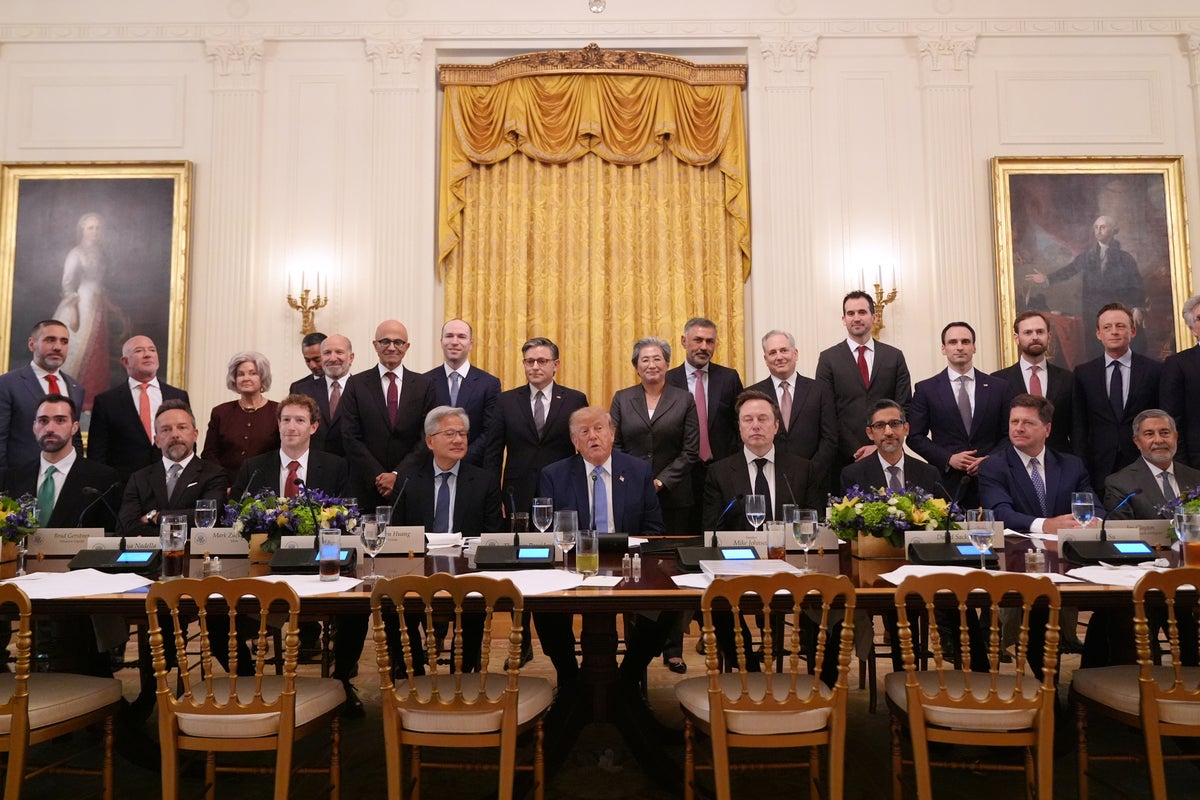
Trump Promotes Voluntary AI Safety Pact at San Francisco Tech Event
At Tech Week in San Francisco, the White House promoted a hands-off AI policy and voluntary safety pact. Industry leaders welcomed the shift toward growth over regulation.

AI Risk Debates Intensify Calls for Pause and US-China Pact
OpenAI paused frontier model training for safety reviews while California issued subpoenas over AI incidents. Officials discussed voluntary standards and potential FTC probes.
The Compass
You just read five takes on one story.
What's your take? Find your political shape in a few minutes.
Take the test