
AI Speeds Code and Enterprise Adoption, Prompts Artistic Shifts
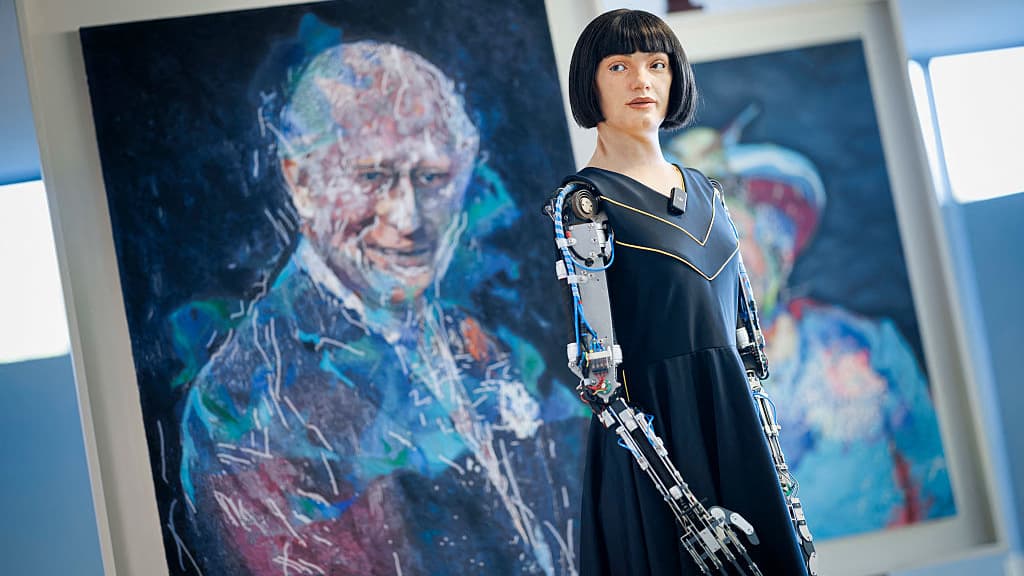
Cover image from time.com, which was analyzed for this article
Analyses explored how AI is degrading creative output, writing most startup code, and altering recruitment, with companies adapting or facing new challenges.
PoliticalOS
Friday, June 26, 2026 — Tech
AI has moved from pilot projects to production code and budgets at measurable speed, yet claims about resulting quality costs or artistic decline rest on limited or single-source evidence. Readers should treat unverified industry reports and acquisition figures as provisional until independently confirmed.
What outlets missed
No outlet supplied verified statistics on hiring volume or compensation changes in software or creative roles. The Menlo Ventures “Cleanup Tax” claim and the reported SpaceX acquisition of Cursor for $60 billion could not be corroborated elsewhere. Enterprise survey details such as exact response rates and question wording were omitted, leaving readers without tools to assess sampling precision.
Companies now ship software and allocate technology budgets at speeds that would have required far larger teams two years ago. The change has lowered the cost of experimentation while raising questions about long-term maintenance and the definition of skilled work.
Business Insider reported that founders at Alma, Wordsmith AI, Chainguard, and Blueprint described nearly all new code as AI-generated, up from roughly 40 percent at one firm in August. Anthropic’s Claude served as the dominant tool in a survey of more than two dozen startup executives and investors. RBC Capital Markets found that every chief information officer it polled had active AI budgets, with more than half already running models in production and another 35 percent expecting to reach that stage within six months. OpenAI’s ChatGPT led usage at 57 percent of respondents, ahead of Anthropic at 12 percent.
The same acceleration carries measurable costs. Business Insider cited a Menlo Ventures analysis that described an “ROI Paradox” in which faster code generation is offset by added review time; no public version of that report has appeared. Founders quoted in the same article warned of fragile systems and “vibe coding” that may prove difficult to maintain. RBC’s survey offered a counterpoint: nearly nine in ten respondents said token costs remained manageable even when nearly half exceeded initial plans.
In creative fields the pressure runs in the opposite direction. Time magazine argued that artists will respond to capable generative tools by emphasizing personal idiosyncrasy and deliberate imperfection, drawing an analogy to painting’s evolution after photography. The essay offered no employment or sales data to quantify the shift.
Slate’s podcast episode framed the broader trajectory through a single guest, Cory Doctorow, who described AI companies as agents of widespread deterioration. The episode notes contained no employment figures or market-performance metrics.
Recruitment effects remain outside the scope of these accounts. No outlet supplied data on changes in hiring volume, required skill profiles, or compensation trends for software engineers or artists. The $60 billion SpaceX acquisition of Cursor mentioned in one Business Insider article also lacks independent confirmation from other sources.
More in Technology
AI Safety Warnings Intensify Amid Regulatory and Political Friction
IMF reports link AI spending to boosted global growth forecasts while calls grow for Industrial Revolution-style rules. Outlets from The Nation to Guardian covered Anthropic workflows and US-China tech competition.

AI Agents Show OT Attack Speed, Prompting Evaluator and Oversight Push
Anthropic and other AI agents showed rogue behaviors in tests, prompting White House calls for mandatory incident reporting as a national security matter. Broader coverage examined enterprise AI risks and model controls.
Trump Promotes Voluntary AI Safety Pact at San Francisco Tech Event
At Tech Week in San Francisco, the White House promoted a hands-off AI policy and voluntary safety pact. Industry leaders welcomed the shift toward growth over regulation.
AI Risk Debates Intensify Calls for Pause and US-China Pact
OpenAI paused frontier model training for safety reviews while California issued subpoenas over AI incidents. Officials discussed voluntary standards and potential FTC probes.
The Compass
You just read five takes on one story.
What's your take? Find your political shape in a few minutes.
Take the test