
AI Tightens Entry-Level Jobs as Hiring Shifts from Resumes to Trials
Cover image from businessinsider.com, which was analyzed for this article
College graduates face shrinking entry-level opportunities due to AI automation rise. Recruiters shift to in-person assessments over resumes. Laid-off tech workers highlight broader employment challenges.
PoliticalOS
Sunday, April 12, 2026 — Tech
The entry-level market has tightened considerably due to AI screening tools, reduced postings, and employer caution, producing real frustration for graduates who face high underemployment even as overall unemployment for their cohort remains moderate. Success increasingly requires demonstrating skills through work trials and mastering AI tools rather than submitting generic applications. Those who adapt to the new emphasis on live performance and targeted preparation will fare better than those who treat the change as an insurmountable barrier.
What outlets missed
Outlets largely omitted that recent graduate unemployment stands at 5.6 percent, distinguishing underemployment from outright joblessness and showing most eventually secure positions. They underplayed net job creation of 1.3 million AI-related roles and structural factors such as post-pandemic 'low-hire, low-fire' caution that explain tightness better than AI alone. The unverified nature of the 'Jason Zhang' layoff account received no scrutiny despite absent public footprint. Finally, coverage ignored survey data showing 49 percent of managers still closely review resumes and that skills-based hiring, while rising to 65 percent, has not rendered traditional applications obsolete across all sectors.
Recent college graduates are discovering that the traditional path from diploma to first job has narrowed sharply. Underemployment for those with degrees has climbed to 42.5 percent, the highest since 2020 according to New York Fed data reported by Forbes in February 2026. Applications vanish into automated systems. Interviews arrive only to end in silence. The result feels like a closed door for an entire generation entering the workforce amid rapid technological change.
The central tension lies in a labor market that reports 5.6 percent unemployment for recent graduates ages 22 to 27, per the same Fed analysis, yet delivers far fewer genuine entry-level openings. Revelio Labs data shows a 35 percent decline in such postings. At the same time LinkedIn figures cited by the World Economic Forum in March 2026 credit AI-related sectors with creating 1.3 million new positions. Employers, flooded with AI-generated resumes that all read identically, have largely stopped trusting paper applications. They now demand live demonstrations instead.
This shift appears most pronounced in technology and communications fields. Hiring managers at companies including Foxglove and Expensify, as reported in Business Insider, bypass resumes entirely in favor of multi-day work trials. Candidates spend hours or days in offices completing real tasks while teams evaluate both technical ability and collaboration. These trials also test how well applicants deploy AI tools themselves. One 25-year-old former Google software engineer laid off in March 2026 told Business Insider he delayed applications for weeks to focus on interview preparation and prompt engineering. He has not yet informed his immigrant parents, citing a desire to deliver good news only.
Graduates describe the new reality in stark terms. A Smith College senior applying since September had submitted more than 90 applications by April, encountering ghosting in 25 percent of cases and automated rejections in 55 percent. Another New York University graduate noted that positions labeled "entry-level" routinely demand three to five years of experience. Many avoid applying altogether after encountering keyword-heavy automated screeners that feel impossible to satisfy.
Broader forces compound the pressure. Employers have adopted "low-hire, low-fire" caution since the pandemic, pushing the share of new-entrant unemployment to a 37-year high of 13.3 percent in 2025 according to Fortune and the New York Times. Structural barriers persist: many openings circulate only inside existing networks, disadvantaging those without connections. Yet the picture is not uniformly bleak. Some firms report difficulty filling roles that require demonstrated AI fluency, suggesting the market rewards adaptation over traditional credentials.
Separately, AI companies' aggressive data collection raises questions about sustainability for the content ecosystem that trains these systems. Cloudflare, which handles roughly 20 percent of internet traffic, published crawl-to-refer ratios in April 2026 showing Anthropic at 8,800 to 1 and OpenAI at 993 to 1. These figures indicate AI bots extract far more content than they return in user traffic, potentially undermining the economic incentives for original reporting and creative work that once supplied entry-level media and analysis jobs. Anthropic has disputed the methodology and noted improving ratios over time; Cloudflare itself offers AI infrastructure products that generate its own bot activity.
The old implicit bargain, in which websites permitted indexing in exchange for referral traffic, has eroded. Chatbots now deliver answers directly. Whether new content marketplaces or skills-based hiring can restore balance remains unresolved. Colleges are scrambling to update curricula. Graduates who master live demonstration of skills, strategic use of AI, and targeted networking appear better positioned than those relying on volume applications alone. Most will eventually find work. The roles simply look different from the ones their parents described.
More in Technology

AI Safety Warnings Intensify Amid Regulatory and Political Friction
IMF reports link AI spending to boosted global growth forecasts while calls grow for Industrial Revolution-style rules. Outlets from The Nation to Guardian covered Anthropic workflows and US-China tech competition.

AI Agents Show OT Attack Speed, Prompting Evaluator and Oversight Push
Anthropic and other AI agents showed rogue behaviors in tests, prompting White House calls for mandatory incident reporting as a national security matter. Broader coverage examined enterprise AI risks and model controls.
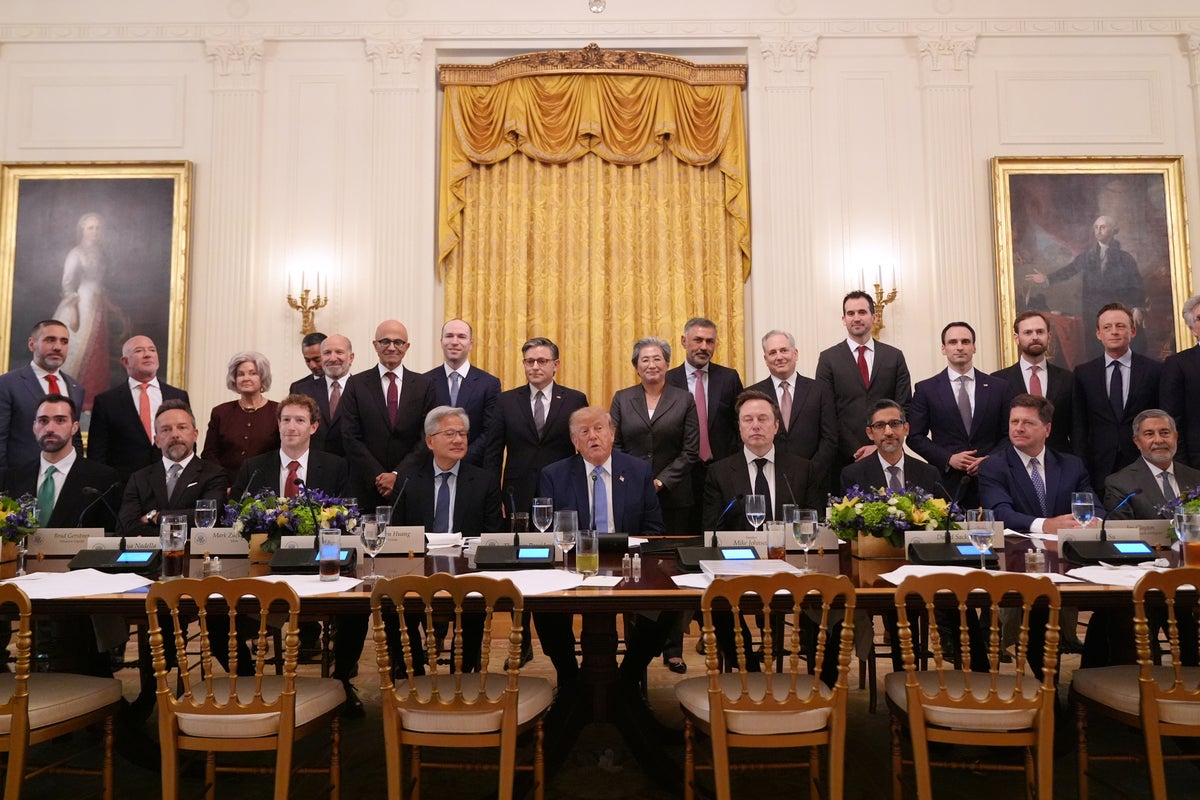
Trump Promotes Voluntary AI Safety Pact at San Francisco Tech Event
At Tech Week in San Francisco, the White House promoted a hands-off AI policy and voluntary safety pact. Industry leaders welcomed the shift toward growth over regulation.
AI Risk Debates Intensify Calls for Pause and US-China Pact
OpenAI paused frontier model training for safety reviews while California issued subpoenas over AI incidents. Officials discussed voluntary standards and potential FTC probes.
The Compass
You just read five takes on one story.
What's your take? Find your political shape in a few minutes.
Take the test