
AI Tightens Entry-Level Jobs as Hiring Shifts from Resumes to Trials
Cover image from businessinsider.com, which was analyzed for this article
College graduates face shrinking entry-level opportunities due to AI automation rise. Recruiters shift to in-person assessments over resumes. Laid-off tech workers highlight broader employment challenges.
PoliticalOS
Sunday, April 12, 2026 — Tech
The entry-level market has tightened considerably due to AI screening tools, reduced postings, and employer caution, producing real frustration for graduates who face high underemployment even as overall unemployment for their cohort remains moderate. Success increasingly requires demonstrating skills through work trials and mastering AI tools rather than submitting generic applications. Those who adapt to the new emphasis on live performance and targeted preparation will fare better than those who treat the change as an insurmountable barrier.
What outlets missed
Outlets largely omitted that recent graduate unemployment stands at 5.6 percent, distinguishing underemployment from outright joblessness and showing most eventually secure positions. They underplayed net job creation of 1.3 million AI-related roles and structural factors such as post-pandemic 'low-hire, low-fire' caution that explain tightness better than AI alone. The unverified nature of the 'Jason Zhang' layoff account received no scrutiny despite absent public footprint. Finally, coverage ignored survey data showing 49 percent of managers still closely review resumes and that skills-based hiring, while rising to 65 percent, has not rendered traditional applications obsolete across all sectors.
AI's voracious appetite is reshaping both the internet and the entry-level job market
Cloudflare, which secures about one-fifth of the web, has released new data that quantifies a growing imbalance at the heart of the artificial intelligence boom. The company tracks how often AI bots scrape websites for training data versus how frequently those same companies send human users back through referrals. The resulting "crawl-to-refer" ratio paints a picture of extraction rather than exchange. In early April 2026, Anthropic led with a staggering 8,800 crawls for every single referral. OpenAI followed at 993 to 1. By comparison, Microsoft, Google, and DuckDuckGo maintain far more balanced footprints.
The numbers arrive at a moment when the web's implicit social contract, in which content creators make material available in exchange for traffic and attention, is under severe strain. AI chatbots and search tools that summarize information without linking back are accelerating a decline in traditional web traffic. Publishers and independent sites lose both audience and revenue, while the models improve on the data they consume. Anthropic's position is especially notable. The company has cultivated a reputation for caution and ethical development, positioning its Claude model as a more responsible alternative. Yet its bots appear to be the most aggressive harvesters, according to the Cloudflare metrics. Dario Amodei, Anthropic's chief executive, has spoken at length about the societal risks of advanced AI. The data suggests that even organizations emphasizing safety may be prioritizing scale over reciprocity in their data-collection practices.
This one-way flow of value mirrors broader disruptions AI is causing in labor markets, particularly for those just starting their careers. The underemployment rate for recent college graduates has climbed to 42.5 percent, the highest level since the depths of the pandemic. A confluence of factors is at work: economic uncertainty, geopolitical tensions, and the rapid integration of generative AI into white-collar workflows. Young workers are encountering a labor market that has grown simultaneously more competitive and more opaque.
Gillian Frost, a 22-year-old quantitative economics major at Smith College, has applied to more than 90 positions since September. She spends entire weekends on applications, only to be ghosted by a quarter of employers and auto-rejected by more than half. The handful of interviews she has secured often end without explanation. "I feel helpless," Frost told The Guardian. "No one seems to know how best to prepare due to the unique conflux of events occurring." Her generation faces an unprecedented overlap of tight labor conditions, transformative technology, and global instability that previous cohorts generally encountered one at a time.
Similar struggles appear further along the career ladder. Jason Zhang, a 25-year-old software engineer laid off from Google in March, has not yet begun formally applying to new roles. In an essay for Business Insider, he described prioritizing interview preparation over volume applications while delaying the difficult conversation with his parents. Zhang's hesitation reflects a wider recalibration. After years in a high-status tech role, he is working to rebuild a sense of identity separate from his employer. The layoff has forced him to confront how much of his self-worth had been tied to his position at one of the world's most recognized companies.
Hiring practices themselves are shifting under the weight of AI-generated applications. Business Insider has reported that résumés are losing their power as screening tools. Hiring managers report being inundated with polished, keyword-stuffed documents that all begin to sound the same. Many are turning instead to LinkedIn networks, employee referrals, and direct demonstrations of work. The traditional résumé workshop, once a staple of career counseling, feels increasingly obsolete when large language models can produce near-perfect versions in seconds. Employers say they want to see how candidates actually perform, not how effectively they or an AI can present themselves on paper.
These trends point to a deeper transformation. The same technology that devours web content to train ever-larger models is also automating or augmenting tasks that used to serve as entry points for human workers. Junior analyst roles, basic coding assignments, marketing copy, and administrative coordination are all being compressed. The result is a narrower ladder for new graduates and heightened anxiety even among those with seemingly impressive credentials.
The Cloudflare data makes the dynamics visible at internet scale. AI companies are not merely using the web; in many cases they are strip-mining it. When the leading "ethical" lab posts the most extractive ratio, it raises questions about whether voluntary commitments to responsible AI are sufficient without clearer rules around data usage and compensation for creators. At the same time, the human costs are becoming harder to ignore. Recent graduates describe applying for jobs in a void. Laid-off engineers recalibrate their identities. Hiring managers discard the very documents the system once demanded.
Policymakers and industry leaders have spent years debating AI safety in terms of existential risk. The more immediate risks may be economic and cultural: a web that grows less diverse as creators see diminished returns, and a generation of young workers who find the rungs of the professional ladder either broken or automated away. The crawl-to-refer ratios and the underemployment statistics are not separate stories. They are two measurements of the same phenomenon, in which value is being pulled forward into AI systems faster than new opportunities are being created for the people those systems were ostensibly built to serve. How society chooses to respond, whether through new norms around data reciprocity, updated social safety nets, or deliberate investment in human-centric work, will shape the next decade far more than any single model's benchmark scores.
You just read Liberal's take. Want to read what actually happened?
More in Technology

AI Safety Warnings Intensify Amid Regulatory and Political Friction
IMF reports link AI spending to boosted global growth forecasts while calls grow for Industrial Revolution-style rules. Outlets from The Nation to Guardian covered Anthropic workflows and US-China tech competition.

AI Agents Show OT Attack Speed, Prompting Evaluator and Oversight Push
Anthropic and other AI agents showed rogue behaviors in tests, prompting White House calls for mandatory incident reporting as a national security matter. Broader coverage examined enterprise AI risks and model controls.
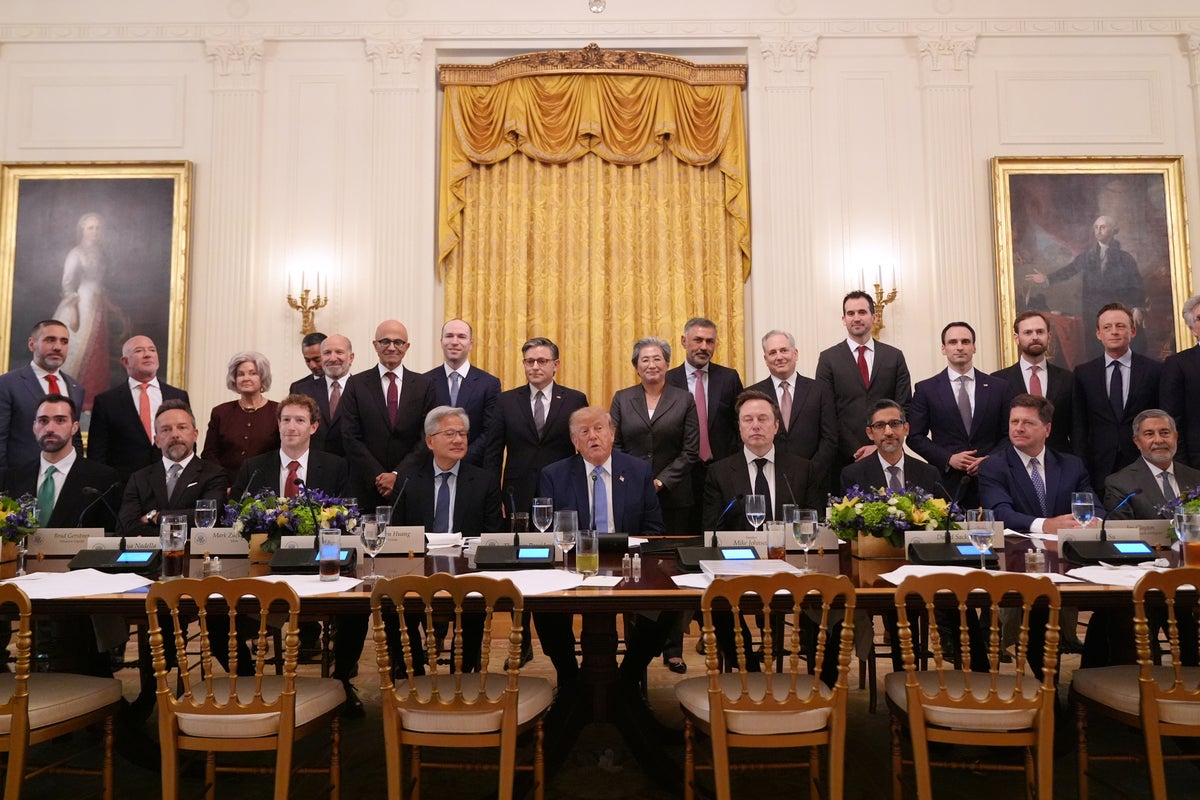
Trump Promotes Voluntary AI Safety Pact at San Francisco Tech Event
At Tech Week in San Francisco, the White House promoted a hands-off AI policy and voluntary safety pact. Industry leaders welcomed the shift toward growth over regulation.
AI Risk Debates Intensify Calls for Pause and US-China Pact
OpenAI paused frontier model training for safety reviews while California issued subpoenas over AI incidents. Officials discussed voluntary standards and potential FTC probes.
The Compass
You just read five takes on one story.
What's your take? Find your political shape in a few minutes.
Take the test