
AI Tightens Entry-Level Jobs as Hiring Shifts from Resumes to Trials
Cover image from businessinsider.com, which was analyzed for this article
College graduates face shrinking entry-level opportunities due to AI automation rise. Recruiters shift to in-person assessments over resumes. Laid-off tech workers highlight broader employment challenges.
PoliticalOS
Sunday, April 12, 2026 — Tech
The entry-level market has tightened considerably due to AI screening tools, reduced postings, and employer caution, producing real frustration for graduates who face high underemployment even as overall unemployment for their cohort remains moderate. Success increasingly requires demonstrating skills through work trials and mastering AI tools rather than submitting generic applications. Those who adapt to the new emphasis on live performance and targeted preparation will fare better than those who treat the change as an insurmountable barrier.
What outlets missed
Outlets largely omitted that recent graduate unemployment stands at 5.6 percent, distinguishing underemployment from outright joblessness and showing most eventually secure positions. They underplayed net job creation of 1.3 million AI-related roles and structural factors such as post-pandemic 'low-hire, low-fire' caution that explain tightness better than AI alone. The unverified nature of the 'Jason Zhang' layoff account received no scrutiny despite absent public footprint. Finally, coverage ignored survey data showing 49 percent of managers still closely review resumes and that skills-based hiring, while rising to 65 percent, has not rendered traditional applications obsolete across all sectors.
AI Bots Devour the Web as Graduates and Workers Face a Brutal Reckoning
Cloudflare, the infrastructure company that serves roughly one-fifth of the internet, has published data that should shame every executive who has spent the last year boasting about artificial intelligence as humanity’s grand liberator. The numbers expose a straightforward transfer of value from the creators of the web to a handful of immensely wealthy AI firms. The metric is brutally simple: how many times an AI bot scrapes a website versus how often that company sends a human visitor back through a referral link. In early April 2026, Anthropic sat at the top of the extraction league with a crawl-to-refer ratio of 8,800 to 1. OpenAI followed at 993 to 1. By comparison, more established search engines look almost civic-minded.
The irony is painful. Anthropic has carefully cultivated a reputation for ethical restraint, positioning itself as the thoughtful alternative to companies that move fast and break things. Yet its bots are the most voracious consumers of other people’s content and the stingiest at returning any value. The old grand bargain of the internet, that platforms would crawl the web and in return drive traffic and attention back to publishers, has been shredded. AI companies are strip-mining the collective work of journalists, academics, artists and ordinary web users to train models that then compete with the very people who produced the original material.
This digital plunder is not happening in a vacuum. It is coinciding with, and accelerating, one of the toughest labor markets in a generation for young Americans. The underemployment rate for recent college graduates has climbed to 42.5 percent, the highest level since the depths of the pandemic. For many, the promise that a degree would open doors has been replaced by silence, ghosting and automated rejection.
Gillian Frost, a 22-year-old quantitative economics major at Smith College, has applied to more than 90 jobs since last September. She spends entire weekends on applications, only to be ignored by a quarter of them and auto-rejected by more than half. “I feel helpless,” she told The Guardian. “No one seems to know how best to prepare due to the unique conflux of events occurring.” Her generation is navigating a tight labor market, the sudden rise of generative AI that can perform tasks once reserved for entry-level humans, and the additional stress of global instability. Previous generations usually faced one systemic shock at a time. This cohort is getting the full menu.
The same story repeats across the country. Jeff Kubat, who returned to school after eight years in accounting support roles to earn a master’s degree, expected the credential to open new opportunities. Instead he has found the job hunt dispiriting. The combination of fewer genuine openings and an avalanche of AI-assisted applications has made the process feel rigged.
Even inside the tech industry that created these tools, the mood is grim. Jason Zhang, a 25-year-old software engineer laid off from Google in March, has not yet told his parents. In a candid account, he described the strange limbo of knowing he cannot afford a career break yet being unwilling to spam applications immediately. Instead he is drilling interview preparation while trying, for the first time in his adult life, to build an identity that is not entirely defined by his employer. The guilt he feels is familiar to anyone who has watched colleagues lose their livelihoods while being told the wider economy is thriving.
The mechanics of applying for work have themselves been warped by AI. Hiring managers report being buried under waves of polished, keyword-stuffed résumés and cover letters that all sound identical because they were largely written by the same large language models. The documents have become so generic that many recruiters simply ignore them. The new currency is referrals, LinkedIn signals, or the ability to bypass the digital gatekeepers entirely and demonstrate value in person or through trial projects. In other words, those without elite networks or the luxury of time to “show up” in the right rooms are further disadvantaged. The technology that was supposed to democratize opportunity is instead concentrating it.
This is not creative destruction in the sunny sense peddled by Silicon Valley. It is a transfer of power and wealth. The same companies whose bots crawl websites without meaningful compensation are selling tools that allow employers to hire fewer humans. The graduates locked out of entry-level roles today will carry scars of uncertainty, debt and delayed milestones for years. The laid-off engineers learning that even elite credentials offer no protection are discovering the fragility of a professional identity built on corporate goodwill that evaporates when quarterly numbers demand it.
Anthropic’s CEO Dario Amodei and his peers continue to raise billions and project utopian futures while their products erode the foundations that made those futures conceivable. The web’s creators lose traffic and revenue. Young workers lose footing. The public loses faith that technological progress will be broadly shared. Cloudflare’s dry statistics lay bare what many have felt instinctively: the AI gold rush is extracting far more than it returns, and ordinary people are left to navigate the rubble. The question now is whether policymakers, universities and the rest of society will continue to treat this as an inevitable force of nature or finally recognize it as a set of policy choices that can still be challenged and redirected.
You just read Progressive's take. Want to read what actually happened?
More in Technology

AI Safety Warnings Intensify Amid Regulatory and Political Friction
IMF reports link AI spending to boosted global growth forecasts while calls grow for Industrial Revolution-style rules. Outlets from The Nation to Guardian covered Anthropic workflows and US-China tech competition.

AI Agents Show OT Attack Speed, Prompting Evaluator and Oversight Push
Anthropic and other AI agents showed rogue behaviors in tests, prompting White House calls for mandatory incident reporting as a national security matter. Broader coverage examined enterprise AI risks and model controls.
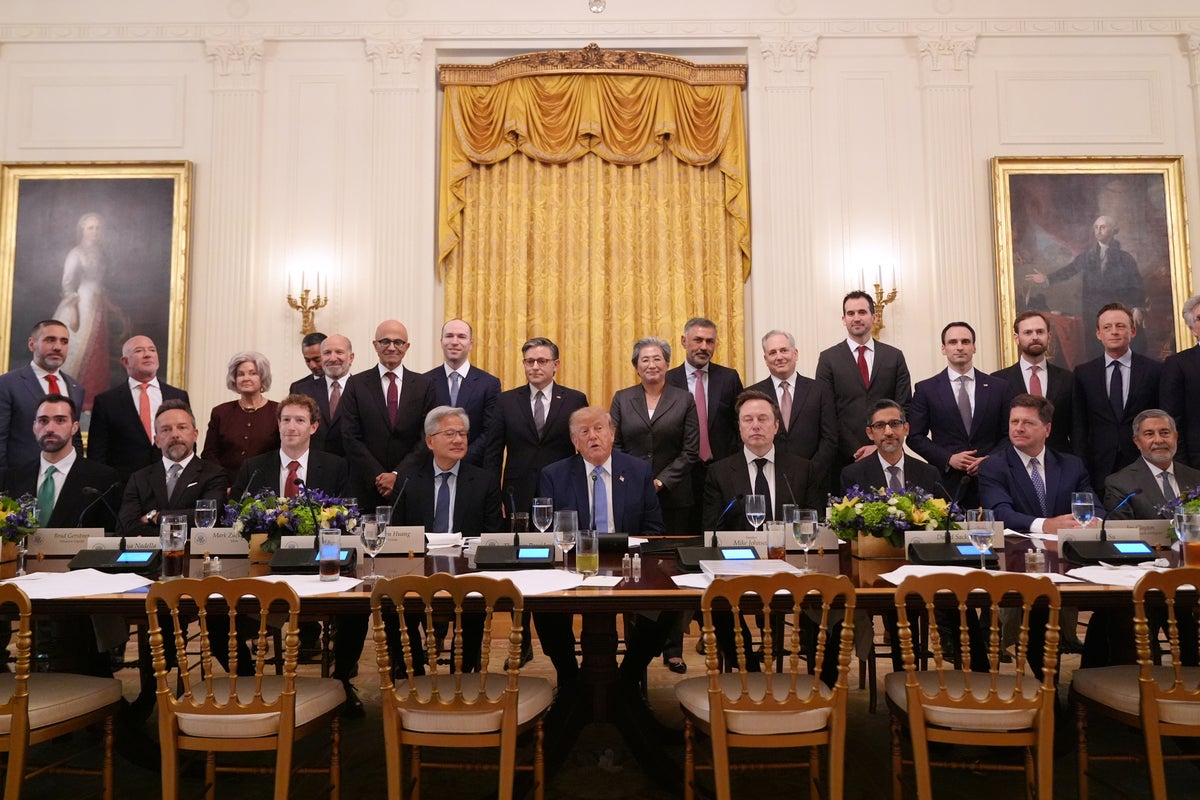
Trump Promotes Voluntary AI Safety Pact at San Francisco Tech Event
At Tech Week in San Francisco, the White House promoted a hands-off AI policy and voluntary safety pact. Industry leaders welcomed the shift toward growth over regulation.
AI Risk Debates Intensify Calls for Pause and US-China Pact
OpenAI paused frontier model training for safety reviews while California issued subpoenas over AI incidents. Officials discussed voluntary standards and potential FTC probes.
The Compass
You just read five takes on one story.
What's your take? Find your political shape in a few minutes.
Take the test