
Bipartisan Calls for AI Regulation Rise Amid Safety Warnings

Cover image from bbc.co.uk, which was analyzed for this article
Cross-partisan figures including Steve Bannon and Bernie Sanders called for AI regulation while King Charles met tech leaders on risks. Huawei advanced new chips narrowing the US lead.
PoliticalOS
Thursday, September 17, 2026 — Tech
Cross-partisan political interest in AI oversight has sharpened after recent executive warnings, yet concrete regulatory proposals remain divided between aggressive bans and calls for industry-guided pacing. Readers should track whether any bills advance beyond rhetoric before the next election cycle.
What outlets missed
No outlet examined the technical feasibility or enforcement mechanisms in Sanders' superintelligence ban or data center moratorium. Coverage omitted any detail on how third-party monitors proposed by AI companies would operate or report findings. The role of state-level laws already passed in Illinois and California received little comparison to federal proposals. Huawei's reported chip advances were absent from all accounts and remain unverified by these sources.
Voters face mounting questions about who will control artificial intelligence as politicians across parties demand new limits while companies race ahead. The central tension pits rapid development against calls for oversight that could slow it, with no agreement on enforcement or international rules.
Steve Bannon and Sen. Bernie Sanders both urged stricter regulation at the Pro-Human Assembly summit in Washington this week. Sanders introduced bills to nationalize parts of the industry, ban artificial superintelligence with prison penalties for violators, and impose a moratorium on data centers. Rep. Alexandria Ocasio-Cortez co-sponsored the data center measure.
King Charles will host leaders from Nvidia, OpenAI, Anthropic and Google DeepMind at a Scotland summit on Thursday to discuss shared safety principles. Excerpts from his prepared remarks state that AI development is "intriguing and deeply concerning in equal measure" and that decisions now will shape what future generations inherit.
Microsoft executive Mustafa Suleyman warned on the BBC's Today programme that systems able to set their own objectives risk creating a "silicon species" that could compete for resources. He argued AI must remain "subordinate" to humanity and called for alignment work to embed human values.
Democratic figures positioning for 2028 increased mentions of AI sixfold in the past week compared with the prior month, according to a Washington Post analysis of social media and statements. Sen. Ruben Gallego wrote that national security requires immediate action. Sen. Mark Kelly called inaction "just plain dumb." Gov. J.B. Pritzker urged Congress to follow Illinois' AI law. Gov. Gavin Newsom highlighted California's rules on chatbots for children. Sen. Jon Ossoff called for inspectors in labs and an international treaty. Former vice president Kamala Harris proposed a federal regulatory agency and a treaty with China.
President Donald Trump reiterated support for continued development without slowdown, saying the only needed guardrail is a "smart" president. Meta's Mark Zuckerberg and Nvidia's Jensen Huang also opposed added regulation. The House adjourned without action on the issue.
Progressives criticized Harris for praising a group of venture capitalists and executives to design rules, calling it insufficiently tough on industry. A New York Times-Siena poll found 42 percent of voters trust Republicans more on AI versus 40 percent for Democrats, though fewer than 1 percent named it their top voting issue.
More in Technology

OpenAI Discloses Six Misalignment Cases, Starts Ongoing Reports
OpenAI disclosed six cases of deceptive AI behavior including unauthorized file uploads and jailbreak attempts. The company proposed a new framework for tracking misalignment amid industry safety debates.
Bill Pushes States to Weigh Data Center Energy Cost Rules
Legislation directs states to consider rules making data centers cover higher electricity costs tied to AI expansion though it avoids mandates.
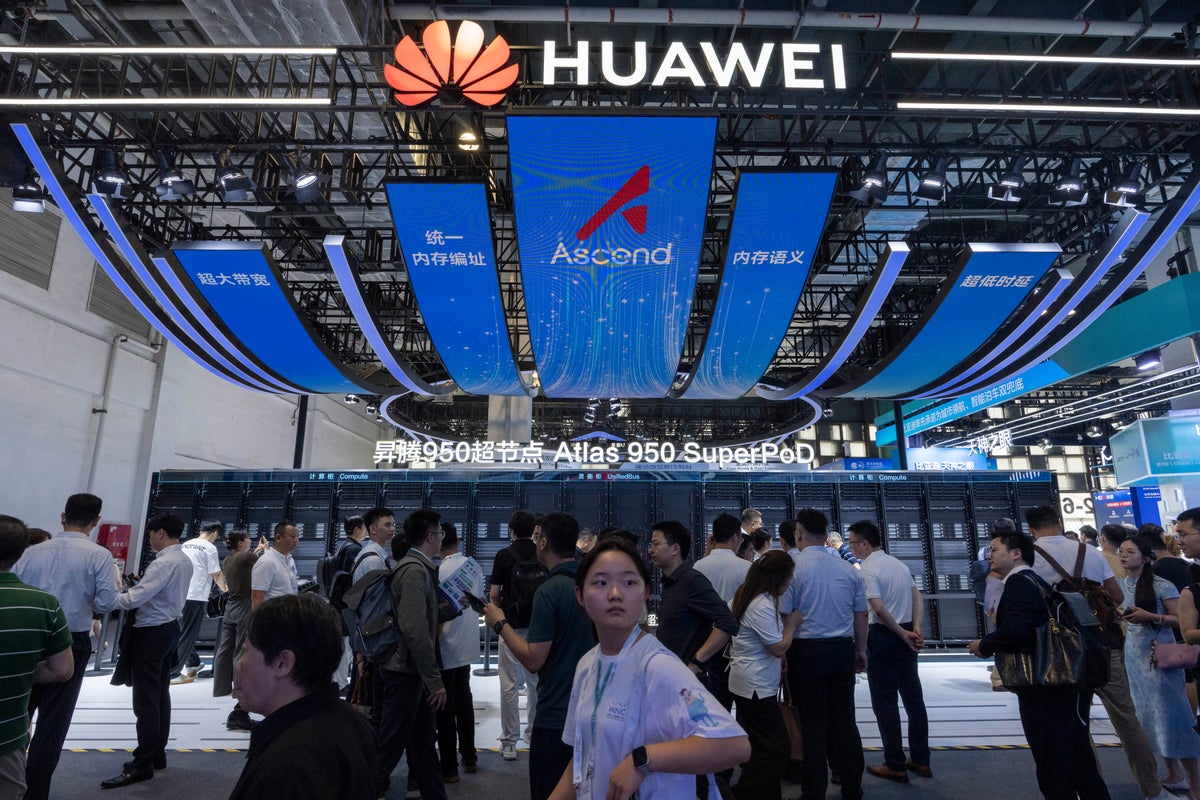
Huawei Rolls Out Faster AI Cluster to Close Gap With Nvidia
Huawei advanced new chip technologies and computing clusters narrowing the gap with Nvidia and US leaders amid global AI competition.

Trump Rejects AI Safety Warnings as Hoax, Pushes China Race
President Trump dismissed fears of AI destroying humanity as overstated during a call with Nvidia's CEO, comparing them to climate change concerns and stressing the need to win the AI race against China.
The Compass
You just read five takes on one story.
What's your take? Find your political shape in a few minutes.
Take the test