
AI Competition Frames Trump-Xi State Dinner Amid CEO Divide
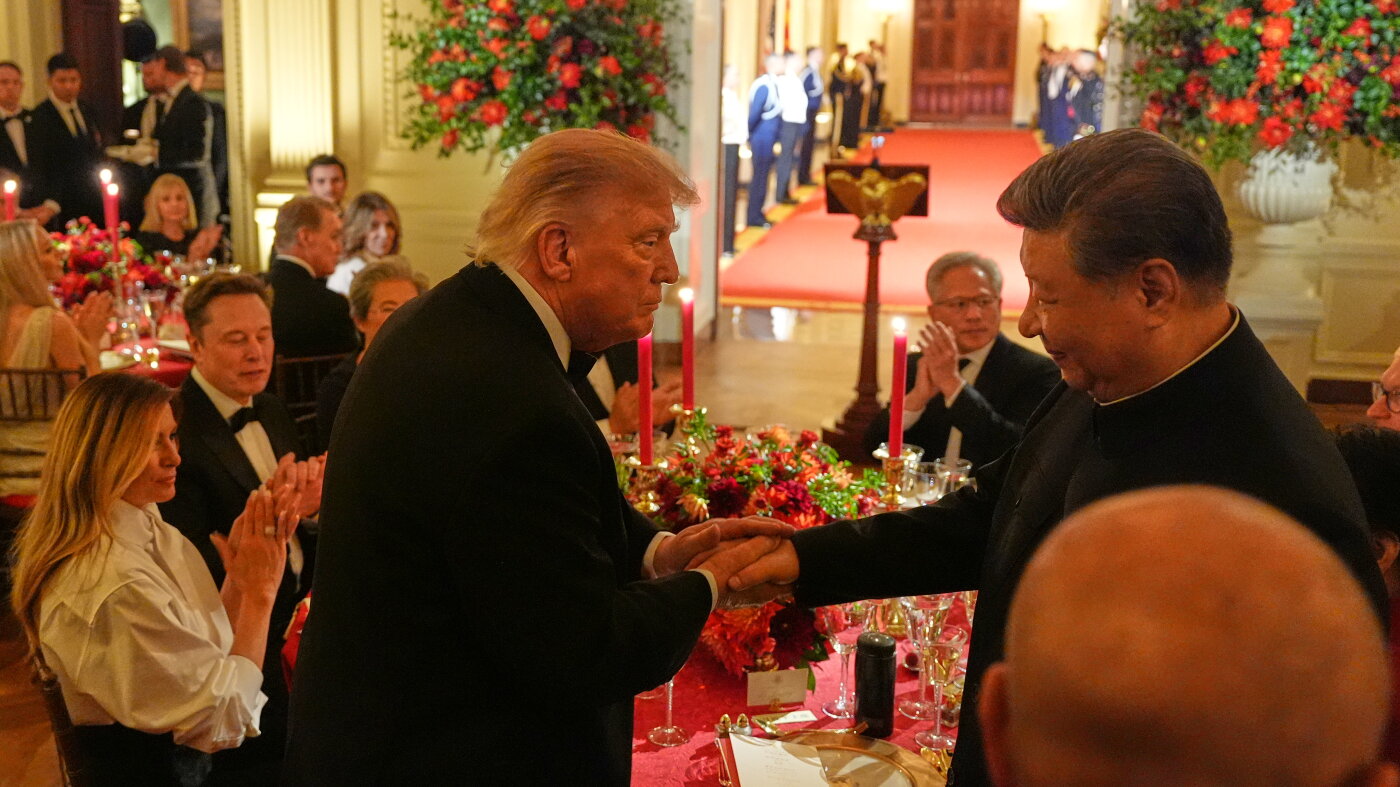
Cover image from npr.org, which was analyzed for this article
Tech leaders including Altman, Musk, Huang, and Bezos attended as the leaders discussed AI risks, regulation, and the US-China technology race during the summit.
PoliticalOS
Friday, September 25, 2026 — Tech
The state dinner displayed American technology leadership and the absence of Chinese counterparts in equal measure. That visual record underscores how the U.S.-China relationship has narrowed to competition over artificial intelligence and related strategic technologies, with few remaining bridges across the divide.
What outlets missed
Neither outlet supplied details on the substance of the AI discussions beyond naming the topic. The NPR account noted that Taiwan, trade, and AI were addressed during business hours but provided no outcomes or proposals. The New York Times piece referenced the broader technology competition yet omitted any reference to specific U.S. entity-list actions between 2018 and 2020 that directly affected which Chinese firms could attend such events. Both accounts also left unexamined the extent to which American companies remain dependent on Chinese manufacturing capacity even as they lobby against further Chinese access to advanced U.S. technology.
Absence of Chinese Business Leaders Underscores Eroded Trade Ties With US
When Chinese leader Xi Jinping visited the United States in 2015, his delegation included prominent corporate executives eager to expand commercial links. This week’s state dinner at the White House for Xi featured no such figures from China, even as American chief executives attended in numbers. The shift illustrates how political pressures and regulatory barriers have displaced the pursuit of mutual economic gains that once defined the relationship.
In 2015, companies like Alibaba sent leaders to accompany Xi, reflecting a period when both nations saw profit opportunities across borders despite ongoing disagreements. Trade volumes grew, investment flowed in both directions, and businesses navigated differences through direct deals rather than government dictates. By contrast, Thursday’s event under President Trump highlighted American tech and finance figures while Chinese counterparts stayed home. Observers noted the absence as evidence that Beijing’s tightening controls on private enterprise and Washington’s restrictions on technology transfers and supply chains have narrowed the space for open commerce.
Trump’s toast emphasized enduring people-to-people connections and the potential for prosperity, yet the guest list told a different story. Discussions during the visit touched on Taiwan, trade balances, and artificial intelligence, areas where policy choices increasingly override market signals. American attendees included executives from major firms, many of whom have navigated tariffs and export controls that raise costs and limit partnerships. Chinese firms, facing their own domestic constraints and scrutiny abroad, appear less inclined or able to send representatives for high-profile engagements.
This pattern aligns with broader trends where government interventions produce unintended results. Tariffs intended to protect domestic industries often raise prices for consumers and disrupt efficient supply chains built over decades. Export controls on advanced chips aim to safeguard security but can slow innovation by reducing collaboration and revenue streams that fund research. Both sides have layered rules that favor state priorities over voluntary exchanges, shrinking the arena where businesses once found common ground.
Historical evidence shows that economies advance most reliably when individuals and firms respond to price signals and consumer demand rather than official edicts. The 2015 delegation reflected that dynamic, with executives focused on expanding markets for goods and services. Today’s environment, marked by reciprocal restrictions, leaves fewer such opportunities. Data on bilateral investment reveals declines in certain sectors, consistent with the costs of heightened barriers.
The dinner’s menu of sea bass and its emphasis on pageantry drew attention to ceremonial aspects, yet the missing Chinese business presence points to deeper economic consequences. Without executives driving deals, announcements of commercial agreements remain limited, as noted by analysts tracking the relationship. This outcome stems not from inherent incompatibility between the two systems but from accumulated policy decisions that crowd out private initiative.
Future progress would require recognizing that prosperity arises from decentralized exchanges, not centralized negotiations. When governments prioritize control over commerce, the result is fewer participants at the table and diminished gains for populations on both sides.
You just read Conservative's take. Want to read what actually happened?
More in Technology

Democratic Wins Heighten Scrutiny of Data Center Expansion
Newly empowered Democrats signaled opposition to rapid AI data center growth on public lands and elsewhere. This contributed to market pressure on chipmakers and infrastructure firms.
Nvidia Faces Added Scrutiny on AI Shipments After Midterms
Nvidia faces increased monitoring of accelerator shipments amid smuggling concerns to China. Broader regulatory uncertainty from the election weighed on the sector.

Google Ties Search Access to AI Opt-In for K-12 Schools
Google will turn its AI tools off by default for K-12 students starting in 2027 and will restrict Search access for schools that fully block AI. The policy reflects deeper integration of AI into core products. Right-leaning New York Post and tech coverage noted the changes.

FBI Ties $6.3 Billion Binance Hack to North Korea; Pyongyang Fires Missiles
The FBI linked the theft of over $6 billion in cryptocurrency from Binance to North Korea's Lazarus Group, citing social engineering. Laundering the funds is expected to take months. Engadget, New York Post, and other outlets reported on the investigation.
The Compass
You just read five takes on one story.
What's your take? Find your political shape in a few minutes.
Take the test