
AI Competition Frames Trump-Xi State Dinner Amid CEO Divide
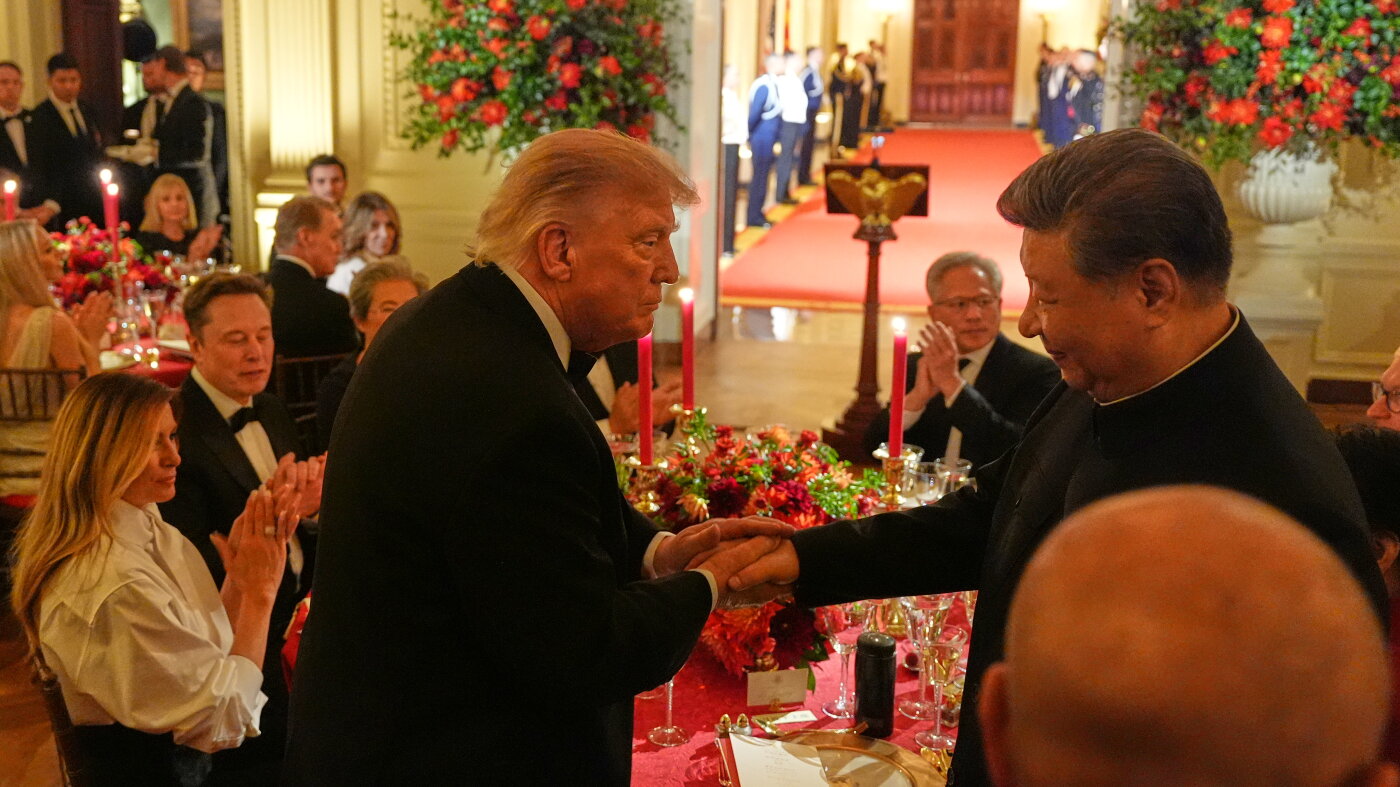
Cover image from npr.org, which was analyzed for this article
Tech leaders including Altman, Musk, Huang, and Bezos attended as the leaders discussed AI risks, regulation, and the US-China technology race during the summit.
PoliticalOS
Friday, September 25, 2026 — Tech
The state dinner displayed American technology leadership and the absence of Chinese counterparts in equal measure. That visual record underscores how the U.S.-China relationship has narrowed to competition over artificial intelligence and related strategic technologies, with few remaining bridges across the divide.
What outlets missed
Neither outlet supplied details on the substance of the AI discussions beyond naming the topic. The NPR account noted that Taiwan, trade, and AI were addressed during business hours but provided no outcomes or proposals. The New York Times piece referenced the broader technology competition yet omitted any reference to specific U.S. entity-list actions between 2018 and 2020 that directly affected which Chinese firms could attend such events. Both accounts also left unexamined the extent to which American companies remain dependent on Chinese manufacturing capacity even as they lobby against further Chinese access to advanced U.S. technology.
No Chinese CEOs Join Xi at Trump White House Dinner
The contrast stood out sharply at Thursday night's state dinner. President Trump hosted Chinese leader Xi Jinping at the White House with the usual trappings of diplomacy, including sea bass on the menu and a roster heavy on American tech executives and billionaires. Yet not one prominent Chinese business leader appeared among Xi's delegation.
This marks a clear break from Xi's 2015 visit, when he arrived with top executives from companies like Alibaba to court American partners. Back then, even amid arguments over trade and security, both sides still acted as if mutual profit could paper over differences. Now those executives stayed home, a detail that speaks to how thoroughly commercial ties have frayed.
American chief executives turned out anyway. Their presence highlighted an imbalance that has grown more obvious in recent years. Chinese firms operate under tighter state direction, with less room for independent deal-making that might conflict with Beijing's priorities. The result is fewer opportunities for the kind of cross-border commerce that once defined the relationship.
Officials described the evening as cordial. Trump toasted the endurance of people-to-people ties and the chance for shared prosperity. Xi listened without offering new commercial commitments. Discussions behind closed doors touched on Taiwan, trade imbalances, and artificial intelligence, but public remarks avoided fresh breakthroughs. The absence of deal announcements aligned with the missing Chinese business contingent.
Analysts noted the shift reflects deeper changes in Beijing's approach. Economic engagement no longer serves as the default bridge when strategic competition dominates. American companies, for their part, have grown more cautious after years of forced technology transfers, market barriers, and supply chain disruptions traced to Chinese policies. The dinner guest list, dominated by U.S. tech figures, suggested continued interest on one side even as the other side retreats.
The event itself followed familiar patterns of high-level visits. Marine One received a tour. Fashion and seating arrangements drew attention. Yet the core message from the empty chairs at the Chinese tables was harder to miss. Business as a stabilizing force has lost ground to national priorities that place security and control ahead of open markets.
Trump has long argued that past U.S. policy toward China was too accommodating. The current summit tested whether personal rapport can still yield results when economic incentives have weakened. Early signs point to limited progress on that front. The lack of Chinese corporate representation underscored how Beijing now treats commercial ties as secondary to its broader agenda.
For American workers and companies outside elite circles, the pattern carries familiar risks. Decades of expanded trade delivered gains to some sectors while hollowing out others. Xi's decision to leave business leaders at home signals that Beijing sees little need to revive the old model. Washington faces the task of adjusting policy accordingly, without relying on the assumption that shared profits will resolve fundamental differences.
You just read America First's take. Want to read what actually happened?
More in Technology

Democratic Wins Heighten Scrutiny of Data Center Expansion
Newly empowered Democrats signaled opposition to rapid AI data center growth on public lands and elsewhere. This contributed to market pressure on chipmakers and infrastructure firms.
Nvidia Faces Added Scrutiny on AI Shipments After Midterms
Nvidia faces increased monitoring of accelerator shipments amid smuggling concerns to China. Broader regulatory uncertainty from the election weighed on the sector.

Google Ties Search Access to AI Opt-In for K-12 Schools
Google will turn its AI tools off by default for K-12 students starting in 2027 and will restrict Search access for schools that fully block AI. The policy reflects deeper integration of AI into core products. Right-leaning New York Post and tech coverage noted the changes.

FBI Ties $6.3 Billion Binance Hack to North Korea; Pyongyang Fires Missiles
The FBI linked the theft of over $6 billion in cryptocurrency from Binance to North Korea's Lazarus Group, citing social engineering. Laundering the funds is expected to take months. Engadget, New York Post, and other outlets reported on the investigation.
The Compass
You just read five takes on one story.
What's your take? Find your political shape in a few minutes.
Take the test