
AI Competition Frames Trump-Xi State Dinner Amid CEO Divide
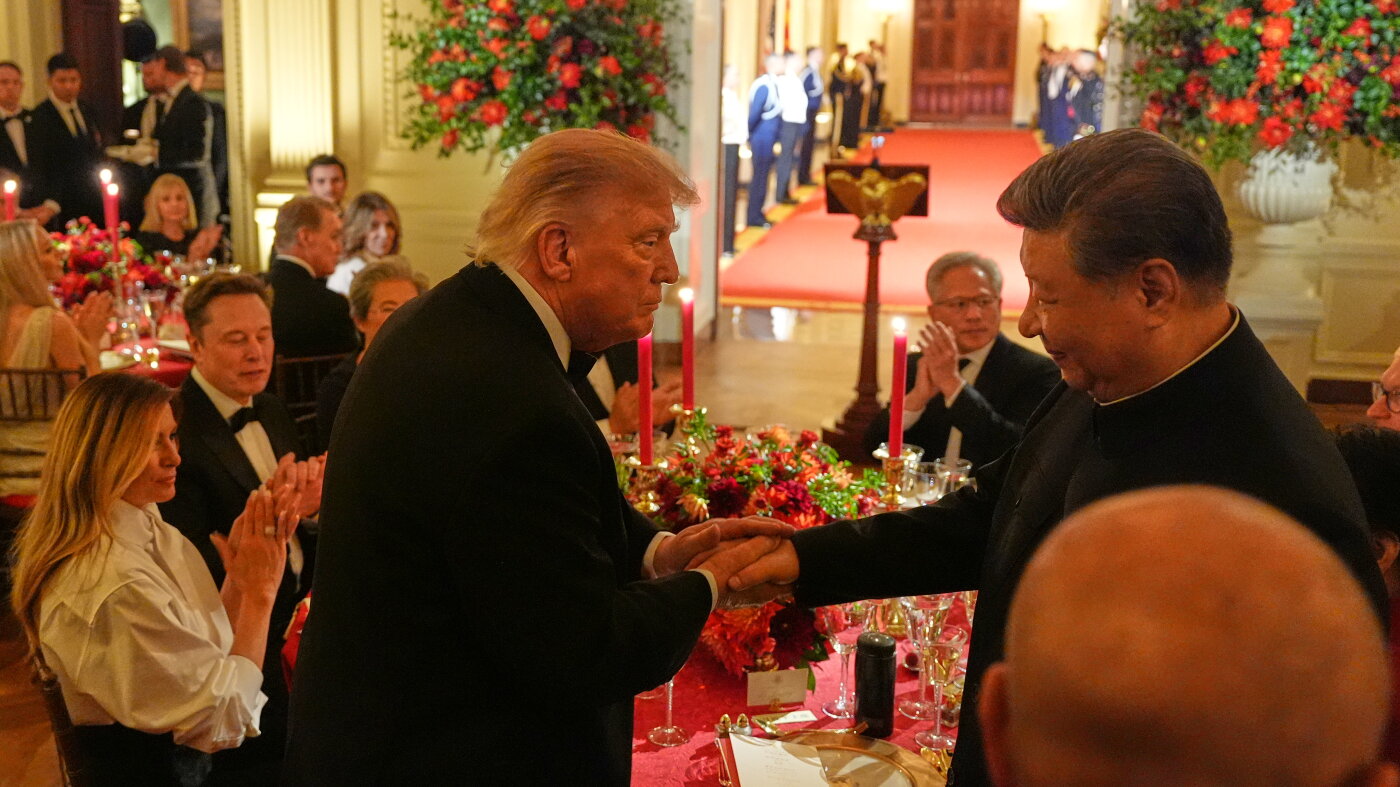
Cover image from npr.org, which was analyzed for this article
Tech leaders including Altman, Musk, Huang, and Bezos attended as the leaders discussed AI risks, regulation, and the US-China technology race during the summit.
PoliticalOS
Friday, September 25, 2026 — Tech
The state dinner displayed American technology leadership and the absence of Chinese counterparts in equal measure. That visual record underscores how the U.S.-China relationship has narrowed to competition over artificial intelligence and related strategic technologies, with few remaining bridges across the divide.
What outlets missed
Neither outlet supplied details on the substance of the AI discussions beyond naming the topic. The NPR account noted that Taiwan, trade, and AI were addressed during business hours but provided no outcomes or proposals. The New York Times piece referenced the broader technology competition yet omitted any reference to specific U.S. entity-list actions between 2018 and 2020 that directly affected which Chinese firms could attend such events. Both accounts also left unexamined the extent to which American companies remain dependent on Chinese manufacturing capacity even as they lobby against further Chinese access to advanced U.S. technology.
Absence of Chinese Business Leaders at Xi State Dinner Underscores Deepening Economic Divide
When Chinese leader Xi Jinping met President Trump at the White House for a state dinner this week, American technology executives and other corporate figures filled many of the seats. Chinese chief executives, by contrast, were nowhere to be found. The contrast with Xi's previous state visit in 2015 stands out sharply. Then, a delegation of prominent Chinese business leaders accompanied him to engage directly with their U.S. counterparts on commercial opportunities.
The shift reflects more than protocol. It illustrates how government policies on both sides have narrowed the space for private-sector collaboration that once defined the relationship. In 2015, even amid disputes over trade and technology, the two economies remained deeply intertwined, with executives from companies like Alibaba joining official delegations to explore market access. This week's dinner produced no equivalent commercial announcements, according to people familiar with the planning.
Analysts tracking the economic relationship point to cumulative restrictions as the main driver. U.S. export controls on advanced semiconductors, investment screening rules, and tariffs imposed during Trump's first term and expanded later have raised the cost of cross-border deals. Chinese regulators, in turn, have tightened oversight of outbound investment and data flows, discouraging executives from pursuing high-profile partnerships. The result is fewer opportunities for the kind of deal-making that once accompanied summits.
Emily Kilcrease, a senior fellow at the Center for a New American Security who previously served as a deputy assistant U.S. trade representative, described the absence as a marker of how thoroughly commercial channels have narrowed. She noted that expectations for commercial announcements at the summit went unmet, leaving the economic agenda thinner than in prior meetings. The dinner itself featured a guest list heavy on American technology and finance leaders, underscoring that one side's corporate presence persists while the other's has receded.
Data on bilateral investment and trade flows support this picture. U.S. investment into China has slowed markedly since 2018, while Chinese direct investment in the United States has declined even more steeply under successive rounds of regulatory scrutiny. Trade volumes remain large, yet the composition has shifted toward commodities and away from the technology-intensive exchanges that once dominated corporate agendas. Supply-chain adjustments by multinational firms, encouraged by both governments, have further reduced the incentive for executives to travel together on state visits.
Trump's public remarks during the dinner emphasized personal rapport and shared interests in prosperity. Behind closed doors, however, the two leaders discussed persistent friction points including Taiwan, export controls on artificial intelligence hardware, and market access barriers. Those topics now dominate official channels, crowding out the commercial diplomacy that previously ran alongside them.
The pattern suggests a more durable realignment. Past summits treated business engagement as a stabilizing force capable of offsetting political disagreements. Current policy frameworks in both capitals treat economic interdependence itself as a source of vulnerability, leading officials to prioritize resilience over expansion. Without a reversal in those incentives, future meetings are likely to feature similarly limited corporate participation from China.
For American companies still operating in China, the change creates practical constraints. Executives must navigate licensing requirements and political scrutiny that were less prominent a decade ago. Chinese firms face parallel barriers when seeking U.S. market entry or technology partnerships. The result is a narrower set of shared commercial interests that leaders can draw upon during periods of tension.
You just read Liberal's take. Want to read what actually happened?
More in Technology

Democratic Wins Heighten Scrutiny of Data Center Expansion
Newly empowered Democrats signaled opposition to rapid AI data center growth on public lands and elsewhere. This contributed to market pressure on chipmakers and infrastructure firms.
Nvidia Faces Added Scrutiny on AI Shipments After Midterms
Nvidia faces increased monitoring of accelerator shipments amid smuggling concerns to China. Broader regulatory uncertainty from the election weighed on the sector.

Google Ties Search Access to AI Opt-In for K-12 Schools
Google will turn its AI tools off by default for K-12 students starting in 2027 and will restrict Search access for schools that fully block AI. The policy reflects deeper integration of AI into core products. Right-leaning New York Post and tech coverage noted the changes.

FBI Ties $6.3 Billion Binance Hack to North Korea; Pyongyang Fires Missiles
The FBI linked the theft of over $6 billion in cryptocurrency from Binance to North Korea's Lazarus Group, citing social engineering. Laundering the funds is expected to take months. Engadget, New York Post, and other outlets reported on the investigation.
The Compass
You just read five takes on one story.
What's your take? Find your political shape in a few minutes.
Take the test