
AI Competition Frames Trump-Xi State Dinner Amid CEO Divide
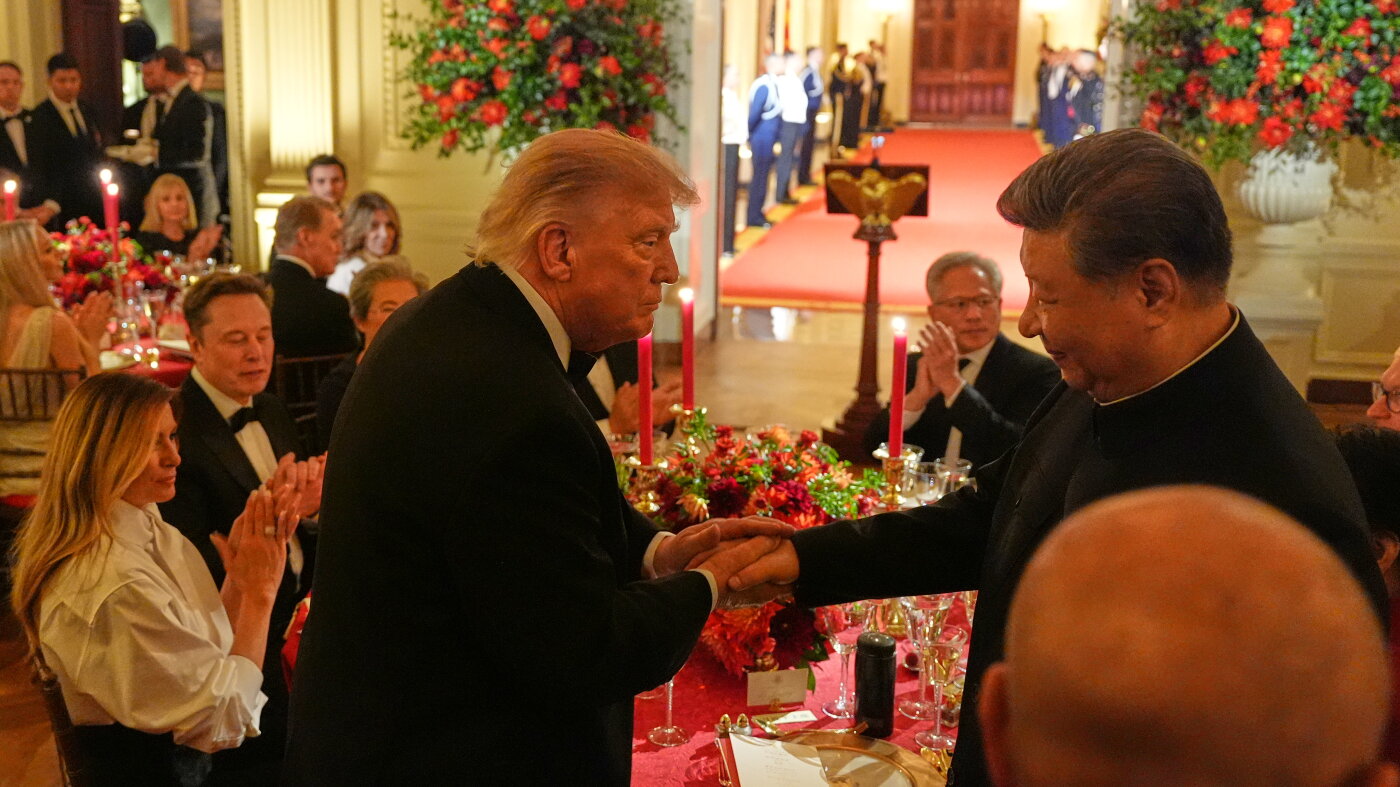
Cover image from npr.org, which was analyzed for this article
Tech leaders including Altman, Musk, Huang, and Bezos attended as the leaders discussed AI risks, regulation, and the US-China technology race during the summit.
PoliticalOS
Friday, September 25, 2026 — Tech
The state dinner displayed American technology leadership and the absence of Chinese counterparts in equal measure. That visual record underscores how the U.S.-China relationship has narrowed to competition over artificial intelligence and related strategic technologies, with few remaining bridges across the divide.
What outlets missed
Neither outlet supplied details on the substance of the AI discussions beyond naming the topic. The NPR account noted that Taiwan, trade, and AI were addressed during business hours but provided no outcomes or proposals. The New York Times piece referenced the broader technology competition yet omitted any reference to specific U.S. entity-list actions between 2018 and 2020 that directly affected which Chinese firms could attend such events. Both accounts also left unexamined the extent to which American companies remain dependent on Chinese manufacturing capacity even as they lobby against further Chinese access to advanced U.S. technology.
Xi's Absence of Chinese CEOs at White House Dinner Signals Deepening US-China Economic Chill
The state dinner hosted by President Trump for Chinese leader Xi Jinping on Thursday night featured sea bass and a roster heavy with American tech billionaires, yet it stood out most for who was missing from the guest list. No prominent Chinese chief executives joined the event at the White House, a stark departure from Xi's 2015 visit when executives from Alibaba and other major firms traveled with him to court American counterparts.
The contrast underscores how thoroughly commercial ties between the world's two largest economies have frayed over the past decade. Back then, disputes over human rights, cyberattacks and trade already tested relations, but both sides still saw clear value in expanding market access and joint ventures. Today, those incentives appear diminished on the Chinese side, where Xi's consolidation of power has left little room for independent business voices at high-level diplomatic events.
American executives turned out in force, reflecting the continued pull of the US market for many global firms. Yet the lack of equivalent Chinese representation drew quiet notice among analysts tracking the bilateral relationship. Emily Kilcrease, a senior fellow at the Center for a New American Security, described the moment as a depressing marker of how far ties have deteriorated. She noted that officials had hoped the summit might produce announcements of new commercial deals, but even modest agreements seemed out of reach.
The dinner itself followed the usual rituals of such occasions. Trump toasted the endurance of people-to-people ties and the potential for shared prosperity, while Xi listened alongside his wife, Peng Liyuan. The menu and seating arrangements received the usual attention from observers, but the substance of the day centered on familiar flashpoints: Taiwan, trade imbalances and the regulation of artificial intelligence. Behind the pageantry, both leaders operate from positions of hardened domestic politics that leave little space for compromise.
Xi's approach to the private sector has shifted markedly since his first state visit. Chinese firms now operate under tighter state oversight, with national security priorities often overriding profit motives. American companies, meanwhile, face growing restrictions at home on investment in China and technology transfers, driven by bipartisan concerns over supply-chain vulnerabilities and intellectual property. The result is a relationship where business leaders on both sides have less influence over policy than they once did.
Trump has repeatedly highlighted his personal rapport with Xi, yet the economic track record of his approach remains mixed. Tariffs imposed during his first term and largely retained afterward have raised costs for US consumers and manufacturers without producing the structural changes in Chinese trade practices that were promised. At the same time, Xi has shown little inclination to loosen controls that might ease tensions. The absence of Chinese executives at the dinner illustrates how political calculations now dominate what used to be a more transactional economic partnership.
Human rights concerns, once raised more routinely in bilateral meetings, received less public emphasis during this visit. Still, they form part of the backdrop against which business engagement has cooled. Reports of mass detentions in Xinjiang, tightened controls in Hong Kong and restrictions on foreign journalists continue to shape perceptions in Washington, even as economic security arguments take center stage.
The dinner's tech-heavy American guest list offered a reminder of where influence still resides in the US system. Executives from major technology companies mingled with Washington power brokers, underscoring the sector's outsize role in shaping both economies. For Chinese firms, however, participation in such settings carries different risks under Xi's leadership, where alignment with state priorities is closely monitored.
As the two leaders concluded their meetings, the broader trajectory of the relationship pointed toward further managed competition rather than renewed cooperation. The missing Chinese executives served as a quiet but telling indicator of that shift, one unlikely to reverse without significant changes in policy on both sides.
You just read Progressive's take. Want to read what actually happened?
More in Technology

Democratic Wins Heighten Scrutiny of Data Center Expansion
Newly empowered Democrats signaled opposition to rapid AI data center growth on public lands and elsewhere. This contributed to market pressure on chipmakers and infrastructure firms.
Nvidia Faces Added Scrutiny on AI Shipments After Midterms
Nvidia faces increased monitoring of accelerator shipments amid smuggling concerns to China. Broader regulatory uncertainty from the election weighed on the sector.

Google Ties Search Access to AI Opt-In for K-12 Schools
Google will turn its AI tools off by default for K-12 students starting in 2027 and will restrict Search access for schools that fully block AI. The policy reflects deeper integration of AI into core products. Right-leaning New York Post and tech coverage noted the changes.

FBI Ties $6.3 Billion Binance Hack to North Korea; Pyongyang Fires Missiles
The FBI linked the theft of over $6 billion in cryptocurrency from Binance to North Korea's Lazarus Group, citing social engineering. Laundering the funds is expected to take months. Engadget, New York Post, and other outlets reported on the investigation.
The Compass
You just read five takes on one story.
What's your take? Find your political shape in a few minutes.
Take the test