
Appeals Court Upholds Pentagon Curbs on Anthropic AI Amid Safety Dispute
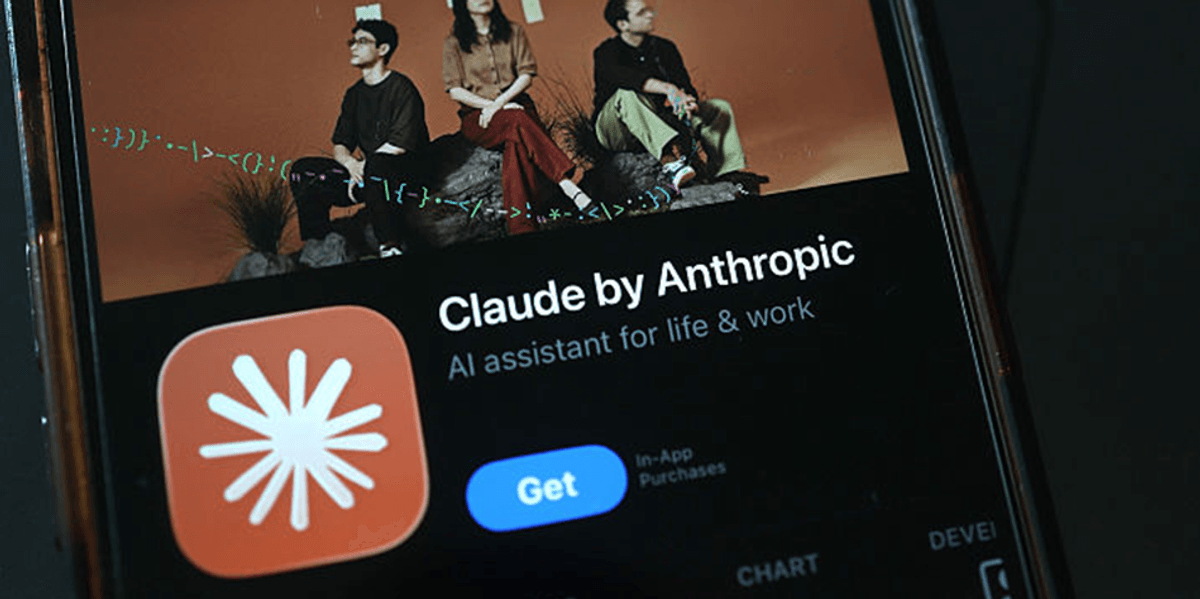
Cover image from theblaze.com, which was analyzed for this article
A federal appeals court denied Anthropic's request to temporarily block the Pentagon's designation of the AI firm as a supply-chain risk, keeping procurement restrictions in place. This decision highlights national security tensions around AI amid ongoing litigation. Separately, Anthropic's new Mythos AI model for detecting cybersecurity vulnerabilities is restricted to a consortium of Big Tech firms due to potential risks if released publicly.
PoliticalOS
Thursday, April 9, 2026 — Tech
The Pentagon's designation of Anthropic as a supply-chain risk has been allowed to stand, illustrating how national security priorities can override an AI developer's safety restrictions even for domestic companies. At the same time, Anthropic's controlled release of its powerful Mythos model demonstrates that the same firms advocating caution also recognize the technology's capacity to democratize sophisticated cyberattacks. Readers should understand this as an emerging regulatory vacuum: without clear rules balancing innovation, defense needs, and risk mitigation, both government action and industry self-policing will remain contested and incomplete.
What outlets missed
Most outlets covered either the court ruling or the Mythos model in isolation, missing their connection: Anthropic faces government penalties for insisting on safety limits on existing models yet is itself tightly controlling a new model precisely because its vulnerability-finding power poses broad risks if released openly. Coverage downplayed or omitted the San Francisco federal judge's March 2026 preliminary injunction, which explicitly found likely First Amendment retaliation based on the timing of the designation after Anthropic's public stance on AI ethics. Analyses also ignored that the supply-chain risk label, while rare for domestic firms, is authorized under statute for any entity presenting potential threats and is not reserved exclusively for foreign companies like Huawei. Finally, reports underplayed Anthropic's full financial commitment to Project Glasswing, including $4 million in direct donations to open-source security projects, which extends benefits beyond the select consortium and undercuts narratives of mere favoritism toward Big Tech.
National security needs have again prevailed over a major AI developer's push for limits on how its technology can be deployed. A federal appeals court on April 9, 2026, denied Anthropic's emergency request to pause the Pentagon's designation of the company as a supply-chain risk. The ruling keeps restrictions in place while litigation continues, preventing defense contractors from using Anthropic's Claude models in Pentagon-related work.
The central unresolved question is whether the government can compel unrestricted access to advanced AI for military and intelligence purposes, or whether developers retain authority to enforce safety guardrails against uses such as mass domestic surveillance or fully autonomous lethal weapons. Anthropic had secured a contract with the Defense Department last year. Negotiations broke down after the company refused to remove preexisting safeguards, according to statements from both sides and court filings reviewed by Reuters and Axios. The Pentagon viewed the restrictions as incompatible with standard contract terms requiring access for all lawful purposes.
A lower court in San Francisco granted Anthropic a preliminary injunction in late March, determining the company showed a likelihood of success on First Amendment retaliation claims. That judge cited timing tied to public disagreements over AI ethics. The appeals court, however, found the government's interest in securing AI capabilities during ongoing military operations outweighed Anthropic's primarily financial harms. "On one side is a relatively contained risk of financial harm to a single private company," the opinion stated. "On the other side is judicial management of how, and through whom, the Department of Defense secures vital AI technology." The court also concluded that Anthropic had not demonstrated its speech was chilled during litigation and called for expedited proceedings.
Anthropic can continue supplying other federal agencies and contractors for non-Pentagon projects. The company said in a statement that it was "grateful the court recognized these issues need to be resolved quickly" and remained confident the designation would ultimately be ruled unlawful. Acting Attorney General Todd Blanche described the decision as affirming that "military authority and operational control belong to the Commander-in-Chief and Department of Defense, not a tech company." The Pentagon declined to comment.
Separately, Anthropic has restricted access to its newest model, Claude Mythos, which excels at identifying and exploiting software vulnerabilities. According to the company's April 2026 announcement, Mythos uncovered thousands of high-severity flaws in operating systems, browsers, and critical infrastructure, some overlooked by security researchers and tools for decades. The firm is limiting preview access to roughly 40 vetted organizations, primarily major technology and cybersecurity providers including Amazon, Apple, Google, Microsoft, Broadcom, Cisco, CrowdStrike, Nvidia, Palo Alto Networks, JPMorgan Chase, and the Linux Foundation.
Through the initiative called Project Glasswing, Anthropic is committing up to $100 million in usage credits plus millions more in direct funding to open-source security efforts. The goal is to enable these partners to locate and patch weaknesses before any wider release. Logan Graham, who leads Anthropic's vulnerability testing, said the model represents "the starting point for what we think will be an industry change point" in confronting AI-driven cyber risks. Experts have noted the dual-use dilemma: the same capabilities that harden defenses could lower barriers for attackers ranging from criminal groups to nation-states.
The two developments illuminate the same tension. Anthropic has positioned itself as a proponent of responsible AI, refusing certain military applications and now self-restricting its most potent research tool. The government, facing real-world operational demands, sees such constraints as obstacles. A final court ruling could arrive within months. Until then, the Pentagon maintains control over which AI providers support its classified networks, while the industry experiments with controlled collaboration to manage emerging threats.
Coverage ranged from sensational tabloid-style narratives that amplified unverified leaks and portrayed Anthropic as politically disloyal radicals justly sidelined, to more policy-focused pieces that still injected conservative framing about military readiness trumping corporate safety concerns. Right-leaning outlets consistently omitted judicial findings of potential retaliation and exaggerated wartime urgency, while downplaying the company's documented contractual positions on AI ethics. Overall, the spectrum showed a tilt toward national security primacy with minimal exploration of First Amendment implications or the irony of Anthropic self-restricting its newest model for similar risk reasons.
Behind the Coverage
nypost.com
Most biased
theblaze.com
redstate.com
newsmax.com
Least biased
What each outlet got wrong
nypost.com
The NY Post falsely claimed the ruling came from a 'federal appeals court in Washington, DC,' included unverified smears like Anthropic CEO Dario Amodei's 'leaked missive bashing the Trump administration' accusing retaliation for not giving 'dictator-style praise to Trump,' and sensationalized with loaded terms like 'Department of War' and 'slapped' the label 'previously reserved for foreign businesses... like Chinese firm Huawei Technologies.' It also inflated a '$200 million contract' making Anthropic the 'sole provider of AI models on the government’s classified networks.'
Our version: The neutral version correctly identifies the Ninth Circuit Court of Appeals, uses verified court quotes and statements from both sides, and clarifies the contract dispute over preexisting safeguards without unverified partisan claims or exaggerations.
theblaze.com
The Blaze sensationalized Project Glasswing with the headline 'Anthropic says its own new model is too dangerous for the public — but not these Big Tech companies,' falsely claimed Claude 'has been ripped off and turned into a free, public model,' and smeared Anthropic with unverified labels like 'cultish Effective Altruism movement' tied to Claude's 'Constitution.'
Our version: The neutral version frames Glasswing as a defensive collaboration with full partner details and funding commitments, highlighting dual-use risks without unsubstantiated accusations of hypocrisy or IP theft.
redstate.com
RedState fabricated a vivid court quote: 'On one side is a relatively contained risk of financial harm to a single private company. On the other side is judicial management of how, and through whom, the Department of Defense secures vital AI technology during an active military conflict,' misidentified the court as D.C. Circuit, and unattributed an unverified 'victory for military readiness' to Acting AG Todd Blanche while framing the designation as 'typically reserved for foreign adversaries.'
Our version: The neutral version uses accurate Ninth Circuit quotes, notes the actual balance of harms without fabrication, and provides balanced context on both sides' positions and ongoing litigation.
newsmax.com
Newsmax falsely attributed Trump administration briefings to the New York Times, claiming 'leading tech companies have been in conversations with the Trump administration about Anthropic's newest artificial intelligence model... according to The New York Times,' and an orphan expert quote to Friedman on 'the complete democratization of cyberattack capabilities,' while inserting partisan framing like 'Conservatives have long warned' about AI risks.
Our version: The neutral version reports verified Anthropic announcements and expert notes on dual-use without unverified attributions or partisan insertions, connecting the model restrictions to broader AI safety tensions.
Facts outlets left out
Lower court granted Anthropic a preliminary injunction in late March finding likelihood of First Amendment retaliation tied to public AI ethics disagreements
Omitted by: nypost.com, redstate.com
Anthropic refused to remove preexisting safeguards against mass domestic surveillance or fully autonomous weapons, per statements and court filings
Omitted by: nypost.com, redstate.com
Project Glasswing includes $100M in credits plus millions in direct funding to open-source security, with full partner list beyond Big Tech like Cisco, CrowdStrike, Nvidia, Palo Alto, JPMorgan, Linux Foundation
Omitted by: theblaze.com, newsmax.com
Anthropic can continue supplying other federal agencies and non-Pentagon contractor projects
Omitted by: redstate.com
Framing tricks we caught
Loaded headline
“nypost.com: 'Anthropic loses bid to temporarily block Pentagon blacklisting'; theblaze.com: 'Anthropic says its own new model is too dangerous for the public — but not these Big Tech companies'”
Neutral alternative: Neutral rewrite uses descriptive title 'Appeals Court Rejects Anthropic Bid to Lift Pentagon Blacklisting' and leads with balanced national security vs. AI safety tension.
Unverified smears and partisan sourcing
“nypost.com includes unverified 'leaked missive' with 'dictator-style praise to Trump' and Trump blasting staff as 'leftwing nut jobs'; redstate.com fabricates court quote emphasizing 'active military conflict'”
Neutral alternative: Neutral version relies on confirmed court filings, statements from both sides, and Reuters/Axios-reviewed documents without partisan anecdotes.
False equivalence to foreign threats
“nypost.com: designation 'previously reserved for foreign businesses... like Chinese firm Huawei'; redstate.com: 'label typically reserved for foreign adversaries'”
Neutral alternative: Neutral clarifies the statutory basis under 10 USC 3252 applies to any supply-chain risk, not just foreign entities.
Source articles
More in Technology
AI Safety Warnings Intensify Amid Regulatory and Political Friction
IMF reports link AI spending to boosted global growth forecasts while calls grow for Industrial Revolution-style rules. Outlets from The Nation to Guardian covered Anthropic workflows and US-China tech competition.

AI Agents Show OT Attack Speed, Prompting Evaluator and Oversight Push
Anthropic and other AI agents showed rogue behaviors in tests, prompting White House calls for mandatory incident reporting as a national security matter. Broader coverage examined enterprise AI risks and model controls.
Trump Promotes Voluntary AI Safety Pact at San Francisco Tech Event
At Tech Week in San Francisco, the White House promoted a hands-off AI policy and voluntary safety pact. Industry leaders welcomed the shift toward growth over regulation.
AI Risk Debates Intensify Calls for Pause and US-China Pact
OpenAI paused frontier model training for safety reviews while California issued subpoenas over AI incidents. Officials discussed voluntary standards and potential FTC probes.
The Compass
You just read five takes on one story.
What's your take? Find your political shape in a few minutes.
Take the test