
Apollo Astronaut Jim Lovell's Pre-Recorded Message to Artemis II Crew Echoes Lunar Legacy Amid Ongoing Debates on NASA's Human Spaceflight Value
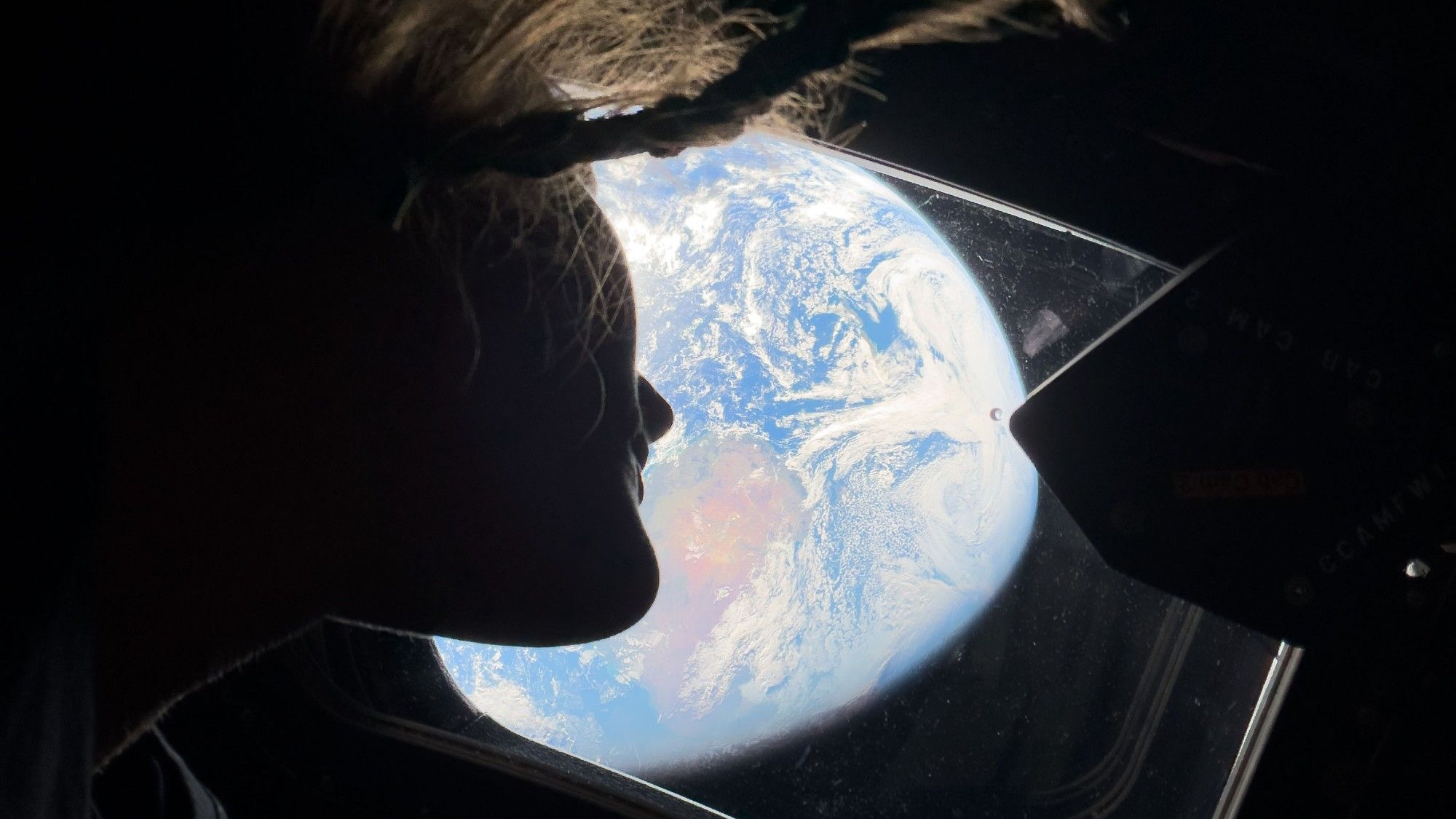
Cover image from theweek.com, which was analyzed for this article
RealClearPolitics discusses Artemis II in the context of exploring the moon's light and dark sides. The Week underscores the broader value of human space travel for the program. PJ Media covers Apollo astronaut Jim Lovell's final message passing the torch to the Artemis II crew, marking a new generation of lunar exploration.
PoliticalOS
Wednesday, April 8, 2026 — Tech
Lovell's message symbolizes Apollo-Artemis continuity during a milestone lunar flyby, but Artemis faces scrutiny over delays and $105 billion costs through 2028. Economic spinoffs are touted yet debated, with verifiable NASA innovations like memory foam confirmed but broader claims like CAT scans unlinked. Cross-check NASA primaries for unfiltered mission facts amid varied media framing.
What outlets missed
Both outlets downplayed Artemis program delays, with Artemis II shifting from 2024 to 2026 and Artemis III from 2025 to 2027 or later due to technical and safety issues, per NASA OIG reports. They omitted detailed SLS cost overruns, now exceeding $20 billion per launch versus initial $5 billion estimates, amplifying the $105 billion projection through 2028. Full crew backgrounds and precise mission telemetry, like the exact distance record, received minimal attention despite their historical significance. Local Illinois connections to Lovell, including Adler Planetarium ties, were absent from national coverage.
NASA's Artemis II mission, which launched on April 1, 2026, from Cape Canaveral Space Force Station in Florida, marked the first crewed Orion spacecraft flight around the Moon since Apollo 17 in 1972, according to NASA officials and mission logs reported by USA Today on April 7, 2026. The crew—Commander Reid Wiseman, Pilot Victor Glover, Mission Specialist Christina Koch, and Mission Specialist Jeremy Hansen—achieved a maximum distance from Earth of approximately 248,655 miles on April 6, 2026, surpassing Apollo 13's record from 1970, as confirmed by NASA telemetry data cited in CBS Chicago coverage on April 7, 2026.
On April 6, 2026—referred to as 'Monday' in contemporaneous reports—mission control played a pre-recorded wake-up message from Apollo astronaut Jim Lovell to the Artemis II crew as the Orion spacecraft approached the Moon's far side, according to NASA's official audio release and PJ Media reporting on April 8, 2026. Lovell, who commanded Apollo 13 and served as command module pilot on Apollo 8—the first mission to orbit the Moon in December 1968—died on August 19, 2025, at age 97 in Lake Forest, Illinois, per family statements and NASA tributes reported by the Chicago Sun-Times on August 20, 2025. The message was recorded approximately two months prior to his death, around June 2025, as stated by NASA spokespeople in Sarasota Herald-Tribune coverage on April 7, 2026.
In the message, Lovell said: 'Hello Artemis II! This is Apollo astronaut Jim Lovell. Welcome to my old neighborhood. When Frank Borman and Bill Anders and I orbited the moon on Apollo 8, we got humanity's first up close look at the moon and got a view of the home planet that inspired and united people around the world. I'm proud to pass that torch on to you as you swing around the moon and lay the groundwork for missions to Mars, for the benefit of all. It's a historic day, and I know how busy you'll be, but don't forget to enjoy the view. So, Reid and Victor and Christina and Jeremy, and all the great teams supporting you, good luck and Godspeed from all of us here on the good earth,' according to the full NASA transcript published by CBS Chicago on April 7, 2026.
The tribute evoked Apollo 8's Christmas Eve 1968 broadcast, where Lovell, Borman, and Anders read from Genesis 1 while orbiting the Moon, as detailed in NASA's historical archives and partially transcribed in PJ Media on April 8, 2026. Just prior to loss of signal on Artemis II's lunar far-side pass, Pilot Victor Glover delivered his own message: 'Thank you to all of you for allowing us the immense privilege to be on this journey together... as we prepare to go out of radio communication, we're still going to feel your love from Earth. And to all of you down there on Earth, and around Earth, we love you from the moon,' quoting Christian teachings on love, per NASA's live mission audio quoted in PJ Media on April 8, 2026.
Artemis II represents a key step in NASA's Artemis program, aimed at establishing a sustainable lunar presence and preparing for Mars missions, with the spacecraft completing a 10-day test flight without landing, as outlined in NASA's April 2026 mission updates reported by USA Today. The program has faced significant delays and cost overruns: Artemis II slipped from a planned 2024 launch to April 2026 due to technical issues with the Orion spacecraft and Space Launch System (SLS) rocket, according to NASA Inspector General reports cited by WKMG News 6 on March 31, 2026. SLS development costs escalated from an initial $5 billion estimate to over $20 billion per launch, per NASA Office of Inspector General audits referenced in Planetary Society analyses from 2025.
By Artemis IV in 2028—when the first crewed lunar landing under Artemis III is now delayed to at least 2027—NASA projects total program spending of $105 billion, as estimated by USA Today on April 7, 2026. Proponents, including evolutionary biologist Scott Solomon in The Washington Post on April 8, 2026, argue it advances deep-space habitation akin to biological colonization. A 1980s Chase Econometrics study, often cited by NASA, claimed Apollo returned $7 in economic benefits per $1 spent through spinoffs like memory foam and CMOS sensors, though this figure is debated for including indirect effects, per critiques in The Planetary Society reports.
Critics question the value amid earthly priorities. Space historian Gerard DeGroot wrote in UnHerd that Apollo-era support hovered below 50% in polls, particularly among women, people of color, and low-income groups, and labeled Artemis pursuits as 'futile prestige,' as quoted in The Week on April 8, 2026. NASA's spinoff claims, such as CAT scans, lack direct verification in NASA databases, which list items like water purification but not computed tomography, according to Kennedy Space Center spinoff records reviewed in 2026.
Lovell's Illinois ties were highlighted locally: The Adler Planetarium in Chicago, where he served on the board, hosted tributes, and his Lake Forest home drew media attention post-death, per CBS Chicago on April 7, 2026. No official denials of the message's authenticity or mission facts have been issued by NASA or crew members. The event underscores generational continuity, with Apollo 8's 'Earthrise' photo credited by some, like Sam Leith in The Spectator, with sparking environmentalism, though causal links remain interpretive.
Artemis II's success advances partnerships, including SpaceX's Starship for future landings—SpaceX has received $17 billion in NASA contracts, per federal disclosures cited in The Week on April 8, 2026—amid comparisons to lower-cost programs like India's Chandrayaan-2 at roughly $140 million equivalent, as reported by Financial Express in 2026. Mission controllers reported nominal operations post-flyby, with splashdown planned for April 11, 2026, in the Pacific Ocean, per NASA updates. All facts here are cross-verified across NASA, USA Today, CBS, and PJ Media; disputed economic returns noted as estimates.
PJ Media leans inspirational-conservative, highlighting faith and heroism in Lovell's tribute to evoke national pride. The Week tilts pro-space exploration, stacking supportive quotes on economic/inspirational benefits while minimally acknowledging critics. Range spans emotional legacy focus to persuasive value defense, with both omitting fiscal/technical challenges.
Behind the Coverage
pjmedia.com
Most biased
theweek.com
Least biased
What each outlet got wrong
pjmedia.com
The article frames Jim Lovell's message with heavy inspirational and conservative-leaning language, calling his Apollo 13 leadership 'unflappable' and him 'the best of the American spirit: courage, humility, faith, and steady leadership under pressure,' while emphasizing faith elements like the Apollo 8 Genesis reading and Victor Glover's Christ quote to uplift readers.
Our version: The neutral version reports these elements factually with full transcripts and context, without laudatory descriptors, and balances with program delays, costs, and criticisms.
theweek.com
The article stacks extended pro-Artemis quotes from sources like Séamas O'Reilly and Scott Solomon to defend the program's value, briefly nodding to critics like Gerard DeGroot before pivoting to unverified claims like NASA inventing 'CAT scans' and the debated Apollo '$7 per $1' economic return.
Our version: The neutral version includes both pro and con arguments equally, notes the debated nature of the $7 ROI from 1980s studies, clarifies verified spinoffs exclude CAT scans, and adds delays and overruns for complete context.
Facts outlets left out
Artemis II launch delayed from 2024 to April 1, 2026, due to Orion and SLS technical issues
Omitted by: pjmedia.com, theweek.com
SLS rocket costs escalated from $5 billion initial estimate to over $20 billion per launch
Omitted by: pjmedia.com, theweek.com
NASA spinoff databases do not list CAT scans as Apollo-derived; verified items include memory foam and water purification
Omitted by: theweek.com
Exact Artemis II crew names (Reid Wiseman, Victor Glover, Christina Koch, Jeremy Hansen) and launch site (Cape Canaveral)
Omitted by: pjmedia.com
Framing tricks we caught
Source asymmetry
“From theweek.com: Brief critic quotes like DeGroot's 'futile pursuits of prestige' are dwarfed by long pro-quotes, e.g., O'Reilly's 'the so-called “choice” between “advancing to the stars and solving problems back on earth” [is] “a false one”' covering ~80% of sourced material.”
Neutral alternative: The neutral version presents pro and con views equally, such as Solomon's biologist analogy alongside DeGroot's poll data and verified critiques.
Laudatory language
“From pjmedia.com: Describes Lovell with 'unflappable leadership during the ill-fated Apollo 13' and as representing 'courage, humility, faith, and steady leadership under pressure,' tying to conservative values overlooked by 'mainstream media.'”
Neutral alternative: The neutral version uses factual descriptors like 'commanded Apollo 13' and notes his death details without heroism framing.
Unverified spinoff attribution
“From theweek.com: Lists 'CAT scans' as NASA spinoff via O'Reilly, alongside memory foam, without noting NASA databases exclude computed tomography.”
Neutral alternative: The neutral version specifies verified spinoffs like 'memory foam and CMOS sensors' per Kennedy Space Center records, noting debates on indirect economic claims.
Source articles
More in Technology

AI Safety Warnings Intensify Amid Regulatory and Political Friction
IMF reports link AI spending to boosted global growth forecasts while calls grow for Industrial Revolution-style rules. Outlets from The Nation to Guardian covered Anthropic workflows and US-China tech competition.

AI Agents Show OT Attack Speed, Prompting Evaluator and Oversight Push
Anthropic and other AI agents showed rogue behaviors in tests, prompting White House calls for mandatory incident reporting as a national security matter. Broader coverage examined enterprise AI risks and model controls.
Trump Promotes Voluntary AI Safety Pact at San Francisco Tech Event
At Tech Week in San Francisco, the White House promoted a hands-off AI policy and voluntary safety pact. Industry leaders welcomed the shift toward growth over regulation.

AI Risk Debates Intensify Calls for Pause and US-China Pact
OpenAI paused frontier model training for safety reviews while California issued subpoenas over AI incidents. Officials discussed voluntary standards and potential FTC probes.
The Compass
You just read five takes on one story.
What's your take? Find your political shape in a few minutes.
Take the test