
China Chip Makers Raise Prices on AI Demand as US Tightens Scrutiny
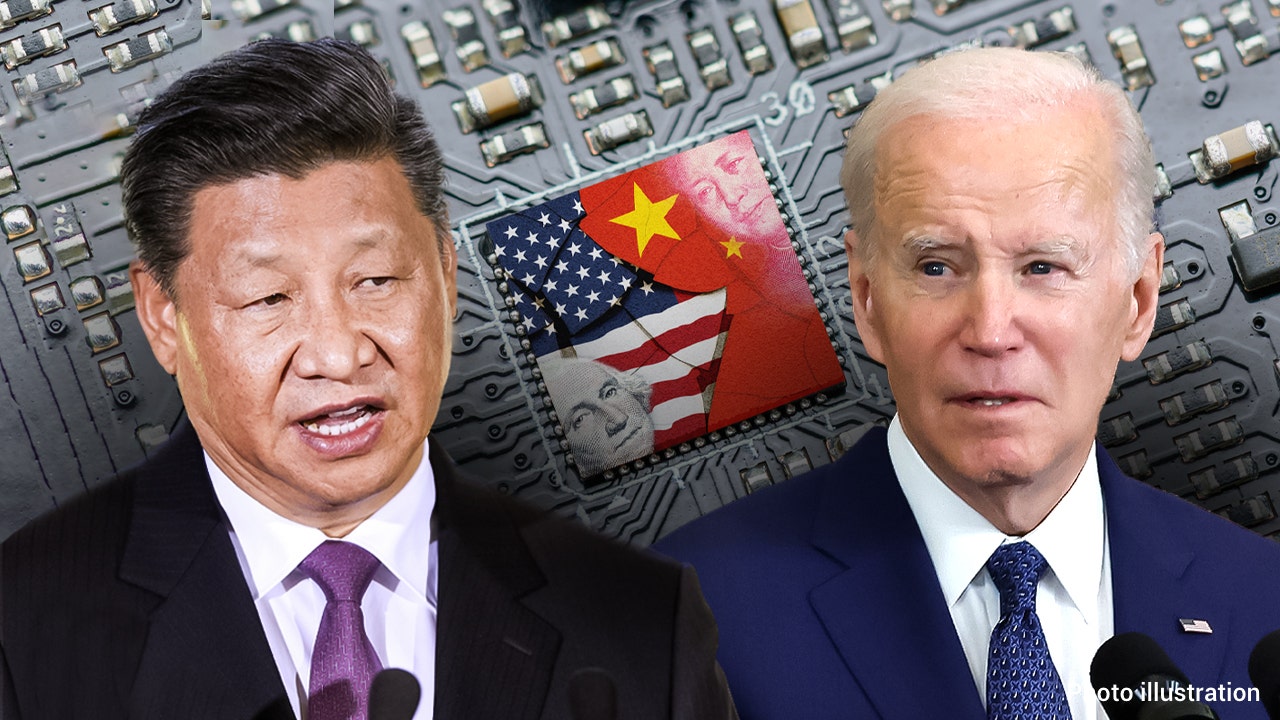
Cover image from foxnews.com, which was analyzed for this article
Firms like CXMT raised prices on AI demand from Huawei while drawing US attention over supply chains. Coverage highlights tech competition and national security angles.
PoliticalOS
Friday, July 24, 2026 — Tech
US restrictions have not prevented Huawei’s reported chip revenue from rising sharply under Chinese state procurement and grants. The United States retains the large majority of global AI compute capacity, yet questions persist about whether controls have achieved their security objectives or accelerated Chinese self-reliance.
What outlets missed
Most coverage omitted the Commerce Department’s explicit national-security rationale focused on weapons of mass destruction and military decision-making systems. Few reports quantified the United States’ retained 75 percent share of global AI compute capacity alongside Huawei’s revenue growth. Details on CXMT’s specific price hikes and supply-chain links to Huawei remain largely unverified across outlets.
Biden Chip Export Controls Fuel Huawei Growth
The Biden administration's 2023 export controls on advanced semiconductors aimed to hinder China's technological progress by restricting access to cutting-edge chip technology. Instead, the measures appear to have accelerated the rise of Huawei, China's largest technology company, which is now projected to see its chip revenue climb sharply.
Analysts estimate Huawei's chip revenue will reach about $12 billion by the end of 2026, up from $7.5 billion in 2025. This represents a roughly 60 percent increase following the imposition of U.S. restrictions. Chinese state agencies were directed to purchase hardware, chips, mobile devices, and software from Huawei, supplemented by more than $1 billion in government grants.
Nvidia chief executive Jensen Huang described Huawei as the single most formidable technology company in China. The company's ability to sustain and expand operations under sanctions illustrates how targeted government interventions can produce results contrary to their stated goals. Companies facing barriers often redirect resources toward domestic alternatives, building resilience that might not have developed otherwise.
The controls sought to limit China's advancement in areas like artificial intelligence and high-performance computing. Yet Huawei has continued to develop its own capabilities, posting revenue growth that exceeds earlier forecasts. This outcome aligns with patterns observed in past efforts to manage technology flows through regulation, where restricted parties adapt by prioritizing internal production and supply chains.
Critics of expansive export policies have long noted their tendency to impose costs on both the targeted nation and the imposing one. American firms lose market access, while foreign competitors gain incentives to innovate around the barriers. In this case, the policy coincided with Huawei positioning itself as a central supplier for China's technology needs.
Data from industry trackers show the revenue trajectory predates the latest restrictions but accelerated afterward. The shift underscores how centralized directives in China, including mandated purchases, can concentrate resources in favored entities. Huawei benefited directly from these coordinated efforts, turning potential setbacks into expanded domestic dominance.
Such developments raise questions about the effectiveness of broad-brush trade restrictions in achieving precise technological containment. Markets respond to incentives, and when governments alter those incentives, participants adjust in ways that often evade the original intent. Historical examples of similar interventions, from steel tariffs to technology embargoes, frequently demonstrate this adaptive response.
The focus now turns to whether future policies will account for these dynamics or repeat the cycle of restrictions followed by accelerated self-sufficiency abroad. Huawei's performance provides a concrete case of how one company's trajectory can diverge from policymakers' expectations when state support meets external pressure.
You just read Conservative's take. Want to read what actually happened?
More in Technology

Democratic Wins Heighten Scrutiny of Data Center Expansion
Newly empowered Democrats signaled opposition to rapid AI data center growth on public lands and elsewhere. This contributed to market pressure on chipmakers and infrastructure firms.
Nvidia Faces Added Scrutiny on AI Shipments After Midterms
Nvidia faces increased monitoring of accelerator shipments amid smuggling concerns to China. Broader regulatory uncertainty from the election weighed on the sector.

Google Ties Search Access to AI Opt-In for K-12 Schools
Google will turn its AI tools off by default for K-12 students starting in 2027 and will restrict Search access for schools that fully block AI. The policy reflects deeper integration of AI into core products. Right-leaning New York Post and tech coverage noted the changes.

FBI Ties $6.3 Billion Binance Hack to North Korea; Pyongyang Fires Missiles
The FBI linked the theft of over $6 billion in cryptocurrency from Binance to North Korea's Lazarus Group, citing social engineering. Laundering the funds is expected to take months. Engadget, New York Post, and other outlets reported on the investigation.
The Compass
You just read five takes on one story.
What's your take? Find your political shape in a few minutes.
Take the test