
China Chip Makers Raise Prices on AI Demand as US Tightens Scrutiny
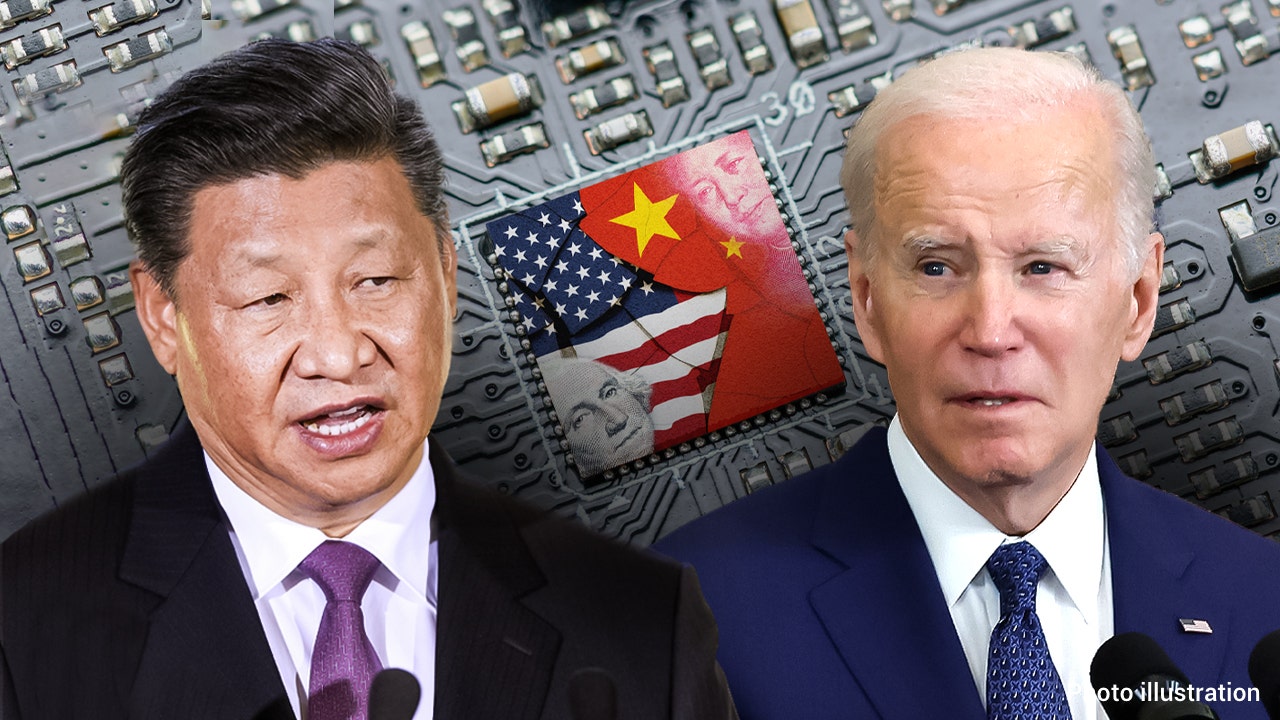
Cover image from foxnews.com, which was analyzed for this article
Firms like CXMT raised prices on AI demand from Huawei while drawing US attention over supply chains. Coverage highlights tech competition and national security angles.
PoliticalOS
Friday, July 24, 2026 — Tech
US restrictions have not prevented Huawei’s reported chip revenue from rising sharply under Chinese state procurement and grants. The United States retains the large majority of global AI compute capacity, yet questions persist about whether controls have achieved their security objectives or accelerated Chinese self-reliance.
What outlets missed
Most coverage omitted the Commerce Department’s explicit national-security rationale focused on weapons of mass destruction and military decision-making systems. Few reports quantified the United States’ retained 75 percent share of global AI compute capacity alongside Huawei’s revenue growth. Details on CXMT’s specific price hikes and supply-chain links to Huawei remain largely unverified across outlets.
Supreme Court Backs Birthright Citizenship in Major Ruling
The Supreme Court closed its term with a 5 to 4 decision in Trump v. Barbara that keeps birthright citizenship in place for children born on American soil to parents who entered the country illegally. The ruling drew immediate fire from conservative legal voices who see it as another example of judges stretching the 14th Amendment beyond its original meaning. Critics pointed out that the amendment was meant to grant citizenship to those fully subject to American jurisdiction after the Civil War, not to reward unlawful presence.
Justice Amy Coney Barrett joined the majority, a move that drew sharp rebukes from movement conservatives who had counted on a different outcome. Within hours of the announcement, prominent voices on the right began framing the case as the next target for reversal. They argued that the court had once again elevated policy preferences over text and history, and they called for a sustained campaign to correct it through new appointments, legislation, and public pressure. The language echoed past fights over Roe v. Wade, with some declaring that the resources of the conservative legal network must now focus on sending this decision to the same fate.
This reaction highlights a pattern that has grown clearer in recent years. When the court hands down rulings that expand federal power or reinterpret founding principles in expansive ways, organized opposition does not simply accept the result as final. Instead, it treats the decision as one stage in an ongoing contest over constitutional meaning. The birthright citizenship case fits squarely inside that tradition. The 14th Amendment’s Citizenship Clause was never intended to create an automatic pathway to citizenship for anyone who manages to give birth inside the border. Early debates and court records show the phrase “subject to the jurisdiction thereof” was understood to exclude children of foreign diplomats and, by logical extension, those whose parents owe allegiance to another sovereign.
Public sentiment has tracked this view for decades. Polls have repeatedly shown majorities favoring limits on automatic citizenship for children of illegal immigrants. State legislatures have considered measures to deny state benefits tied to such citizenship, and candidates for national office have run on promises to narrow the practice through executive action or constitutional clarification. The court’s decision does not erase that underlying disagreement. It simply shifts the arena where the argument will continue.
The conservative response also reflects a broader skepticism toward the idea that nine justices possess the final word on every constitutional question. Americans have challenged Supreme Court precedents before, sometimes successfully. The court itself reversed course on issues ranging from economic regulation to criminal procedure after sustained political and intellectual pressure altered the composition of the bench and the surrounding legal culture. The current push against Trump v. Barbara follows the same logic.
Meanwhile, the practical effects of the status quo remain visible at the southern border. Record encounters with illegal crossers have produced thousands of births inside the United States each year to parents without legal status. These children receive citizenship, access to federal programs, and a platform for chain migration that extends well beyond the original family unit. Enforcement agencies report that the promise of citizenship functions as a powerful incentive for some migrants to attempt dangerous crossings. The court’s ruling leaves this dynamic untouched.
Conservative strategists are already mapping next steps. Some focus on legislation that would clarify the meaning of jurisdiction under the 14th Amendment. Others emphasize the importance of future judicial nominees who view the clause through an originalist lens. Still others stress the role of state attorneys general in testing the limits of the ruling through targeted litigation. The common thread is a refusal to treat the decision as settled law immune from further scrutiny.
The episode underscores that constitutional interpretation in America has never been the exclusive property of the judiciary. The people and their elected representatives retain the capacity to press alternative readings, especially when the court’s conclusions rest on contested historical claims. The fight over birthright citizenship is simply the latest demonstration of that enduring reality.
You just read America First's take. Want to read what actually happened?
More in Technology

Democratic Wins Heighten Scrutiny of Data Center Expansion
Newly empowered Democrats signaled opposition to rapid AI data center growth on public lands and elsewhere. This contributed to market pressure on chipmakers and infrastructure firms.
Nvidia Faces Added Scrutiny on AI Shipments After Midterms
Nvidia faces increased monitoring of accelerator shipments amid smuggling concerns to China. Broader regulatory uncertainty from the election weighed on the sector.

Google Ties Search Access to AI Opt-In for K-12 Schools
Google will turn its AI tools off by default for K-12 students starting in 2027 and will restrict Search access for schools that fully block AI. The policy reflects deeper integration of AI into core products. Right-leaning New York Post and tech coverage noted the changes.

FBI Ties $6.3 Billion Binance Hack to North Korea; Pyongyang Fires Missiles
The FBI linked the theft of over $6 billion in cryptocurrency from Binance to North Korea's Lazarus Group, citing social engineering. Laundering the funds is expected to take months. Engadget, New York Post, and other outlets reported on the investigation.
The Compass
You just read five takes on one story.
What's your take? Find your political shape in a few minutes.
Take the test