
Democratic-Backed Judge Chris Taylor Wins Wisconsin Supreme Court Race, Expanding Liberal Majority to 5-2

Cover image from talkingpointsmemo.com, which was analyzed for this article
Democrat-aligned Judge Chris Taylor secured victory in Wisconsin's Supreme Court election, expanding the court's liberal majority to 5-2 and delivering a key win for Democrats on issues like abortion rights. The race drew national attention as a bellwether for judicial balance in a battleground state. Coverage highlighted Democrats' off-year overperformance.
PoliticalOS
Wednesday, April 8, 2026 — Politics
Chris Taylor's decisive win solidifies Wisconsin Supreme Court's 5-2 liberal majority through 2030, amid pending cases on abortion, unions, redistricting and elections. Nonpartisan races draw partisan money, with this quieter $8.9M contest following $100M+ predecessors. Readers should note fiscal contexts like Act 10 and recent map rulings for balanced policy views.
What outlets missed
Most outlets downplayed Act 10's 2011 fiscal crisis context ($3.6 billion deficit) framing it solely as union power limits, omitting savings from employee contributions. They underemphasized the nonpartisan ballot structure despite partisan backing, and recent March 31, 2026, federal dismissal of a congressional gerrymander suit. Full justice names and Bradley's exact retirement timeline were often glossed over, as was precise 2022 map imposition details amid legislative impasse.
MADISON, Wis. (AP) — Democratic-backed appeals court Judge Chris Taylor defeated Republican-backed appeals court Judge Maria Lazar in Wisconsin's nonpartisan Supreme Court election on April 7, 2026, securing a 10-year term and expanding the court's liberal majority from 4-3 to 5-2, according to results reported by the Associated Press and the New York Times election tracker.
With 95% of votes counted as of April 8, 2026 morning, Taylor held 60.1% (901,822 votes) to Lazar's 39.8% (597,291 votes), per the New York Times tracker cited in Talking Points Memo reporting. The race replaced retiring conservative Justice Rebecca Bradley, whose seat opened after her 2015 appointment by then-Gov. Scott Walker (R). Liberals — identified as Ann Walsh Bradley, Rebecca Dallet, Jill Karofsky and Janet Protasiewicz — now join Taylor for a 5-2 majority with conservatives Annette Ziegler and Brian Hagedorn, per Wisconsin Courts records and Ballotpedia.
The election drew $8.9 million in spending as of late March 2026, with Taylor's campaign and allies holding a 9-1 advantage, according to WisPolitics.com analysis cited in the Washington Post. Taylor, 52, a former Democratic state legislator and Planned Parenthood lobbyist, received endorsements from Sen. Tammy Baldwin (D-Wis.), former Attorney General Eric Holder and former President Barack Obama in the campaign's final week, per Talking Points Memo and Wisconsin Public Radio. Lazar, 54, a former deputy attorney general under Walker, visited county Republican offices to close out campaigning, as noted by the Washington Post.
Wisconsin Supreme Court races are officially nonpartisan, with no party labels on ballots, but received heavy partisan funding and endorsements, Ballotpedia confirms. Taylor campaigned on reproductive rights, criticizing the U.S. Supreme Court's 2022 Dobbs decision overturning Roe v. Wade, per Washington Post debate coverage. In 2024, the state court blocked enforcement of an 1849 abortion ban nearly all abortions; Taylor praised the 4-3 ruling, while Lazar said she would respect precedent without specifying her vote, according to the same report.
On unions, Taylor has criticized 2011's Act 10, which limited public employee collective bargaining amid a $3.6 billion two-year state budget deficit, requiring contributions of about 5.8% of salary to pensions and 12.6% to health premiums (exempting public safety unions), per Wisconsin legislative records and Wikipedia summary. Lazar defended Act 10 as state attorney; a new challenge is pending before appeals court, potentially reaching the Supreme Court, Washington Post reported. Both candidates recused from commenting on merits.
Redistricting disputes loom: Current congressional maps, imposed by state court in 2022 on a 'least change' basis from 2011 after legislative deadlock post-2020 census, yield six Republican and two Democratic House seats, per Wisconsin Supreme Court order and Washington Post. Taylor, as lawmaker, opposed GOP gerrymanders; Lazar defended 2012 maps as state attorney and opposes frequent litigation, favoring decennial redraws, the Post noted. A three-judge federal panel dismissed a gerrymander challenge on March 31, 2026, citing no authority to override state maps, Wisconsin Public Radio reported — disputed fact, as state panels may still rule.
Election administration cases may arise, as in 2020 when the then-conservative court 4-3 upheld Joe Biden's win over Donald Trump. Taylor affirmed the ruling; Lazar acknowledged Biden's victory but declined to say how she would rule, per Washington Post. Justice Bradley's 2022 Teigen v. WEC opinion banned unstaffed drop boxes on statutory grounds (Wis. Stat. § 6.87); liberals overturned it in 2024's Priorities USA on municipal discretion, not fraud claims, court records show — Guardian misattributed it to 'false fraud claims.'
This marks the fourth straight win for liberal-aligned candidates: In April 2023, Janet Protasiewicz's victory in the U.S.'s most expensive judicial race ($100 million+, per Brennan Center cited in Guardian) flipped the court 4-3 liberal after 15 years of conservative control. In 2025, Susan Crawford prevailed, per Talking Points Memo. Liberals now control until at least 2030, though Taylor warned turnover risk in Politico interview cited by Guardian.
The 'sleepy' race followed high-drama predecessors, with over half of voters undecided in Marquette Law School's March 2026 poll, per Guardian. Taylor barnstormed; Lazar called her opponent too partisan, saying 'the court is not for sale' at a GOP event, Wisconsin Public Radio reported. Taylor emphasized a 'pro-democracy majority' at Democratic headquarters.
UW-Madison Prof. Howard Schweber told Talking Points Memo judicial panels are 'pretty much certain' to find maps unconstitutional — unverified prediction, as no public matching statement found; panels could redraw maps appealable to the court. Future cases may include electronic ballots for disabled voters and voter citizenship audits, per Votebeat cited in TPM.
Conservatives upheld GOP laws like voter photo ID and gun rights expansions pre-2023. No immediate rulings expected before fall 2026 midterms. Taylor's term runs through 2036.
Coverage ranged from Washington Post's issue-balanced preview with mild pro-liberal framing on power shifts, to Guardian's election-focused 'pro-democracy' emphasis against GOP 'hindrances.' TPM posts were most celebratory, treating nonpartisan ideological wins as direct Democratic expansions with unverified predictions. Overall left-leaning tilt celebrated liberal gains amid swing-state stakes.
Behind the Coverage
washingtonpost.com
Most biased
theguardian.com
talkingpointsmemo.com
Least biased
talkingpointsmemo.com
Least biased
What each outlet got wrong
washingtonpost.com
Framed the lede around Democrats seeking to 'curtail GOP power in the swing state by lifting union restrictions and redrawing congressional districts,' portraying liberal goals positively while calling the 2023 liberal win a 'seismic event' that ended conservatives' 'safe harbor.'
Our version: The neutral version factually notes the court's ideological shift from 4-3 to 5-2 liberal without implying partisan power struggles or dramatic upheavals.
theguardian.com
Portrayed Taylor as building a 'pro-democracy majority' and 'friendly to voting rights,' while linking conservative Justice Bradley's drop box ban to 'false election fraud claims about mail ballots' and conservatives 'pushing for policies that could hinder voting access.'
Our version: The neutral version explains the Teigen v. WEC drop box ruling was based on statutory grounds (Wis. Stat. § 6.87), overturned on municipal discretion, and covers issues like abortion and unions evenly without partisan moral labels.
talkingpointsmemo.com
Used headlines like 'Democrats Expand Their Majority on Wisconsin’s Critical State Supreme Court' and 'Dem-Backed Judge Wins Wisconsin Supreme Court Seat, Expanding Its Liberal Majority,' treating the nonpartisan race as direct partisan control; promoted unverified UW-Madison Prof. Howard Schweber quote that panels are 'pretty much certain' to find maps unconstitutional.
Our version: The neutral version specifies 'Democratic-backed' vs. 'Republican-backed' candidates in a confirmed nonpartisan election, notes Schweber's prediction as unverified with no public matching statement, and includes the recent federal panel dismissal.
Facts outlets left out
Act 10 was enacted amid a $3.6 billion two-year state budget deficit, requiring public employees to contribute ~5.8% of salary to pensions and 12.6% to health premiums (exempting public safety unions).
Omitted by: washingtonpost.com, theguardian.com
Current congressional maps were court-imposed in 2022 on a 'least change' basis from 2011 after legislative deadlock post-2020 census.
Omitted by: washingtonpost.com, talkingpointsmemo.com
A three-judge federal panel dismissed a gerrymander challenge on March 31, 2026, citing no authority to override state maps.
Omitted by: washingtonpost.com, talkingpointsmemo.com
Wisconsin Supreme Court races are officially nonpartisan with no party labels on ballots, despite partisan funding.
Omitted by: talkingpointsmemo.com
Full court composition post-election: liberals Ann Walsh Bradley, Rebecca Dallet, Jill Karofsky, Janet Protasiewicz, Chris Taylor; conservatives Annette Ziegler, Brian Hagedorn.
Omitted by: theguardian.com, talkingpointsmemo.com
Framing tricks we caught
Loaded lede
“Washington Post: 'Voters will decide Tuesday whether to expand the liberal majority on Wisconsin’s top court as Democrats and their backers seek to curtail GOP power in the swing state by lifting union restrictions and redrawing congressional districts.'”
Neutral alternative: Neutral version leads with factual results and court shift: 'Democratic-backed appeals court Judge Chris Taylor defeated Republican-backed appeals court Judge Maria Lazar... expanding the court's liberal majority from 4-3 to 5-2.'
Moral binary language
“Guardian: 'Taylor is seen as friendly to voting rights, while Lazar’s views align more closely with Republicans pushing for policies that could hinder voting access'; drop boxes as 'frequent target of false election fraud claims.'”
Neutral alternative: Neutral version details both candidates' positions on issues like abortion, unions, redistricting, and election cases evenly, clarifying drop box ruling on statutory grounds without fraud dismissal narrative.
Loaded headline
“Talking Points Memo: 'Democrats Expand Their Majority on Wisconsin’s Critical State Supreme Court'; 'Dem-Backed Judge Wins Wisconsin Supreme Court Seat, Expanding Its Liberal Majority.'”
Neutral alternative: Neutral version uses 'Democratic-backed' and 'Republican-backed' in AP-style dateline, emphasizing nonpartisan official status and vote counts.
Source articles
More in Politics

Federal Agents Search Omar Home in Ongoing Immigration Probe
Homeland Security agents searched the Minnesota Democrat's DC residence in a criminal probe, prompting accusations of political intimidation from Omar and Democratic leaders. Coverage spans left-leaning outlets like NPR, BBC, and The Guardian alongside right-leaning criticism from The Federalist and Daily Wire.

Trump Diesel Import Plan Draws Pushback Over Russia Ties
The weekend agreement drew bipartisan congressional pushback and criticism from Ukraine's Zelenskyy, with analysts downplaying US fuel price impacts. Right-leaning outlets like National Review, Dispatch, and Washington Examiner questioned its legality and effectiveness.

Independents Test Voter Appetite for Middle Ground in 2026 Midterms
Nearly 200 independents are running in competitive races as voters weigh ballot measures on housing costs in states like Massachusetts. Left-leaning coverage from NYT, NPR, and Guardian highlights turnout and key races while right outlets focus on GOP strategy.
Trump Rallies in Alaska, Ohio to Bolster GOP Senate Candidates
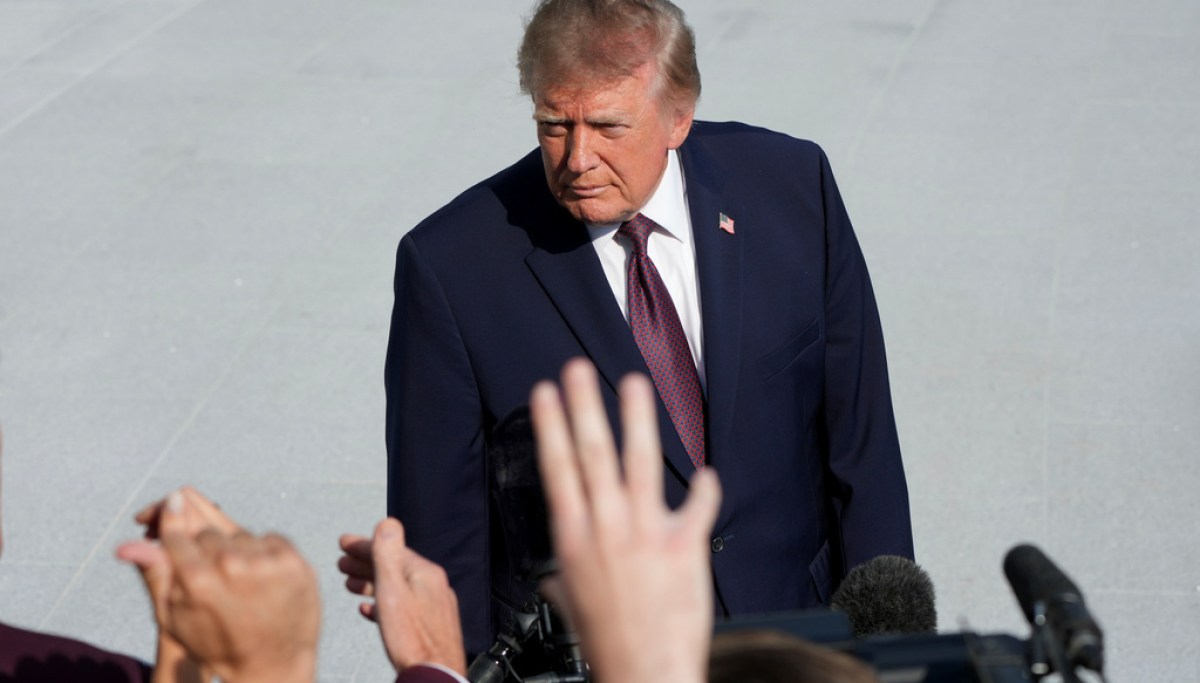
The president rallied in Wasilla for Sen. Dan Sullivan and faced empty seats at an Ohio event amid midterm concerns. Outlets across the spectrum covered the trips as signals of GOP vulnerability weeks before Election Day.
The Compass
You just read five takes on one story.
What's your take? Find your political shape in a few minutes.
Take the test