
CPI Report and Oil Spike at $106 Shape Fed Outlook
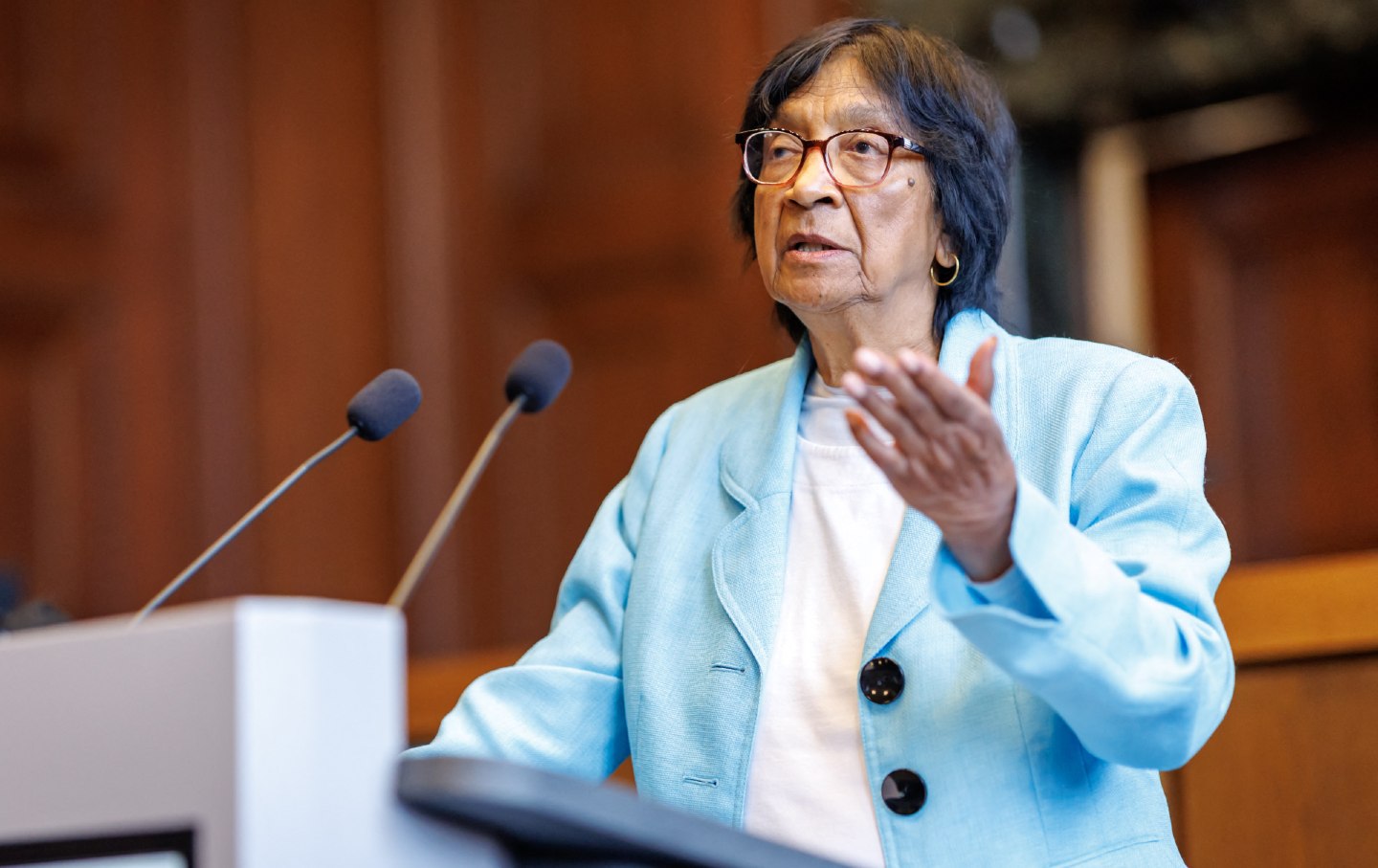
Cover image from thenation.com, which was analyzed for this article
Report expected at 3.6% headline and 2.5% core as oil hits $106/barrel from Middle East tensions. Fed rate decisions hang in balance.
PoliticalOS
Wednesday, October 14, 2026 — Business
The September CPI release will test whether oil-driven price pressures alter expectations for Federal Reserve action. Without relevant reporting from the supplied sources, investors must rely on the consensus forecast of 3.6 percent headline and 2.5 percent core until official data arrives.
What outlets missed
No outlets supplied data on the topic. The provided articles addressed an unrelated Nobel award and UK Labour Party speech instead of inflation or energy markets. No independent verification of the 3.6 percent or 2.5 percent forecasts was possible from the material given. Oil price movements and their direct link to the CPI components therefore remain unexamined in the supplied coverage.
Navi Pillay Receives Nobel Peace Prize for Defending Universal Standards of Law
The Norwegian Nobel Committee’s decision to award this year’s Peace Prize to Navi Pillay highlights a deliberate effort to underscore the role of international institutions at a moment when major powers have openly tested their limits. Pillay, the South African jurist who served as a judge on the International Criminal Court and as the United Nations High Commissioner for Human Rights, has long argued that rules against war crimes and rights abuses apply evenly across borders rather than depending on a state’s alliances or ideology.
Committee members framed the award around the idea that peace depends on consistent application of law. Their statement emphasized that national and international legal systems form the foundation for resolving disputes without violence, a point they tied directly to Pillay’s record. That record includes work on tribunals addressing atrocities in Rwanda and the former Yugoslavia, as well as her later role pressing governments to account for civilian harm in conflicts from Sudan to Myanmar.
Pillay’s approach has drawn notice because it does not exempt powerful actors. During her tenure at the UN human rights office, her office documented concerns over U.S. detention practices, Russian actions in Ukraine, and Israeli policies in the occupied territories. She has also criticized Morocco’s administration of Western Sahara. This even-handed posture aligns with the committee’s warning that selective enforcement weakens the broader system meant to deter large-scale violence.
The timing of the award coincides with active conflicts that test those same mechanisms. In Sudan, competing military factions have displaced millions amid reports of targeted killings. In Myanmar, the military’s campaign against Rohingya populations continues with limited external restraint. Palestinian civilians face high casualties in Gaza under Israeli operations, while Russia’s war in Ukraine has produced documented violations of conventions on civilian protection. Each case illustrates the gap between legal standards and state behavior when enforcement relies on political will that often proves inconsistent.
Pillay has described human rights principles as non-negotiable regardless of the violator’s position in the international order. That stance reflects her background in post-apartheid South Africa, where legal accountability formed part of the transition from minority rule. It also mirrors debates within the United States and Europe about whether institutions built after 1945 can adapt to renewed great-power competition without losing credibility.
Critics of the current system note that enforcement remains uneven, with permanent members of the UN Security Council able to shield allies or themselves through veto power. Supporters counter that the alternative—abandoning the framework entirely—would remove even the limited tools available for documentation, sanctions, and referral to courts. Pillay’s selection appears aimed at reinforcing the former view by recognizing an individual whose career has operated within those constraints while insisting on their impartial use.
The award does not resolve the practical difficulties of securing compliance from states that view legal obligations as optional. It does, however, signal that the committee sees continued investment in those obligations as essential rather than outdated. Pillay’s acceptance speech is expected to focus on the practical steps needed to close the distance between stated rules and observed conduct, including stronger support for independent investigations and domestic incorporation of international standards.
In an environment where several governments have questioned the legitimacy of bodies like the International Criminal Court or the UN Human Rights Council, the choice of Pillay frames the debate around the costs of erosion rather than the benefits of selective application. Whether that framing influences policy remains to be seen, but the committee’s emphasis on law as a precondition for peace offers a clear benchmark against which future actions can be measured.
You just read Liberal's take. Want to read what actually happened?
More in Business & Economy

Business Activity Holds Up as Selling Prices Rise Fastest Since 2022
S&P Global PMI shows robust activity but selling prices rise at fastest pace since 2022 amid energy and supply chain costs. Halloween candy prices jump 7.7%.

Stock Futures Climb on Anthropic IPO Filing and AI Financing
Major indices rose on enthusiasm from Anthropic's IPO filing and broader AI infrastructure announcements including Meta's massive fundraising plans. Investors are betting heavily on continued AI growth despite valuation concerns.

Tariffs and AI Transition Fuel Growth and Job Worries
Trump's tariff rhetoric and AI-driven restructuring raised concerns about growth, inflation, and job impacts as markets reacted to geopolitical and tech shifts.

AI Companies Weigh Early IPOs as Risks Mount
Nasdaq fell sharply amid concerns over AI spending sustainability and data center costs; Nvidia, Meta, and others were hit as Meta and Tesla reported earnings.
The Compass
You just read five takes on one story.
What's your take? Find your political shape in a few minutes.
Take the test