
Cubans Scrape By as Decades-Old Ration System Collapses
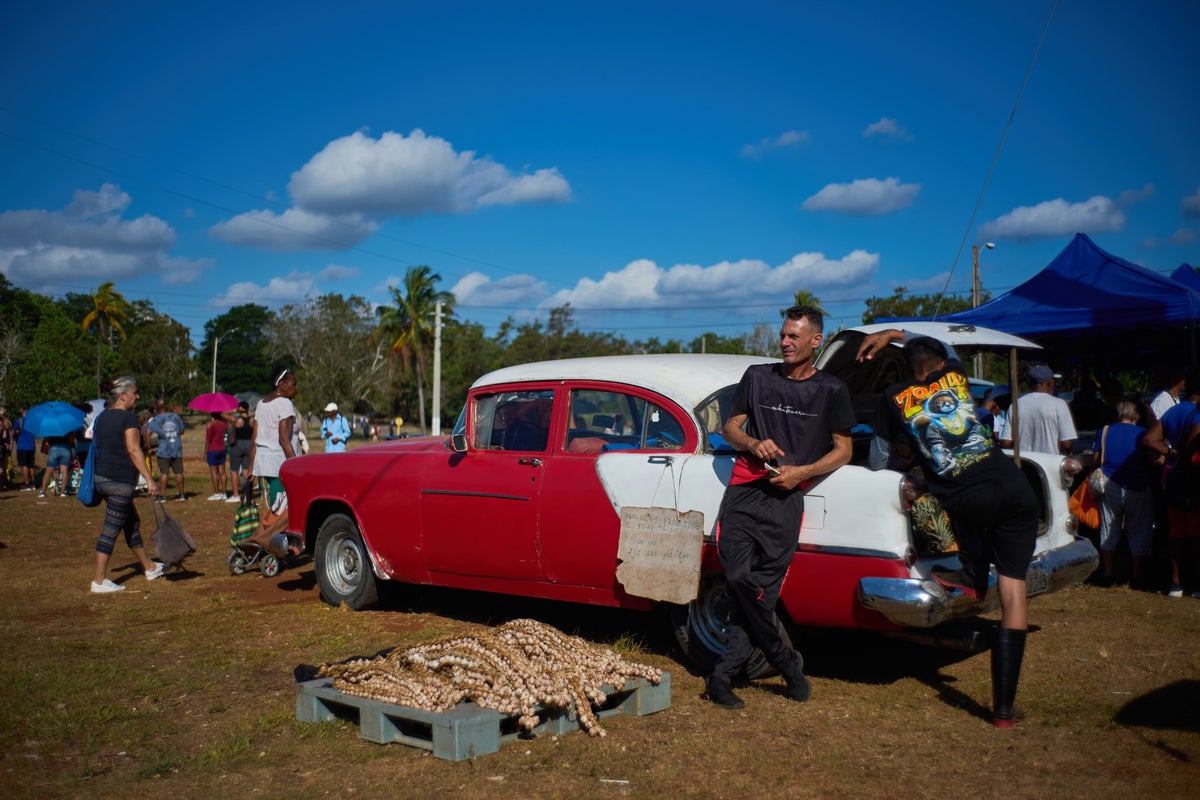
Cover image from independent.co.uk, which was analyzed for this article
Cubans are struggling to survive as the economy collapses, prices soar, and long-standing government ration books provide fewer and fewer products. Pocket-size rations are insufficient amid dwindling supplies.
PoliticalOS
Sunday, May 3, 2026 — Business
Cuba's ration system, the backbone of daily survival for more than six decades, is failing under the combined weight of chronic fiscal mismanagement, currency disasters, military dominance of hard-currency sectors, longstanding U.S. sanctions and the loss of Venezuelan oil. The crisis is real, multidimensional and worsening; residents are already choosing between beans and sugar, one meal or none. How the government executes its promised shift to targeted aid — and whether external pressures ease — will decide if this becomes a managed transition or a deeper social rupture.
What outlets missed
Most accounts omitted the military conglomerate GAESA's central role in controlling tourism revenue, foreign currency inflows and food import decisions, facts documented in CSIS and Miami Herald reporting that shift emphasis from pure scarcity to allocation priorities. Coverage also underplayed verifiable U.S. agricultural exports to Cuba — hundreds of millions of dollars in chicken, pork and rice sold on cash terms in 2025 — which demonstrate that some hard-currency food trade continues despite sanctions. The government's April 2026 pilot program to begin phasing out universal rations in favor of targeted subsidies for vulnerable groups received almost no attention, even though it directly addresses the libreta's future. Finally, compensatory Russian oil shipments of roughly 730,000 barrels in March 2026 and precise pre-2026 inflation and peso-devaluation data (77 percent inflation in 2021, 88 percent peso loss 2021-2023) were rarely quantified, leaving readers without a clear chronological or multi-causal picture.
Cuba Faces Deepening Scarcity as Decades of Central Planning Erode Basic Provisions
In central Havana a state-run bodega sits nearly empty under dusty posters that still list prices from another era. José Luis Amate López has worked there for years and says he has gone almost two weeks without a customer except for a scrawny brown kitten that wanders through the silent room. The shelves that once held enough subsidized food to feed 5,000 registered clients now offer little more than dust. This scene repeats across Cuba where the government’s long-standing ration book known as the libreta has become a symbol of an economy that no longer delivers even the modest guarantees it once made.
The libreta was created by Fidel Castro in the early 1960s as a cornerstone of the revolution’s promise to provide for every citizen. Each family received a small booklet that entitled them to fixed quantities of rice beans milk cooking oil fish and even cigarettes at prices kept artificially low by the state. Assigned neighborhood bodegas were supposed to be restocked at the beginning of every month. For a time the system functioned because it rested on massive subsidies first from the Soviet Union and later from Venezuela. When those external supports weakened the entire structure began to crack.
Cuba’s economy has been in freefall for several years. Official statistics are scarce but independent economists estimate that the country lost roughly a third of its import capacity after Venezuelan oil shipments dwindled and tourism never fully recovered from the pandemic. Inflation has soared. Many basic goods are now priced in U.S. dollars at government-run hard-currency stores that ordinary Cubans cannot reach with their peso salaries which average the equivalent of twenty to thirty dollars a month. The result is a two-tier system in which those with access to remittances or illegal markets can eat while those without slip further into hunger.
The ration book has shrunk in response. Items that once lasted a family a full month now cover only a week or two at most. Milk allocations for children under seven have been cut. Eggs appear irregularly. Chicken and fish arrive in such small quantities that lines form before dawn and many registered customers still leave empty-handed. Amate López told reporters that no Cuban can truly survive on what the libreta provides anymore. The statement is echoed in conversations across the island where even those who remember the worst days of the 1990s say conditions have deteriorated further.
That earlier crisis known as the Special Period followed the sudden loss of Soviet subsidies after the Berlin Wall fell. Between 1990 and 1995 Cubans lost an average of five to twenty-five percent of their body weight according to a study published in a medical journal. Bread milk eggs and cooking oil became luxuries. Yet many survivors insist the current situation feels more hopeless. In the 1990s the government at least maintained the appearance of equal distribution. Today the state acknowledges it cannot supply the libreta while simultaneously selling the same scarce items for dollars to anyone who possesses them. The contradiction is not lost on citizens who see it as an admission that sixty years of centralized economic management have failed to create self-sufficiency.
The human cost is visible in everyday life. Elderly residents who depend entirely on pensions and the ration book skip meals. Working-age Cubans patch together survival through informal work remittances or by raising chickens in patios and rooftops. Malnutrition clinics report rising cases of anemia and stunted growth among children. Meanwhile the government continues to blame external factors such as the American embargo and the effects of global inflation. Those explanations carry less weight when observers note that other Caribbean nations facing similar external pressures have not seen their food distribution systems collapse so completely.
Cuba’s leadership has experimented with limited private enterprise in recent years allowing small restaurants and private farms to operate under heavy regulation. Yet bureaucratic obstacles and confiscatory taxation have kept these reforms too modest to offset the decline in state production. Agricultural output remains hampered by broken machinery lack of fertilizer and the absence of clear property rights that would encourage farmers to invest in their land. The result is a country that imports roughly two-thirds of its food despite having fertile soil and a favorable climate.
For ordinary Cubans the shrinking libreta is more than an inconvenience. It represents the end of a social contract that once traded political liberty for material security. That contract was never fully honored but its visible unraveling has left millions without even the pretense of a safety net. As shelves remain bare and prices climb beyond reach the question facing Cuba is not simply how to refill the ration book but whether a system built on central direction and suppressed prices can ever produce abundance rather than perpetual shortage. The empty bodegas in Havana suggest the answer has been decades in the making.
You just read Conservative's take. Want to read what actually happened?
More in Business & Economy

Stocks Rise on Earnings as Home Sales Hit Low
Major indices closed mixed to higher, led by healthcare and defensive stocks, as companies like Eli Lilly and UnitedHealth reported strong results. Pending home sales hit record lows.

US Stocks Mixed as Tech Rebounds on AI Optimism
The Dow slipped slightly while the S&P 500 and Nasdaq rose, led by Nvidia, AMD, and Intel gains on renewed AI sector confidence after prior drops. Broader market volatility tied to earnings and data center demand.

Trump Unveils $8 Billion Diesel Relief for Farmers
The Agriculture Department launched the program to offset record diesel prices for farmers, framed as economic aid and a midterm pitch in Kansas amid ongoing inflation and energy cost pressures.
CPI Rises to 3.7 Percent as Energy Costs Climb Amid Iran Conflict
Hotter-than-expected CPI figures fueled rate hike fears and contributed to sharp declines in AI and tech stocks. Left and right economic commentary debates Trump policies versus Fed actions.
The Compass
You just read five takes on one story.
What's your take? Find your political shape in a few minutes.
Take the test