
Cubans Scrape By as Decades-Old Ration System Collapses
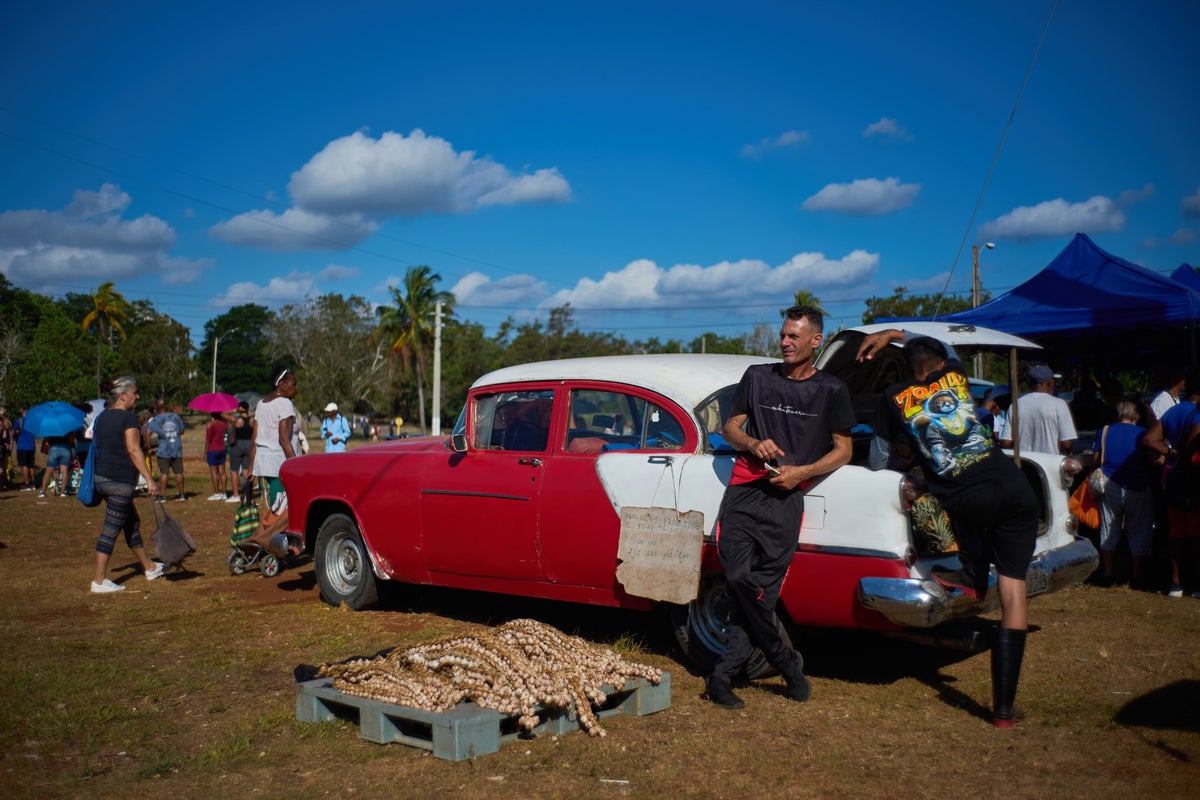
Cover image from independent.co.uk, which was analyzed for this article
Cubans are struggling to survive as the economy collapses, prices soar, and long-standing government ration books provide fewer and fewer products. Pocket-size rations are insufficient amid dwindling supplies.
PoliticalOS
Sunday, May 3, 2026 — Business
Cuba's ration system, the backbone of daily survival for more than six decades, is failing under the combined weight of chronic fiscal mismanagement, currency disasters, military dominance of hard-currency sectors, longstanding U.S. sanctions and the loss of Venezuelan oil. The crisis is real, multidimensional and worsening; residents are already choosing between beans and sugar, one meal or none. How the government executes its promised shift to targeted aid — and whether external pressures ease — will decide if this becomes a managed transition or a deeper social rupture.
What outlets missed
Most accounts omitted the military conglomerate GAESA's central role in controlling tourism revenue, foreign currency inflows and food import decisions, facts documented in CSIS and Miami Herald reporting that shift emphasis from pure scarcity to allocation priorities. Coverage also underplayed verifiable U.S. agricultural exports to Cuba — hundreds of millions of dollars in chicken, pork and rice sold on cash terms in 2025 — which demonstrate that some hard-currency food trade continues despite sanctions. The government's April 2026 pilot program to begin phasing out universal rations in favor of targeted subsidies for vulnerable groups received almost no attention, even though it directly addresses the libreta's future. Finally, compensatory Russian oil shipments of roughly 730,000 barrels in March 2026 and precise pre-2026 inflation and peso-devaluation data (77 percent inflation in 2021, 88 percent peso loss 2021-2023) were rarely quantified, leaving readers without a clear chronological or multi-causal picture.
Economic Crisis Guts Cuba's Revolutionary Ration System Leaving Millions Without Enough to Eat
In a dimly lit state-run bodega in central Havana the shelves that once groaned under the weight of subsidized staples now collect dust. José Luis Amate López has not had a real customer in nearly two weeks. The only living thing that regularly appears is a scrawny brown kitten slinking between empty crates. For the roughly 5,000 people assigned to this single store the monthly trip that used to guarantee survival has become an exercise in disappointment.
The Cuban libreta the pocket-size government ration book introduced by Fidel Castro in the early 1960s was once the cornerstone of daily life in the socialist nation. It promised every family rice beans cooking oil sugar coffee milk eggs and even occasional portions of fish or chicken at prices so low they were virtually symbolic. Bodegas were supposed to be fully stocked by the first of each month. Families could plan their meals around the guaranteed allotment. That system which survived decades of external hostility and internal inefficiency is now disintegrating in plain sight.
Amate López who has worked in the same bodega for years remembers when the room was so packed with crates that staff could barely walk between them. Today it is an empty shell. Dusty posters on the walls still list prices that bear no resemblance to reality. The few items that do arrive are insufficient to feed anyone for more than a few days. “No Cuban can truly survive on the products from the ration book anymore” he said staring at the bare concrete floor.
The collapse of the libreta is not happening in isolation. Cuba’s economy is in freefall. Inflation has pushed the prices of everything not covered by the ration book beyond the reach of ordinary salaries. Basic goods are increasingly sold only in U.S. dollars a currency most Cubans do not earn in meaningful quantities. A socialist country of nearly 11 million people finds itself divided between those who can access remittances or informal dollars and the far larger number who cannot. For the latter the shrinking ration book is the only remaining safety net and that net is tearing.
The situation feels painfully familiar to Cubans who lived through the “Special Period” after the Soviet Union collapsed in the early 1990s. Back then the sudden loss of subsidized oil food and machinery triggered a humanitarian emergency. A medical study from that era found Cubans lost between five and 25 percent of their body weight on average as bread milk eggs and chicken disappeared from tables. The government cut the ration book then too. Yet many who endured those years say the deprivation of 2026 feels more hopeless. At least in the 1990s there was a sense that the crisis had an identifiable external cause the disappearance of the Soviet bloc. Today the causes are multiple and the solutions feel more distant.
Empty shelves are now the norm rather than the exception across the island. Families that once stretched the libreta to cover an entire month now exhaust their allotment in the first week. What little remains is often of poor quality or limited to a few ounces of rice and a small amount of beans. Meat has become a distant memory for many. Vegetables when they appear at all are sold at market prices that swallow a week’s wages in a single purchase.
The human cost is visible in the thinning faces on Havana’s streets and in the growing number of people turning to whatever informal economy they can find. Some sell belongings. Others rely on relatives abroad. A growing segment simply goes without. The government has repeatedly promised reforms and external assistance but the shelves remain bare. Even the bodega workers who are supposed to be the final link in the ration chain find themselves presiding over scarcity they cannot explain to their neighbors.
Photographs from recent weeks show elderly Cubans clutching their battered libreta booklets while standing before rows of empty metal racks. In one image taken inside Amate López’s bodega a framed portrait of Fidel Castro looks down on the scene a silent reminder of the revolutionary promise that every citizen would be guaranteed the basics. That promise made in the flush of victory over dictatorship now collides with the harsh arithmetic of an economy that no longer produces enough to feed its people.
Cuba has faced sanctions pressure from the United States for more than six decades. Officials in Havana have long argued that the embargo exacerbates every shortage. Yet even accounting for that external constraint the internal mismanagement shortages of fuel and foreign currency and the steady erosion of state capacity have left the ration system on life support. What began as a tool of social equality has become a ledger of decline.
For ordinary Cubans the daily reality is simpler and more brutal. A mother in Centro Habana who asked not to be named said she now feeds her two children mainly on rice water and whatever cooking oil she can stretch across two weeks. The milk ration for young children arrives sporadically and in quantities too small to matter. “We are tired of hearing that things will improve” she said. “We just want to eat today.”
As the island’s leadership debates further cuts and possible dollarization of more sectors the libreta’s slow death raises an uncomfortable question for a country that still calls itself socialist. When the state can no longer guarantee the minimum basket of goods that defined the revolution for generations what remains of the social contract? For José Luis Amate López and the thousands of Cubans who stare at the same empty shelves each month that question is no longer theoretical. It is the difference between hunger and starvation measured out in ever-smaller portions.
The kitten keeps returning to the bodega perhaps because even scraps have disappeared everywhere else. The customers have not. They are simply learning to live with less in a country that once believed no one should have to.
You just read Progressive's take. Want to read what actually happened?
More in Business & Economy

Stocks Rise on Earnings as Home Sales Hit Low
Major indices closed mixed to higher, led by healthcare and defensive stocks, as companies like Eli Lilly and UnitedHealth reported strong results. Pending home sales hit record lows.

US Stocks Mixed as Tech Rebounds on AI Optimism
The Dow slipped slightly while the S&P 500 and Nasdaq rose, led by Nvidia, AMD, and Intel gains on renewed AI sector confidence after prior drops. Broader market volatility tied to earnings and data center demand.

Trump Unveils $8 Billion Diesel Relief for Farmers
The Agriculture Department launched the program to offset record diesel prices for farmers, framed as economic aid and a midterm pitch in Kansas amid ongoing inflation and energy cost pressures.

CPI Rises to 3.7 Percent as Energy Costs Climb Amid Iran Conflict
Hotter-than-expected CPI figures fueled rate hike fears and contributed to sharp declines in AI and tech stocks. Left and right economic commentary debates Trump policies versus Fed actions.
The Compass
You just read five takes on one story.
What's your take? Find your political shape in a few minutes.
Take the test