
Off-Grid Data Centers Encounter Setbacks as AI Power Demand Climbs
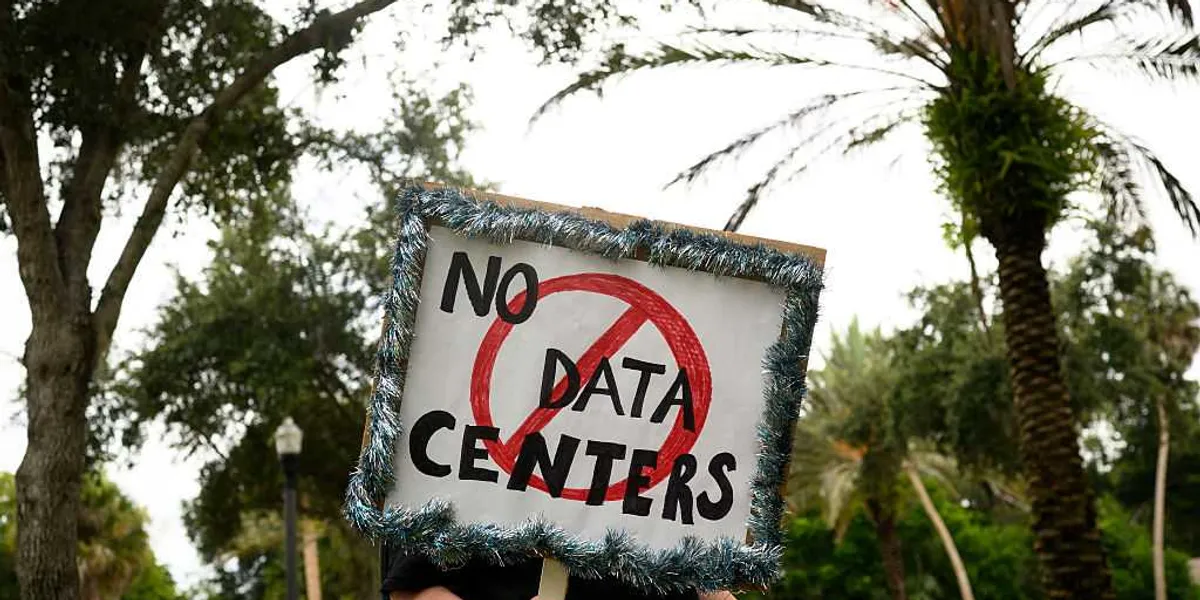
Cover image from theblaze.com, which was analyzed for this article
Off-grid data centers face pushback as AI demand surges, with critics pointing to scarcity politics and infrastructure strain.
PoliticalOS
Monday, July 27, 2026 — Tech
AI-driven demand is accelerating off-grid data-center proposals, yet specific permitting denials and reliability incidents have already surfaced. Whether these projects can deliver at the announced scale without heavier reliance on grid upgrades remains the central open question for investors, utilities, and communities.
What outlets missed
The limited scope of the New Mexico pipeline denial, affecting only one segment rather than halting the full route, received no cross-outlet clarification. Ipsos country-level excitement figures cited in one column could not be corroborated in publicly released summaries from the same survey. No outlet supplied baseline 2023 electricity-consumption shares or 2028 projections alongside the 90-gigawatt behind-the-meter total, leaving readers without scale for evaluating growth claims. Water-use figures for individual facilities were absent from all three pieces despite their relevance to permitting disputes.
Data Centers Power AI Expansion Despite Local Pushback and Infrastructure Hurdles
Loudoun County, Virginia, hosts the world’s largest cluster of data centers, drawing more than 4,100 megawatts of power and supporting roughly 200 facilities that have transformed local finances. County records show each dollar spent on services for the industry returns about $26 in tax revenue, allowing officials to fund schools and roads while lowering property tax rates. Similar patterns appear in other regions where data centers have anchored economic growth tied to cloud computing and artificial intelligence.
This concentration reflects a broader national surge. Research firm Cleanview estimates 59 planned data centers with 90 gigawatts of capacity intend to use behind-the-meter power sources such as gas turbines or fuel cells to bypass grid delays. Twelve large projects tracked by Occam Edge rely primarily on onsite generation, totaling 10.6 gigawatts. Proponents argue these facilities form essential infrastructure for AI training, financial services, and everyday digital activity, much like past investments in ports or power plants.
Local resistance has grown in several states. Officials in New Mexico recently rejected a gas pipeline for Oracle’s 2.5-gigawatt Project Jupiter campus, part of a larger Stargate initiative with OpenAI, potentially adding years to timelines. In Virginia, a smaller off-grid site lost turbine power for 24 hours and switched to diesel generators, prompting complaints about noise and air quality during regional wildfire smoke. Some municipalities have responded with moratoriums or stricter zoning rules aimed at limiting new builds.
Analysts note that such pushback often stems from concerns over electricity demand, water use for cooling, and changes to community character. Yet data from established hubs like Northern Virginia show utility bills remaining near or below national averages and minimal added pollution or noise compared with other industrial sites. The tension arises less from the facilities themselves than from permitting systems built for slower eras, where discretionary reviews can stretch for years without clear standards.
Federal and state policy choices will shape outcomes. Projects that secure reliable power and land face fewer obstacles when regulators streamline interconnection rules or encourage co-location with new generation. Without those adjustments, the trillions in announced AI capital risk delays that compound across supply chains. Communities that integrate data centers into long-term planning, as Loudoun has done since the late 1990s, capture fiscal gains that offset infrastructure costs.
The pattern echoes earlier infrastructure debates, where initial scarcity arguments gave way to expanded capacity once rules adapted. Data centers do not operate in isolation from the grid or local resources, but their scale makes coordinated policy essential rather than reactive blocks. How regulators balance speed with accountability will determine whether AI deployment accelerates or stalls in the coming decade.
You just read Liberal's take. Want to read what actually happened?
More in Technology

Democratic Wins Heighten Scrutiny of Data Center Expansion
Newly empowered Democrats signaled opposition to rapid AI data center growth on public lands and elsewhere. This contributed to market pressure on chipmakers and infrastructure firms.
Nvidia Faces Added Scrutiny on AI Shipments After Midterms
Nvidia faces increased monitoring of accelerator shipments amid smuggling concerns to China. Broader regulatory uncertainty from the election weighed on the sector.

Google Ties Search Access to AI Opt-In for K-12 Schools
Google will turn its AI tools off by default for K-12 students starting in 2027 and will restrict Search access for schools that fully block AI. The policy reflects deeper integration of AI into core products. Right-leaning New York Post and tech coverage noted the changes.

FBI Ties $6.3 Billion Binance Hack to North Korea; Pyongyang Fires Missiles
The FBI linked the theft of over $6 billion in cryptocurrency from Binance to North Korea's Lazarus Group, citing social engineering. Laundering the funds is expected to take months. Engadget, New York Post, and other outlets reported on the investigation.
The Compass
You just read five takes on one story.
What's your take? Find your political shape in a few minutes.
Take the test