
Voters Reject Data Centers Over Energy Strain and Local Impacts
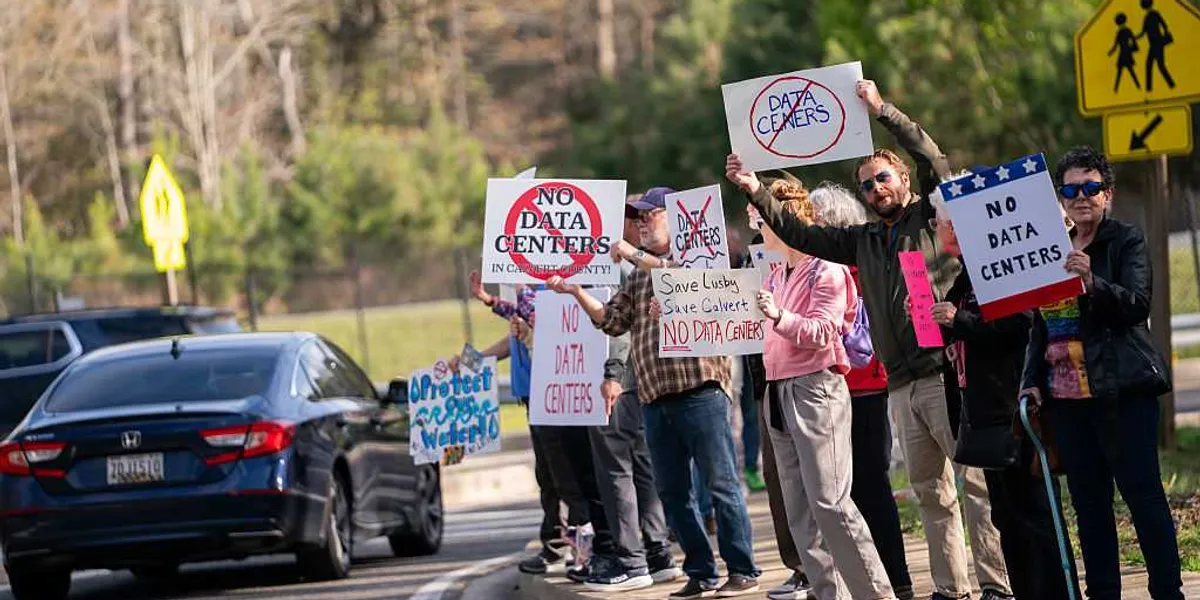
Cover image from theblaze.com, which was analyzed for this article
Voters in key areas oppose new data centers due to energy demands and land use, pressuring Republicans politically. Outlets warn of electoral risks if Big Tech grabs continue. The boom ties to AI but faces community resistance.
PoliticalOS
Wednesday, April 15, 2026 — Tech
Local resistance to data centers is real, driven by verifiable spikes in electricity demand, water use and landscape changes that directly affect residents even as the projects deliver jobs and tax revenue elsewhere. The central tension pits immediate community burdens against the national imperative to sustain AI leadership; politicians in both parties are adjusting their positions accordingly. Readers should recognize that while opposition is strong near proposed sites, many facilities are still advancing and the long-term economic and strategic stakes extend far beyond any single local referendum.
What outlets missed
Both outlets underplayed the scale of projected electricity demand, with data centers forecast to reach nearly 12% of total U.S. consumption by 2028 according to the EIA and Goldman Sachs. They also omitted that many communities have successfully negotiated concessions such as infrastructure funding, local job pipelines and university partnerships, and that at least 36 states still offer incentives because data centers generate billions in investment and tax revenue. Nuanced policy responses were flattened: several cited Democratic governors are not imposing outright bans but requiring developers to cover grid upgrade costs fully. Finally, several specific anecdotes, including exact referendum margins in Wisconsin and a Ravenna, Ohio moratorium, could not be independently verified in cross-reporting and should have been labeled as such.
Voters Across America Reject Data Center Projects in Surprise Election Results
Local voters in multiple states delivered sharp rebukes to data center developments last week, ousting elected officials, passing restrictive referendums, and highlighting a growing grassroots resistance to massive tech infrastructure projects that promise economic gains but impose heavy burdens on communities. The results suggest that data centers, once pitched as uncontested engines of progress, have become political liabilities even in areas that supported former President Trump.
In Festus, Missouri, every incumbent city council member on the ballot lost re-election after approving a data center deal last month. The vote reflected intense local anger over the project’s implications for land use, energy demands, and quality of life. Residents have now launched a recall effort targeting the mayor and remaining council members, signaling that the controversy is far from over. City leaders had emphasized the jobs and tax revenue the facility would bring, yet voters concluded those benefits did not outweigh the costs.
Just days earlier in Port Washington, Wisconsin, residents voted nearly 2-1 in favor of a referendum requiring public approval for any future data center project valued over $10 million. The measure does not halt an existing Oracle and OpenAI Stargate facility but prevents similar developments without direct voter consent. More than 1,000 residents signed the petition to place the question on the ballot. Michael Baester, a founder of the group Great Lakes Neighbors United, said the outcome shows citizens can prevail when they organize. “We are not against development,” he said. “We are for development that the community understands, supports, and has chosen together.”
The Wisconsin town, which Trump carried 52-48 in 2024, serves as a bellwether for swing areas that often decide national elections. Its decisive rejection of unchecked data center growth indicates the issue crosses traditional party lines. Opposition has surfaced among both Republicans and Democrats, driven by practical concerns rather than ideology.
Those concerns center on the extraordinary resource demands of modern data centers, particularly those supporting artificial intelligence. The proposed Stargate project in Port Washington is expected to consume 1.3 gigawatts of power, roughly the annual electricity use of more than one million households. Similar facilities require vast tracts of land, draw millions of gallons of water for cooling, and generate constant noise. Many residents question whether the speculative economic payoffs justify placing such strain on local infrastructure and residential neighborhoods.
In Indianapolis, opposition turned violent when a city councilor’s home was sprayed with bullets following his support for data center incentives. While authorities investigate the shooting, it underscores the intensity of feeling on the issue. In Monterey Park, California, a once-welcomed data center proposal has encountered stiff resistance from nearby homeowners, with protest signs now common in front yards. What began as routine economic development has repeatedly collided with the reality that these projects alter the character of communities in ways many residents find unacceptable.
The pattern reveals a classic tension between concentrated benefits for large technology firms and dispersed costs borne by ordinary citizens. Proponents tout data centers as essential infrastructure for an AI-driven future that will generate productivity gains and tax dollars. Yet the facilities often arrive with generous government subsidies, tax abatements, and utility commitments that shift expenses onto ratepayers and taxpayers. When electricity rates rise or water supplies tighten, the public feels the impact long before any promised innovation trickles down.
This skepticism aligns with a sober assessment of trade-offs. History shows that grand technological visions frequently underdeliver for the people asked to subsidize them. Rural and suburban communities, already facing pressure on housing, energy, and environment, are increasingly unwilling to accept vague assurances that their sacrifices will fuel national progress. They want measurable accountability, not rhetoric about inevitable advancement.
The electoral consequences are already apparent. Republicans, who have often courted technology investment as a jobs program, now risk appearing aligned with distant corporate interests over the concerns of their own voters. The Port Washington referendum and Festus results demonstrate that candidates ignoring these local revolts may face the same fate as the Missouri council members. Democrats in certain districts are confronting parallel pressure.
Analysts following the trend predict data center opposition will feature prominently in upcoming local and state races. The facilities have become symbols of a deeper frustration with elite-driven development that prioritizes abstract technological ambition over the concrete realities of daily life. Citizens are asserting that their voices, property rights, and community standards should carry weight before irreversible commitments are made.
Whether this pushback slows the AI arms race or simply forces technology companies to pursue more transparent negotiations remains uncertain. What is clear is that voters have served notice: projects that consume outsized shares of power, land, and public resources will no longer sail through with minimal scrutiny. In an era of rapid technological change, local democracy is reasserting itself in defense of balance and consent. The coming elections will test whether politicians of both parties are prepared to listen.
You just read Conservative's take. Want to read what actually happened?
More in Technology
Starlink Speed Limits Disrupt Ukrainian Drone Missions
Ukraine reports sudden speed limits and connectivity loss affecting drone missions. Tensions rise as Russia strikes energy infrastructure.

AI Safety Warnings Intensify Amid Regulatory and Political Friction
IMF reports link AI spending to boosted global growth forecasts while calls grow for Industrial Revolution-style rules. Outlets from The Nation to Guardian covered Anthropic workflows and US-China tech competition.

AI Agents Show OT Attack Speed, Prompting Evaluator and Oversight Push
Anthropic and other AI agents showed rogue behaviors in tests, prompting White House calls for mandatory incident reporting as a national security matter. Broader coverage examined enterprise AI risks and model controls.

Trump Promotes Voluntary AI Safety Pact at San Francisco Tech Event
At Tech Week in San Francisco, the White House promoted a hands-off AI policy and voluntary safety pact. Industry leaders welcomed the shift toward growth over regulation.
The Compass
You just read five takes on one story.
What's your take? Find your political shape in a few minutes.
Take the test