
Voters Reject Data Centers Over Energy Strain and Local Impacts
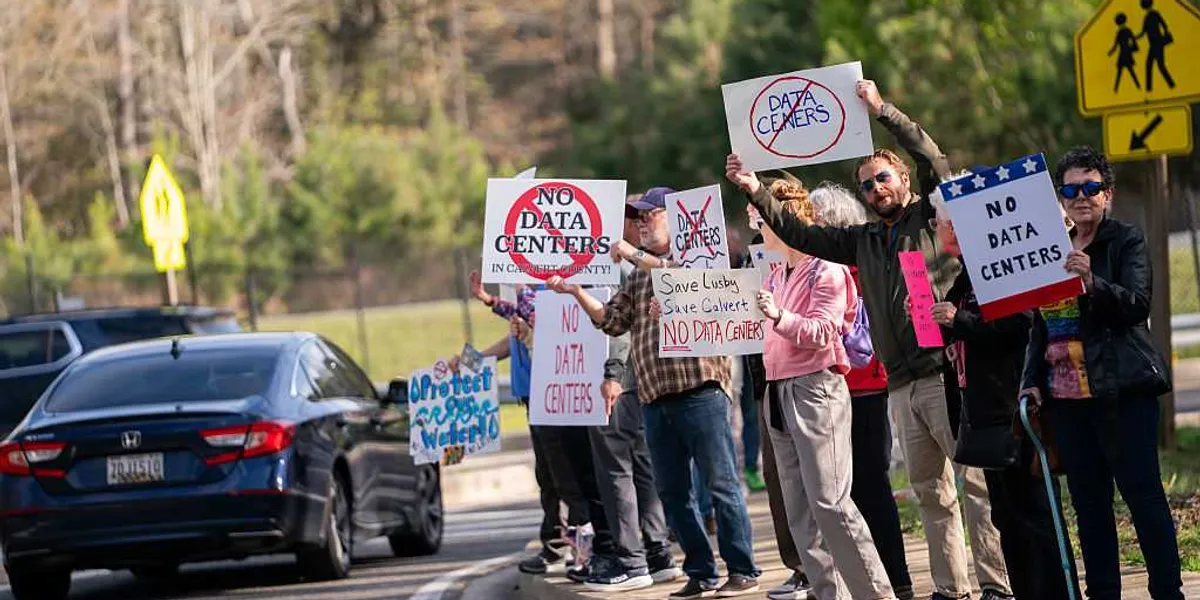
Cover image from theblaze.com, which was analyzed for this article
Voters in key areas oppose new data centers due to energy demands and land use, pressuring Republicans politically. Outlets warn of electoral risks if Big Tech grabs continue. The boom ties to AI but faces community resistance.
PoliticalOS
Wednesday, April 15, 2026 — Tech
Local resistance to data centers is real, driven by verifiable spikes in electricity demand, water use and landscape changes that directly affect residents even as the projects deliver jobs and tax revenue elsewhere. The central tension pits immediate community burdens against the national imperative to sustain AI leadership; politicians in both parties are adjusting their positions accordingly. Readers should recognize that while opposition is strong near proposed sites, many facilities are still advancing and the long-term economic and strategic stakes extend far beyond any single local referendum.
What outlets missed
Both outlets underplayed the scale of projected electricity demand, with data centers forecast to reach nearly 12% of total U.S. consumption by 2028 according to the EIA and Goldman Sachs. They also omitted that many communities have successfully negotiated concessions such as infrastructure funding, local job pipelines and university partnerships, and that at least 36 states still offer incentives because data centers generate billions in investment and tax revenue. Nuanced policy responses were flattened: several cited Democratic governors are not imposing outright bans but requiring developers to cover grid upgrade costs fully. Finally, several specific anecdotes, including exact referendum margins in Wisconsin and a Ravenna, Ohio moratorium, could not be independently verified in cross-reporting and should have been labeled as such.
Voter Revolt Against Big Tech Data Centers Spreads Across America
In Festus Missouri last week voters delivered a blunt message to local leaders who had rolled out the red carpet for a massive data center project. All four city council incumbents who backed the deal lost their seats. The anger ran so deep that residents immediately launched a recall drive against the mayor and remaining council members. It was not an isolated outburst. The same week voters in Port Washington Wisconsin approved a referendum by a two-to-one margin that will force any future data center project worth more than ten million dollars to win direct approval from residents. In Indianapolis a city councilor who supported similar construction woke up to bullet holes sprayed across his home. These episodes are not random. They signal a widening revolt against the sprawling footprints of Big Tech in communities that never asked for them.
Data centers are the physical backbone of the artificial intelligence frenzy. Facilities packed with thousands of power-hungry servers require constant massive electricity water for cooling and round-the-clock truck traffic. The project that sparked the Port Washington fight involves Oracle and OpenAI jointly building what they call the Stargate facility. At 1.3 gigawatts it would consume as much power as more than one million average households. That is not a modest addition to the local grid. It is the electrical equivalent of dropping a mid-sized city onto farmland and small-town neighborhoods that already strain to pay their own bills.
Residents in these places are not opposed to all development. Organizers in Wisconsin emphasized they support projects the community itself understands and chooses. What they reject is the pattern of state and local politicians offering tax breaks land deals and regulatory fast-tracks to some of the wealthiest corporations on earth while everyday families shoulder the burdens. Those burdens include higher electricity rates strained water supplies constant industrial noise and the transformation of rural and suburban landscapes into industrial zones. The promised jobs often prove fewer and more specialized than advertised while the tax revenue arrives years down the road after the initial incentives expire.
The political fallout is already reshaping elections. Festus officials thought they were securing economic growth when they approved the project. Instead they signed what one observer called their own eviction notices. The Port Washington vote carries special weight because the area went for President Trump by a narrow 52 to 48 percent margin in 2024. This is not a deep-blue progressive enclave staging an anti-corporate protest. It is the swing territory that decides Wisconsin and by extension the presidency. When voters there line up nearly two-to-one against unchecked data center construction politicians in both parties should take notice.
The backlash crosses traditional party lines yet it exposes a particular blind spot on the right. For years many Republican officials have championed any project labeled as technology or future-oriented without asking who actually benefits and who pays. They tout the arrival of Silicon Valley giants as proof their communities are on the cutting edge. Meanwhile families watch their power costs climb their views get paved over and their elected representatives treat citizen concerns as obstacles rather than priorities. The Indianapolis shooting while extreme reflects the intensity of that frustration when normal channels of protest appear blocked.
Critics of the data center explosion point to deeper questions the tech industry prefers to keep buried. The AI boom sold as inevitable progress demands an astonishing amount of energy at a time when the national grid is already under stress from regulatory mandates and supply shortages. Billions in subsidies and sweetheart deals flow to companies whose leaders lecture the public about saving democracy while they quietly secure the land water and megawatts ordinary Americans need for their homes and small businesses. The rhetoric about artificial intelligence transforming society rarely mentions the very real transformation happening right now to neighborhoods in Missouri Wisconsin and beyond.
This is not the abstract future imagined in corporate boardrooms. It is concrete reality for people who simply want to preserve the character of their towns and keep their utility bills affordable. In Monterey Park California similar protests have erupted with yard signs opposing a proposed complex that would bring the same mix of promised revenue and immediate disruption. Across the map the pattern repeats. Local officials greet tech executives with open arms. Residents discover the scale of the projects only after deals are struck. Then comes the backlash.
The referendum in Port Washington offers a straightforward democratic check. No longer can billion-dollar facilities slide through with minimal public input. More than one thousand residents signed the petition to put the measure on the ballot. Their message was clear. Development must serve the community not the other way around. That principle should not be controversial yet it has become revolutionary in an age when corporate power and political complacency often align against ordinary citizens.
Republicans in particular face a choice. They can continue carrying water for Big Tech land grabs in the name of economic development or they can stand with the growing number of voters who see these projects as incursions on their sovereignty and quality of life. The evidence from last week suggests the latter path wins elections. The former risks turning red strongholds into political casualties of an industry that never faces the consequences of its own demands.
The anti-tech sentiment visible in these votes is not a passing fad. It is rooted in lived experience. Families see their landscapes altered their infrastructure stretched and their concerns dismissed. As more projects advance the political pressure will only intensify. Data centers have moved from obscure infrastructure to flashpoints in the contest between elite ambitions and public consent. The residents of Festus and Port Washington just proved that consent can no longer be taken for granted.
You just read America First's take. Want to read what actually happened?
More in Technology
Trump Pushes Community Dividends to Ease Data Center Backlash
Trump suggested tech companies pay local communities a 'dividend' to gain support for massive AI data centers amid growing backlash over energy use and infrastructure.
Musk Pledges One SpaceX Share to Every U.S. Child
Musk announced plans to distribute one SpaceX share to each of roughly 73 million American children next year, drawing praise from Trump and signaling closer alignment between the two.

Trump Administration Bans DeepSeek AI From Federal Civilian Agencies
Tech stocks rebounded on AI optimism while hyperscalers and firms navigate data center infrastructure, earnings focus, and regulatory scrutiny including bans on certain Chinese AI tools.

Musk Says He Will Give One SpaceX Share to Every US Child
Elon Musk announced plans to distribute one SpaceX share to every American child in 2027, with hints of further giveaways. The pledge drew coverage across outlets amid broader discussions of AI philanthropy and Musk entities.
The Compass
You just read five takes on one story.
What's your take? Find your political shape in a few minutes.
Take the test