
Democrats Launch Long-Shot 25th Amendment Push to Review Trump's Fitness
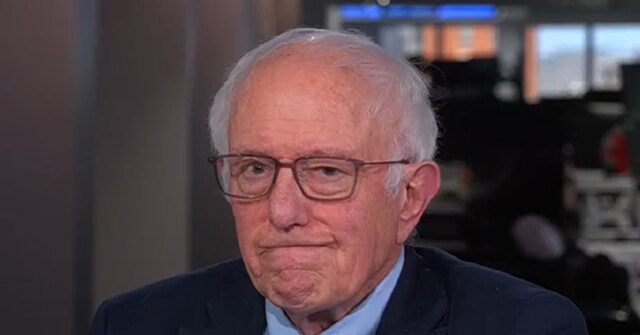
Cover image from breitbart.com, which was analyzed for this article
House Democrats led by Raskin propose an expert panel to evaluate Trump's fitness under the 25th Amendment amid war strains. Critics call him unstable, tying to low polls. Long odds but highlights partisan divides.
PoliticalOS
Wednesday, April 15, 2026 — Politics
Democrats' bill to create an expert panel reviewing Trump's fitness under the 25th Amendment is real but faces insurmountable procedural barriers in a Republican-controlled Congress and White House. It reflects genuine partisan fury over the president's Iran policy and rhetoric yet functions primarily as political messaging rather than a viable removal mechanism. Readers should weigh the documented decline in some polling segments and allied friction against the absence of bipartisan consensus required to alter the constitutional order during an active conflict.
What outlets missed
Most accounts underplayed the sequence of events that produced the current crisis, including specific Iranian threats against U.S. assets that preceded American and Israeli strikes in February 2026. A two-week ceasefire reached in early April received only glancing mention despite its potential to alter threat assessments. Coverage also gave short shrift to the exact legal threshold for the 25th Amendment: even a commission recommendation would still require Vice President Vance and a cabinet majority or supermajorities in Congress. Finally, the distinction between Trump's targeting of Iranian regime infrastructure and hyperbolic characterizations of his language as "genocidal" toward an entire civilization was rarely clarified with primary quotes.
As U.S. forces remain locked in a dangerous conflict with Iran, a group of House Democrats has introduced legislation to examine whether President Donald Trump is fit to continue in office. The effort, framed by its sponsors as a national security imperative, arrives amid allied friction, fluctuating domestic support and sharp questions about presidential rhetoric. It is almost certain to fail.
Rep. Jamie Raskin, D-Md., filed the bill on April 14, 2026, that would create a commission of former high-ranking officials appointed by both parties. The panel could recommend medical or psychological review to determine if the president is "mentally or physically unable" to discharge his duties under Section 4 of the 25th Amendment. According to one account the measure has roughly 50 Democratic cosponsors. A separate group of nearly 100 Democrats had already called for invocation of the amendment after Trump's recent statements on Iran, though the precise tally and wording could not be independently verified across outlets.
The timing is not accidental. The war began with U.S. and Israeli strikes in February 2026. A U.S.-led blockade of Iranian ports followed. Trump has pressed allies, including Italian Prime Minister Giorgia Meloni, to help secure the Strait of Hormuz. Meloni, once a vocal Trump supporter, aligned herself with Pope Leo XIV's criticism of the campaign. Trump responded by calling her position "unacceptable," labeling her a "coward" and accusing her of indifference to Iran's nuclear ambitions. These exchanges, described by critics as unmoored, form a core exhibit in the Democratic case.
Public polling has shown erosion. An analysis cited by multiple outlets found Trump's net approval among non-college white voters, a key demographic, declining noticeably on both general performance and Iran policy. Specific claims of a 34-point plunge tied directly to the war could not be corroborated in primary CNN data reviewed by other reporters.
Sen. Bernie Sanders, I-Vt., has sharply criticized the president, calling his behavior insulting to Catholics and accusing him of enabling a wider regional conflict through alignment with Israeli Prime Minister Benjamin Netanyahu. Reports that Sanders used the phrase "mentally unstable" during an MSNBC appearance on April 14 could not be independently verified; his documented remarks on social media and in other forums echo the substance without that exact televised wording.
The legislation faces structural barriers that are difficult to overstate. Invocation of the 25th Amendment requires the vice president and a majority of the cabinet, or Congress under specific procedures. Vice President JD Vance remains a close Trump ally. Republicans control both chambers. The White House dismissed the bill outright. A spokesman called Raskin "a stupid person's idea of a smart person" and contrasted Trump's "sharpness" and "energy" with the prior administration's alleged concealment of President Biden's condition.
Some conservative voices have also questioned aspects of Trump's Iran strategy. Commentators including Alex Jones and Candace Owens have criticized elements of the campaign, though reports that they explicitly joined 25th Amendment calls were not corroborated elsewhere. Democrats have filed separate articles of impeachment against Trump and Defense Secretary Pete Hegseth, citing alleged violations of congressional war powers.
The central unresolved question is whether these moves represent a good-faith constitutional safeguard or partisan theater staged against the backdrop of real casualties and heightened nuclear risk. Previous attempts to invoke the 25th Amendment against Trump during his first term gained no traction. This version, even if it forces hearings, seems destined for the same fate. Yet it keeps the debate over presidential capacity alive at a moment when the Strait of Hormuz, oil prices and American credibility all hang in the balance.
A two-week ceasefire was reportedly reached in early April. Iranian threats against U.S. interests preceded the initial strikes. Those details, while carried in some international reporting, received less emphasis in coverage centered on domestic finger-pointing. The commission's precise size, reported as 17 members in one outlet, also varied or went unspecified elsewhere.
What emerges is less a realistic removal effort than a diagnostic on American politics: deep distrust, procedural gridlock and the persistent temptation to treat constitutional tools as political weapons. Readers can disagree on Trump's temperament. The mechanics, however, are unforgiving. Without Republican buy-in the bill is theater. The war, by contrast, is not.
More in Politics
Trump at 32% Approval as Gas Prices Test GOP Midterm Hopes
NYT/Siena polling showed Trump's approval at historic lows around 32 percent with Democrats leading by double digits in key districts. Early voting has surged in battleground states.

Record Early Voting Hits Battlegrounds, Shifting Partisan Shares
AP analysis found hundreds of thousands more early ballots than in 2022 in states including Texas, Ohio, Kansas, Maine, and North Carolina, shifting partisan dynamics.
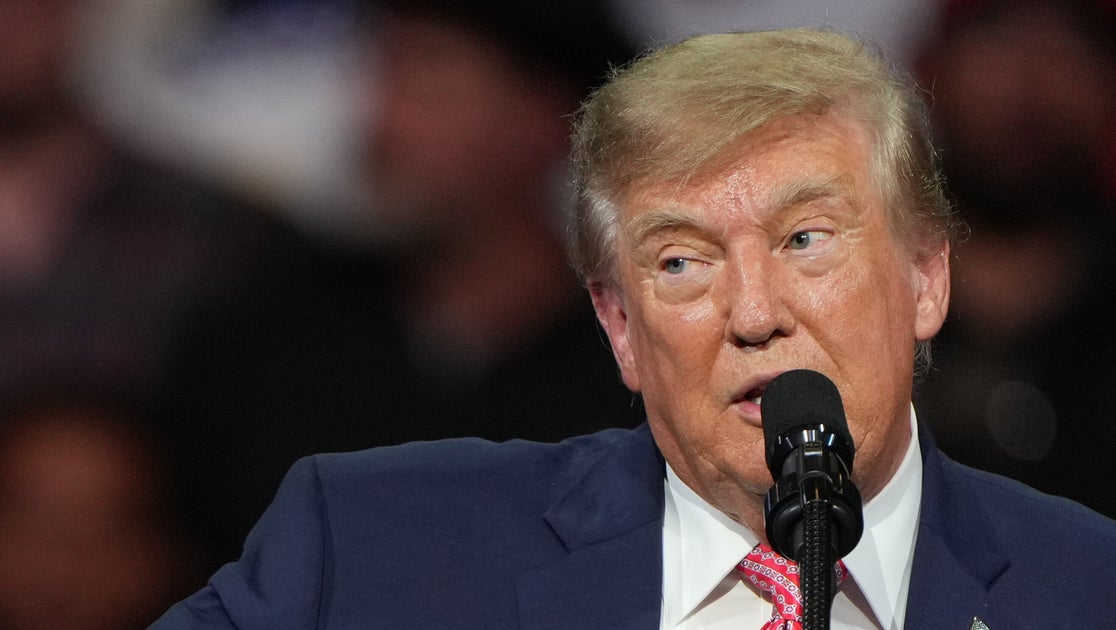
Trump Backs Marshall in Kansas Senate Race Tightened by Farm Costs
President Trump rallied in deep-red Kansas for GOP Sen. Roger Marshall in a competitive race, announcing an $8 billion farm fuel relief program amid high diesel prices. Democrats see an opening to end 94 years of GOP dominance in the state.

Trump Pauses Russia Sanctions Amid Ukraine Tensions and Missile Strikes
Trump waived sanctions on Russia and floated trilateral talks with Putin and Xi as part of ending the Ukraine war, while tensions rose with Zelenskyy over Starlink and arms. Bipartisan senators engaged Zelenskyy amid the shifts.
The Compass
You just read five takes on one story.
What's your take? Find your political shape in a few minutes.
Take the test