
Democrats Launch Long-Shot 25th Amendment Push to Review Trump's Fitness
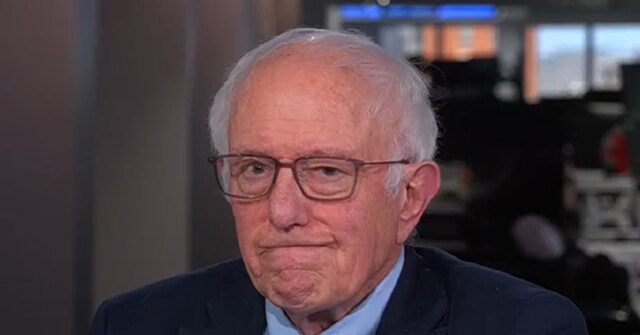
Cover image from breitbart.com, which was analyzed for this article
House Democrats led by Raskin propose an expert panel to evaluate Trump's fitness under the 25th Amendment amid war strains. Critics call him unstable, tying to low polls. Long odds but highlights partisan divides.
PoliticalOS
Wednesday, April 15, 2026 — Politics
Democrats' bill to create an expert panel reviewing Trump's fitness under the 25th Amendment is real but faces insurmountable procedural barriers in a Republican-controlled Congress and White House. It reflects genuine partisan fury over the president's Iran policy and rhetoric yet functions primarily as political messaging rather than a viable removal mechanism. Readers should weigh the documented decline in some polling segments and allied friction against the absence of bipartisan consensus required to alter the constitutional order during an active conflict.
What outlets missed
Most accounts underplayed the sequence of events that produced the current crisis, including specific Iranian threats against U.S. assets that preceded American and Israeli strikes in February 2026. A two-week ceasefire reached in early April received only glancing mention despite its potential to alter threat assessments. Coverage also gave short shrift to the exact legal threshold for the 25th Amendment: even a commission recommendation would still require Vice President Vance and a cabinet majority or supermajorities in Congress. Finally, the distinction between Trump's targeting of Iranian regime infrastructure and hyperbolic characterizations of his language as "genocidal" toward an entire civilization was rarely clarified with primary quotes.
Democrats Launch 25th Amendment Push Against Trump as Iran Policy Divides His Base
House Democrats introduced legislation this week that would create a special commission to examine President Donald Trump’s fitness to serve, citing his conduct during the ongoing military confrontation with Iran. The measure, backed by 50 Democratic cosponsors and led by Rep. Jamie Raskin of Maryland, invokes the 25th Amendment’s provisions for addressing presidential incapacity. It proposes a 17-member panel of former officials appointed by both parties that could recommend a medical review to determine whether the president is “mentally or physically unable” to perform his duties.
The timing reflects deepening partisan disagreement over Trump’s decision to confront Iran’s nuclear program directly after years of diplomatic efforts that critics say only allowed Tehran to advance its weapons capabilities. Raskin argued that Trump’s rhetoric, including sharp exchanges with allies and imagery depicting him in messianic terms, has eroded public confidence and created a national security risk. The congressman pointed to Trump’s public criticism of Pope Francis and threats against Iranian leadership as evidence of volatility that Congress must address.
The legislation faces long odds. Even if the commission formed, it would require Vice President JD Vance’s cooperation to advance any removal process, an unlikely prospect given Vance’s consistent alignment with the president. Still, the filing illustrates how the Iran conflict has moved from foreign policy debate into domestic institutional warfare.
The dispute escalated after Trump publicly condemned Italian Prime Minister Giorgia Meloni, a leader once viewed as a ideological ally on the right. Meloni had expressed support for the Pope’s concerns about the regional fallout from strikes on Iranian targets. Trump responded by calling her position “unacceptable,” accusing her of indifference to the prospect of a nuclear-armed Iran and labeling her a “coward” for declining to commit Italian naval forces to reopen the Strait of Hormuz, a critical chokepoint for global oil shipments. The episode revealed fractures even among populist conservative governments in Europe that had previously backed tougher stances against radical Islamist regimes.
Sen. Bernie Sanders added to the criticism during an appearance on MSNBC, describing Trump as “mentally unstable.” The Vermont independent cited the president’s repeated claims about his own success, his use of religious imagery, and his close coordination with Israeli Prime Minister Benjamin Netanyahu as evidence of dangerous judgment. Sanders announced plans to introduce resolutions limiting U.S. support for Netanyahu’s government, linking the Iran operation to broader disagreements over Gaza and West Bank policy. His remarks echoed a growing chorus on the left that portrays the president’s decisiveness as instability rather than strategic clarity.
Public opinion data suggests the political cost is real. An analysis by CNN’s Harry Enten found Trump’s net approval rating among noncollege white voters, a cornerstone of his electoral strength, has fallen 34 points in recent weeks. The same group now registers strongly negative views of his handling of the Iran conflict. These voters had remained loyal through previous controversies, making the scale of the shift notable even if the underlying polling methodologies reflect the usual challenges of measuring sentiment during active warfare.
The developments come at a moment when the administration continues to argue that Iran’s nuclear infrastructure represented an imminent danger that diplomacy had failed to neutralize. For decades, Tehran pursued enrichment activities in violation of international agreements while funding proxy militias across the Middle East. Proponents of the current policy maintain that allowing a theocratic regime committed to regional domination to obtain deliverable nuclear weapons would create risks far exceeding the temporary disruptions of military action. The Strait of Hormuz, through which roughly one-fifth of global oil passes, remains a flashpoint precisely because Iran has threatened to close it in retaliation.
Critics counter that the operation has produced unintended consequences, from higher energy prices to strained alliances. Yet the speed with which some Democrats have moved from policy disagreement to institutional removal efforts raises questions about whether the 25th Amendment is being treated as a serious constitutional tool or a legislative workaround for political frustration. The amendment was designed primarily for cases of physical incapacity or sudden medical emergency, not routine partisan combat over foreign policy.
This episode also tests the cohesion of the political movement that brought Trump back to power. The New Republic has reported signs of strain within MAGA circles, both domestically and among international populist leaders wary of prolonged conflict. JD Vance, widely seen as the heir apparent to this coalition, will likely face pressure to articulate how conservative skepticism of endless wars can coexist with the necessity of confronting genuine threats from ideologically driven regimes.
The Democratic initiative, whatever its immediate prospects, underscores a persistent pattern in recent American politics: the temptation to frame policy disputes in terms of personal pathology rather than substantive disagreement. Whether the public ultimately judges Trump’s Iran policy by its results or by the volume of criticism it generates will help determine if the current drop in certain polling subgroups proves temporary or lasting. For now, the administration shows no sign of retreating from its assessment that preventing a nuclear Iran justifies the political and strategic costs.
You just read Conservative's take. Want to read what actually happened?
More in Politics

Federal Agents Search Omar Home in Ongoing Immigration Probe
Homeland Security agents searched the Minnesota Democrat's DC residence in a criminal probe, prompting accusations of political intimidation from Omar and Democratic leaders. Coverage spans left-leaning outlets like NPR, BBC, and The Guardian alongside right-leaning criticism from The Federalist and Daily Wire.

Trump Diesel Import Plan Draws Pushback Over Russia Ties
The weekend agreement drew bipartisan congressional pushback and criticism from Ukraine's Zelenskyy, with analysts downplaying US fuel price impacts. Right-leaning outlets like National Review, Dispatch, and Washington Examiner questioned its legality and effectiveness.

Independents Test Voter Appetite for Middle Ground in 2026 Midterms
Nearly 200 independents are running in competitive races as voters weigh ballot measures on housing costs in states like Massachusetts. Left-leaning coverage from NYT, NPR, and Guardian highlights turnout and key races while right outlets focus on GOP strategy.
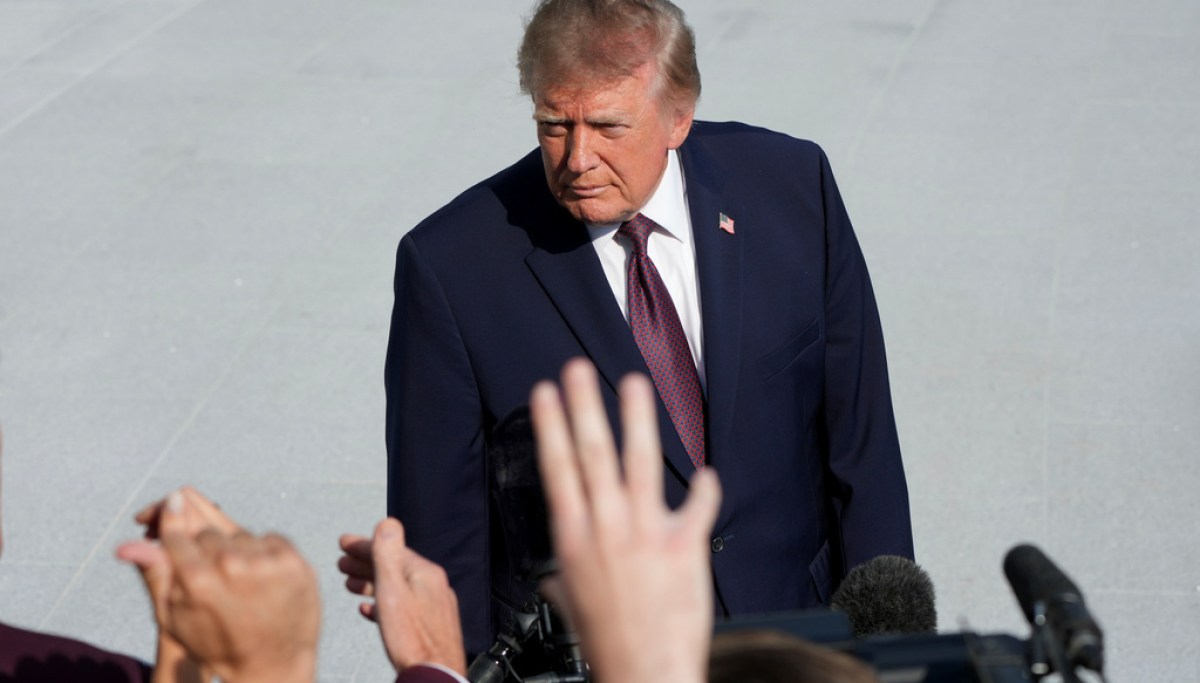
Trump Rallies in Alaska, Ohio to Bolster GOP Senate Candidates
The president rallied in Wasilla for Sen. Dan Sullivan and faced empty seats at an Ohio event amid midterm concerns. Outlets across the spectrum covered the trips as signals of GOP vulnerability weeks before Election Day.
The Compass
You just read five takes on one story.
What's your take? Find your political shape in a few minutes.
Take the test