
Democrats Launch Long-Shot 25th Amendment Push to Review Trump's Fitness
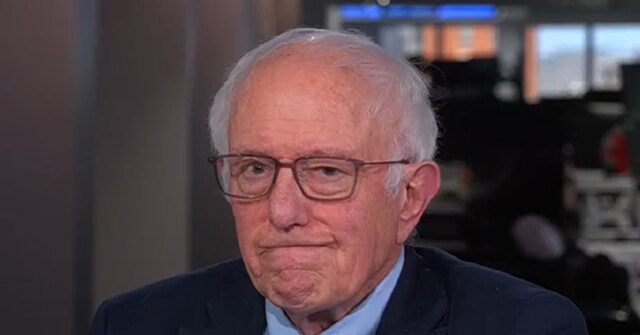
Cover image from breitbart.com, which was analyzed for this article
House Democrats led by Raskin propose an expert panel to evaluate Trump's fitness under the 25th Amendment amid war strains. Critics call him unstable, tying to low polls. Long odds but highlights partisan divides.
PoliticalOS
Wednesday, April 15, 2026 — Politics
Democrats' bill to create an expert panel reviewing Trump's fitness under the 25th Amendment is real but faces insurmountable procedural barriers in a Republican-controlled Congress and White House. It reflects genuine partisan fury over the president's Iran policy and rhetoric yet functions primarily as political messaging rather than a viable removal mechanism. Readers should weigh the documented decline in some polling segments and allied friction against the absence of bipartisan consensus required to alter the constitutional order during an active conflict.
What outlets missed
Most accounts underplayed the sequence of events that produced the current crisis, including specific Iranian threats against U.S. assets that preceded American and Israeli strikes in February 2026. A two-week ceasefire reached in early April received only glancing mention despite its potential to alter threat assessments. Coverage also gave short shrift to the exact legal threshold for the 25th Amendment: even a commission recommendation would still require Vice President Vance and a cabinet majority or supermajorities in Congress. Finally, the distinction between Trump's targeting of Iranian regime infrastructure and hyperbolic characterizations of his language as "genocidal" toward an entire civilization was rarely clarified with primary quotes.
Trump Faces Growing Isolation as Iran War Erodes Core Support and Triggers Radical Democratic Response
President Donald Trump is confronting a sharp political backlash at home as his military actions against Iran appear to be fracturing his once-solid base and drawing increasingly extreme responses from congressional Democrats. The president lashed out this week at Italian Prime Minister Giorgia Meloni, a leader previously seen as a close conservative ally, after she expressed agreement with Pope Francis’s criticism of the ongoing conflict. Trump called Meloni’s stance “unacceptable,” accused her of not caring whether Iran acquires a nuclear weapon, and labeled her a coward for declining to assist in efforts to reopen the Strait of Hormuz.
The unusually public rebuke of a European partner comes at a moment when new polling shows Trump’s standing among non-college-educated white voters, a cornerstone of his political coalition, has collapsed. According to an analysis by CNN’s Harry Enten, Trump’s net approval rating with this group has plummeted 34 points. Even more striking, the president is now underwater with these voters on the very issue many expected would unify them: his decision to launch strikes on Iran and his broader handling of the crisis. The shift represents what analysts describe as one of the most significant erosions of support within this demographic in recent memory.
The domestic fallout extends beyond polling numbers. The war has begun to splinter elements of the MAGA movement both at home and among traditional international partners. Trump’s willingness to align with Israeli Prime Minister Benjamin Netanyahu, who long advocated for direct confrontation with Iran, has fueled criticism from unexpected quarters. On Tuesday, Senator Bernie Sanders of Vermont went on MSNBC and declared the president “mentally unstable.” Sanders cited Trump’s pattern of falsehoods, his sharing of online images portraying him in Christ-like imagery, and what he called the president’s indulgence of Netanyahu’s regional ambitions. The Vermont senator announced plans to introduce resolutions aimed at cutting off American funding to Netanyahu’s government, which he accused of pursuing a “genocidal war” in Gaza, initiating conflict with Iran, and violating international norms in the West Bank.
Sanders’s remarks reflect a broader escalation in left-wing rhetoric. Hours earlier, House Democrats led by Representative Jamie Raskin introduced legislation that would create a bipartisan commission to examine invoking the 25th Amendment against the president. The proposed 17-member body, consisting of former high-ranking officials appointed by both parties, could recommend medical evaluations to determine whether Trump is “mentally or physically unable to discharge the powers and duties of the office.” The bill, which has 50 Democratic cosponsors, cites what Raskin described as Trump’s threats to “destroy entire civilizations,” his alleged violation of congressional war powers, public insults directed at the Pope, and the controversial artistic renderings comparing the president to Jesus Christ.
Raskin framed the measure as a matter of national security, arguing that public confidence in Trump’s judgment has reached “unprecedented lows.” Yet the legislation faces long odds. Invoking the 25th Amendment would ultimately require the support of Vice President JD Vance, a close Trump ally, making actual removal from office highly improbable. Critics on the right view the Democratic push as another chapter in years of lawfare and institutional maneuvering designed to sideline a president voters elected to challenge Washington’s permanent bureaucracy.
The convergence of these developments paints a picture of a presidency under strain. Trump’s aggressive posture toward Iran, including strikes that have yet to produce a clear resolution, has produced real-world costs: casualties, regional instability, and now domestic political hemorrhage. The president’s furious response to Meloni, a populist conservative who has often aligned with America First principles, suggests growing frustration within his own circle as traditional allies express reservations. The Strait of Hormuz, a critical chokepoint for global oil supplies, remains a flashpoint, with Trump reportedly pressing partners to take more assertive action to secure it.
For Vice President Vance, the heir apparent to the MAGA mantle, these fractures present an early test. The movement that propelled Trump to victory now shows signs of division over foreign entanglements that many working-class voters appear increasingly unwilling to underwrite. Polling indicates that even voters who backed Trump in 2024 are questioning whether another Middle East conflict serves American interests or simply repeats the costly mistakes of previous administrations.
Democrats, meanwhile, are seizing on the moment to portray the president as unhinged. Their willingness to invoke the 25th Amendment and amplify claims of mental instability from figures like Sanders underscores the intensity of partisan opposition. Yet the polling decline among non-college whites suggests the discontent is not limited to the usual critics. These voters, many of whom prioritized border security, economic nationalism, and skepticism of forever wars, appear to be registering their disapproval in significant numbers.
As the Iran conflict drags on without a decisive outcome, Trump finds himself squeezed between progressive demands for his removal and visible cracks in the coalition that brought him back to the White House. The coming weeks will test whether the president can stabilize his standing with the working-class base that once formed his most reliable support or whether the war will accelerate the very political isolation his critics have long predicted.
You just read America First's take. Want to read what actually happened?
More in Politics

Federal Agents Search Omar Home in Ongoing Immigration Probe
Homeland Security agents searched the Minnesota Democrat's DC residence in a criminal probe, prompting accusations of political intimidation from Omar and Democratic leaders. Coverage spans left-leaning outlets like NPR, BBC, and The Guardian alongside right-leaning criticism from The Federalist and Daily Wire.

Trump Diesel Import Plan Draws Pushback Over Russia Ties
The weekend agreement drew bipartisan congressional pushback and criticism from Ukraine's Zelenskyy, with analysts downplaying US fuel price impacts. Right-leaning outlets like National Review, Dispatch, and Washington Examiner questioned its legality and effectiveness.

Independents Test Voter Appetite for Middle Ground in 2026 Midterms
Nearly 200 independents are running in competitive races as voters weigh ballot measures on housing costs in states like Massachusetts. Left-leaning coverage from NYT, NPR, and Guardian highlights turnout and key races while right outlets focus on GOP strategy.
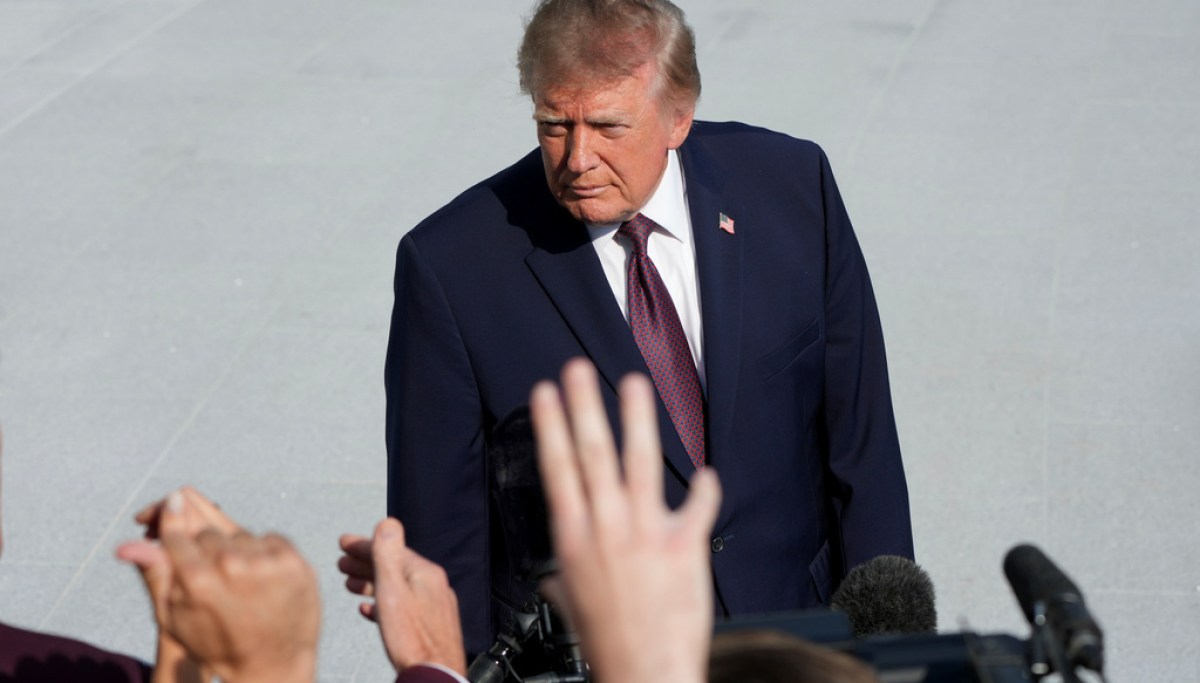
Trump Rallies in Alaska, Ohio to Bolster GOP Senate Candidates
The president rallied in Wasilla for Sen. Dan Sullivan and faced empty seats at an Ohio event amid midterm concerns. Outlets across the spectrum covered the trips as signals of GOP vulnerability weeks before Election Day.
The Compass
You just read five takes on one story.
What's your take? Find your political shape in a few minutes.
Take the test