
Democrats Take House and Senate, Constraining Trump
Democrats flipped both the House and Senate in a major rebuke to President Trump and Republicans. The results create divided government and set up battles over spending, oversight, and foreign policy for the remainder of Trump's term.
PoliticalOS
Thursday, November 5, 2026 — Politics
Democrats now hold both chambers and intend to challenge Trump’s tax, tariff, and spending policies, yet lack the votes to override vetoes. The practical limits on reversing inflation or ending the Iran conflict quickly remain the central open question for the next two years.
What outlets missed
Neither article supplied official vote margins, turnout data, or state-by-state breakdowns from state election offices. Details on the precise start date and congressional authorization status of the Iran conflict remained absent. No government statistical agency figures on unemployment or real wage growth appeared to test claims about the economy’s overall strength. The pieces also omitted any assessment of how the results might affect specific foreign-policy votes or appropriations timelines in the new Congress.
Democrats Secure Majorities in House and Senate in Midterm Rout of Republicans
Republicans entered the 2026 midterms with unified control of government and a president eager to expand his agenda. They left with neither. Democrats captured the House by a wide margin and took the Senate, delivering one of the largest midterm swings in modern elections and ending any prospect of continued Republican dominance in Congress.
The scale of the defeat became clear in the days after voting. Democrats flipped dozens of districts and states that had leaned Republican in recent cycles. The results reflected widespread voter frustration with inflation and the costs tied to President Trump’s policies, including the ongoing conflict with Iran. Exit polling and early surveys showed that economic concerns ranked as the top issue for many who switched their votes or stayed home.
Inside the Trump operation, the warning signs had already surfaced. Six days before Election Day, more than two dozen senior strategists joined a private video call. The tone was bleak. Pollster Tony Fabrizio opened by asking whether participants wanted the “white pill” or the “black pill” first. Data consultant Tim Saler presented two paths: one in which the party’s major advertising effort reached its intended voters, and another in which losses mounted sharply. Several participants responded with dark humor, joking about funeral plans and possible exile. The exchange captured a campaign that had lost confidence in its own message.
President Trump had spent the final stretch of the race dismissing affordability worries as exaggerated, insisting the economy remained strong by traditional measures. Voters rejected that framing. High prices for groceries, fuel and other essentials cut across regions and demographics, giving Democrats a consistent line of attack. The war added another layer of dissatisfaction, as the public appeared unwilling to accept the trade-offs of sustained military engagement.
By the morning after the election, Democratic leaders were already discussing legislative priorities. Incoming Senate Majority Leader Chuck Schumer and House counterparts signaled interest in revisiting recent tax changes and trade measures. Early veto threats from the White House did not deter the talk. The new majorities will have limited time to act before the 2028 cycle begins, but the election outcome has shifted the balance of power for the remainder of Trump’s term.
Republicans now face a compressed window to regroup. The party’s data operation had projected narrower losses under optimistic turnout assumptions. Actual results fell well short of those projections, leaving strategists to reassess both messaging and resource allocation for future contests. Democrats, meanwhile, will test whether the coalition that delivered these gains can hold together when forced to choose among competing priorities on spending, regulation and foreign policy.
The election underscored how quickly public tolerance for an unpopular president and an unpopular conflict can erode congressional support. With two years left in the term, both parties must navigate a divided government shaped by voter judgments on costs rather than on partisan loyalty alone.
You just read Liberal's take. Want to read what actually happened?
More in Politics

Democrats Flip Senate, Expand House Majority in Midterms
Democrats flipped the Senate and expanded their House majority in a major rebuke to President Trump and Republicans. Key victories included multiple Senate seats and state-level wins that ended long-standing GOP dominance in places like Texas.

GOP Losses Spur Blame, Vance Distancing, 2028 Maneuvers
Republicans are pointing fingers internally after heavy losses, with Vice President JD Vance distancing himself from Trump over the Iran war and positioning for a potential 2028 run. Challengers within the party are already sensing opportunity.

Democrats Take House and Senate Amid Record Midterm Turnout
Democrats achieved decisive gains in the 2026 midterms, flipping seats to take control of both chambers. Coverage highlights historic turnout and implications for the Trump administration.
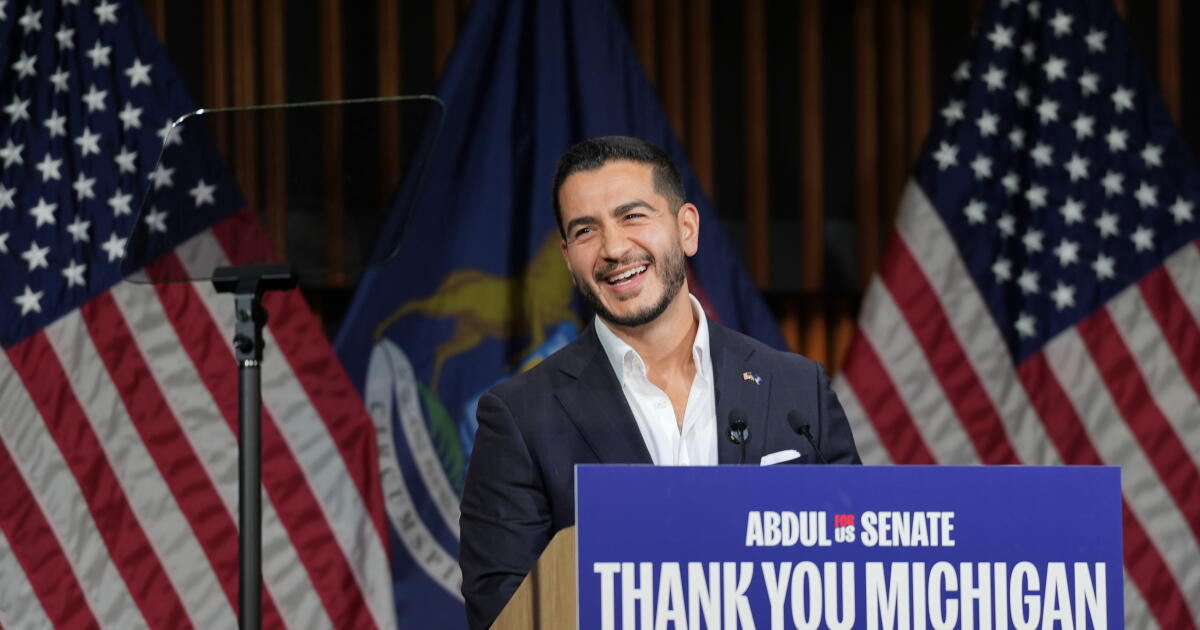
Voters Elect First Muslim Senator, Multiple Historic Firsts
Voters elected the first Muslim US Senator, first Black woman governor of Georgia, and first Native American woman governor of New Mexico, highlighting demographic shifts in key states.
The Compass
You just read five takes on one story.
What's your take? Find your political shape in a few minutes.
Take the test