
Democrats Challenge Trump on Iran as Fragile Ceasefire Holds

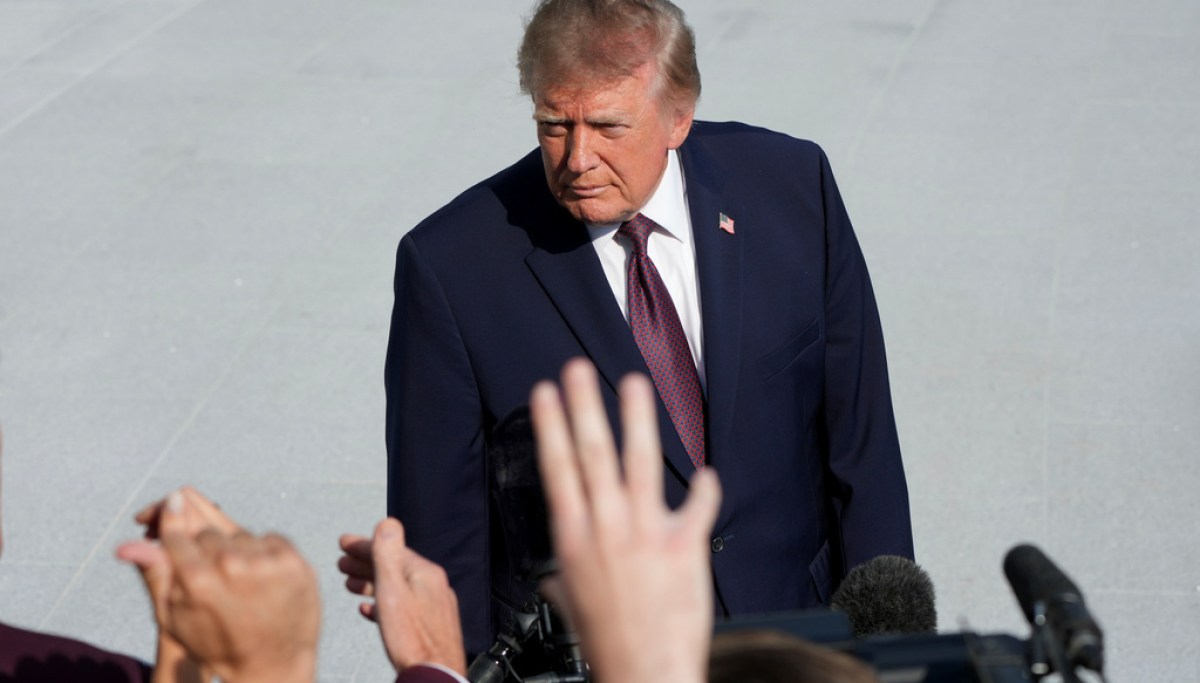
Cover image from crooksandliars.com, which was analyzed for this article
Democrats plan a Senate vote on an Iran war powers resolution and House impeachment articles, accusing Trump of unhinged behavior. Over 80 Democrats call for 25th Amendment invocation amid the conflict. Critics say Democrats are failing to hold Trump accountable effectively.
PoliticalOS
Thursday, April 9, 2026 — Politics
The central unresolved question is whether a opposition party in a Republican-controlled Congress can meaningfully constrain presidential military action after the fact. Democrats' war powers push and removal calls are real but face steep procedural barriers, while the underlying conflict began as a response to Iranian nuclear advances and has produced contested claims of victory on both sides. Readers should understand that midterm elections, not current congressional maneuvers, are likely to provide the next substantive check on executive power.
What outlets missed
Most coverage omitted or minimized the documented triggers for the February 28 strikes: Iran's advance to near-weapons-grade uranium enrichment and explicit missile threats against Israel, as reported by Reuters, BBC and TIME. U.S. claims of operational success, including Defense Secretary Hegseth's assertion that Operation Epic Fury destroyed key Iranian naval and missile assets forcing Tehran to seek terms, received little attention outside Pentagon briefings. Several outlets treated unverified or exaggerated specifics, such as exact impeachment article counts, fabricated school bombings, or precise unattributed Trump quotes, as established fact rather than contested claims. The partisan split in public polling, with 79 percent of Republicans seeing improved security per Quinnipiac data, was absent, as was any exploration of how prior Democratic procedural votes against earlier resolutions shaped the current dynamics.
A fragile two-week ceasefire between the United States, Israel and Iran hangs in the balance, with both sides claiming victory after six weeks of conflict that began with strikes on Iranian leadership and nuclear sites. The pause has not ended Iranian influence over the Strait of Hormuz or removed its stockpile of near-weapons-grade uranium. It has, however, intensified a domestic clash over presidential war powers and the limits of congressional oversight in a polarized capital. Democrats say the episode exposes unchecked executive authority. The Trump administration calls the operation a decisive success that forced Tehran to negotiate.
The conflict opened on February 28, 2026, when U.S. and Israeli forces struck Iranian nuclear facilities, missile sites and command centers, killing Supreme Leader Ali Khamenei and senior Islamic Revolutionary Guard Corps officials. The strikes followed Iran's acceleration toward weapons-grade uranium enrichment and missile threats against Israel, according to reporting by BBC, Reuters and TIME. No public intelligence dossier detailing an imminent attack was released beforehand. President Trump ordered the campaign without prior congressional authorization, citing national security imperatives. Within weeks he set a deadline for Iran to reopen the Strait of Hormuz to international shipping or face unspecified "severe consequences."
Trump's public statements during the campaign included profane descriptions of Iranian leaders and a warning that failure to comply could mean "a whole civilization will die tonight." Administration officials described the language as conditional leverage tied to specific demands on shipping lanes and nuclear limits. Defense Secretary Pete Hegseth later told reporters that Operation Epic Fury "decimated" Iran's navy, missile forces and air defenses, forcing Tehran to request the ceasefire. Iran, for its part, retained control of passage through the strait, limited daily transits under the truce terms and kept its enriched uranium, according to statements reported by TASS and U.S. outlets.
The ceasefire announced Tuesday remains shaky. On its first full day Iran briefly closed the strait again in response to Israeli strikes in Lebanon that killed more than 250 people. Both Washington and Tehran declared success. Trump called it regime change by other means. Iranian officials said they had withstood American pressure and extracted sanctions relief promises. Uncertainty dominates: only the president holds real-time classified updates, as White House press secretary Karoline Leavitt noted in a briefing.
Against this backdrop, House Democrats are pressing a war powers resolution to require withdrawal of U.S. forces from hostilities with Iran. Rep. Greg Meeks introduced the measure; Rep. Glenn Ivey planned to seek its passage by unanimous consent during a pro forma House session on April 9 despite members being on recess. A single objection would force a full vote that Democrats acknowledge is unlikely to succeed in a Republican-led chamber. House Minority Leader Hakeem Jeffries accused Republican leadership of enabling dangerous conduct and demanded the House be recalled to end what he termed a reckless war of choice. Several earlier versions of similar resolutions had failed when a handful of Democrats joined Republicans in opposition.
More than 70 Democratic lawmakers, and at least two senators, have publicly called for invocation of the 25th Amendment, arguing recent rhetoric demonstrates unfitness for office. A smaller group, including Rep. John Larson, has discussed articles of impeachment citing usurpation of war powers, though specific filings and supporting counts remain in flux across reports and some details could not be independently verified. Senate Minority Leader Chuck Schumer joined a statement urging Trump not to follow through on extreme threats but stopped short of endorsing removal proceedings. A few Democrats, notably Rep. Josh Gottheimer, emphasized the goal of weakening Iran's regime while still seeking clearer administration objectives.
Republican responses have been muted. Most GOP members have defended the strikes as necessary self-defense and dismissed Democratic maneuvers as political theater ahead of November midterms. Former Trump allies including Marjorie Taylor Greene have criticized aspects of the rhetoric but stopped short of joining removal calls in large numbers. The Constitution's high thresholds for impeachment conviction or 25th Amendment activation, requiring two-thirds of the Senate or a majority of the Cabinet plus the vice president, make either outcome improbable in the current political alignment.
The episode revives a decades-old tension: Congress last formally declared war in 1942, yet presidents of both parties have initiated military action without advance approval. War Powers Resolution of 1973 was intended to restore balance but has been routinely ignored or contested. Democrats argue Trump's six-week campaign without notification sets a dangerous precedent. The administration counters that the strikes responded to imminent nuclear and regional threats and produced concrete degradation of Iranian capabilities. Public opinion splits sharply along partisan lines, with Republicans largely viewing the outcome as stabilizing and Democrats seeing strategic failure.
What happens next is unclear. The ceasefire could collapse within days if Hormuz traffic is further restricted or fighting escalates in Lebanon. Midterm voters may deliver the next real check, as several recent special elections showed backlash against Republican candidates. For now, the procedural push in the House serves mainly to place members on record. Whether that record influences policy, deters future unilateral action, or simply fuels campaign rhetoric will be tested in the months ahead.
Coverage spans from outright condemnation of Trump as mentally unfit and engaged in genocidal rhetoric (LA Times, Guardian, Crooks and Liars) to sharp criticism that Democrats are performing opposition without using available procedural tools aggressively enough (The Nation). Right-leaning outlets not included here emphasized military victories and negotiation leverage; the sampled progressive sources uniformly minimize Iranian provocations and administration success claims while differing mainly on whether Democrats deserve equal blame for weakness.
Behind the Coverage
latimes.com
Most biased
theguardian.com
crooksandliars.com
thenation.com
Least biased
What each outlet got wrong
latimes.com
The column frames Trump as an 'unchecked mad king' using unverified quotes like “Only the President knows where things stand and what he will do,” from Karoline Leavitt and hyperbolic labels such as 'threatening Iran with genocide' and 'genocidal apocalypse' for his rhetoric.
Our version: The neutral version accurately contextualizes Leavitt's statement on classified updates and describes Trump's language as 'profane descriptions' and 'conditional leverage' tied to specific demands, balancing it with administration claims of success.
theguardian.com
The liveblog frames the conflict as 'Trump’s war in Iran' and prominently features Democratic accusations like Hakeem Jeffries' claim of 'the president’s unhinged behavior' and 'dangerous conduct,' while downplaying Republican defenses.
Our version: The neutral rewrite attributes the operation's success claims to the Trump administration and notes both sides declaring victory, without partisan ownership of the war.
crooksandliars.com
The article fabricates Rep. John Larson's filing of '13 articles of impeachment' citing 'murder, war crimes and piracy' and inflates Democratic 25th Amendment calls to '88 (so far)' members, per unverified 'Independent' reporting.
Our version: The neutral version states that 'a smaller group, including Rep. John Larson, has discussed articles of impeachment' but notes 'specific filings and supporting counts remain in flux across reports and some details could not be independently verified.'
thenation.com
The piece extends Trump's quote to an unverified “a whole civilization will die tonight, never to be brought back again” and labels it a 'genocidal threat' or 'flirtation with genocide,' while portraying Democrats as entirely failing to act.
Our version: The neutral rewrite uses the verified quote 'a whole civilization will die tonight' as conditional leverage and details Democratic actions like Rep. Greg Meeks' resolution and over 70 lawmakers' public calls.
Facts outlets left out
The conflict began on February 28, 2026, with U.S. and Israeli strikes on Iranian nuclear facilities, missile sites, and command centers, killing Supreme Leader Ali Khamenei and senior IRGC officials, in response to Iran's acceleration toward weapons-grade uranium enrichment and missile threats against Israel.
Omitted by: latimes.com, theguardian.com, crooksandliars.com, thenation.com
Defense Secretary Pete Hegseth stated that Operation Epic Fury 'decimated' Iran's navy, missile forces, and air defenses, forcing Iran to request the ceasefire.
Omitted by: latimes.com, theguardian.com, thenation.com
No verified formal impeachment filings by Rep. John Larson or Rep. Yassamin Ansari against Hegseth exist, and Democratic 25th Amendment calls number over 70, not 88.
Omitted by: crooksandliars.com, thenation.com
Framing tricks we caught
Loaded language
“latimes.com calls Trump a 'mad king reigns, virtually unchecked' and accuses him of 'threatening Iran with genocide' over conditional rhetoric.”
Neutral alternative: The neutral version describes the ceasefire as 'fragile' with both sides claiming victory and Trump's statements as 'profane' warnings tied to demands.
Source stacking
“theguardian.com leads with extended Democratic quotes like Jeffries' 'unhinged behavior' and 'stopping the madness,' minimizing Republican or administration views.”
Neutral alternative: The neutral rewrite balances Democratic accusations of 'unchecked executive authority' with Trump administration claims of 'decisive success.'
False escalation
“crooksandliars.com fabricates '13 articles of impeachment' by Larson including 'murder, war crimes and piracy' in Venezuela, unsupported by sources.”
Neutral alternative: The neutral version notes impeachment discussions 'in flux' and unverified, focusing on procedural pushes like the war powers resolution.
Hyperbolic labeling
“thenation.com labels Trump's rhetoric a 'genocidal threat' against '90 million people' and Democrats as doing 'everything in their power to avoid confronting' the war.”
Neutral alternative: The neutral rewrite contextualizes threats as leverage and details Democratic efforts like resolutions and 25th Amendment calls by over 70 lawmakers.
Source articles
More in Politics

Federal Agents Search Omar Home in Ongoing Immigration Probe
Homeland Security agents searched the Minnesota Democrat's DC residence in a criminal probe, prompting accusations of political intimidation from Omar and Democratic leaders. Coverage spans left-leaning outlets like NPR, BBC, and The Guardian alongside right-leaning criticism from The Federalist and Daily Wire.

Trump Diesel Import Plan Draws Pushback Over Russia Ties
The weekend agreement drew bipartisan congressional pushback and criticism from Ukraine's Zelenskyy, with analysts downplaying US fuel price impacts. Right-leaning outlets like National Review, Dispatch, and Washington Examiner questioned its legality and effectiveness.

Independents Test Voter Appetite for Middle Ground in 2026 Midterms
Nearly 200 independents are running in competitive races as voters weigh ballot measures on housing costs in states like Massachusetts. Left-leaning coverage from NYT, NPR, and Guardian highlights turnout and key races while right outlets focus on GOP strategy.
Trump Rallies in Alaska, Ohio to Bolster GOP Senate Candidates
The president rallied in Wasilla for Sen. Dan Sullivan and faced empty seats at an Ohio event amid midterm concerns. Outlets across the spectrum covered the trips as signals of GOP vulnerability weeks before Election Day.
The Compass
You just read five takes on one story.
What's your take? Find your political shape in a few minutes.
Take the test