
Democrats Push 25th Amendment for Trump as Iran Ceasefire Holds

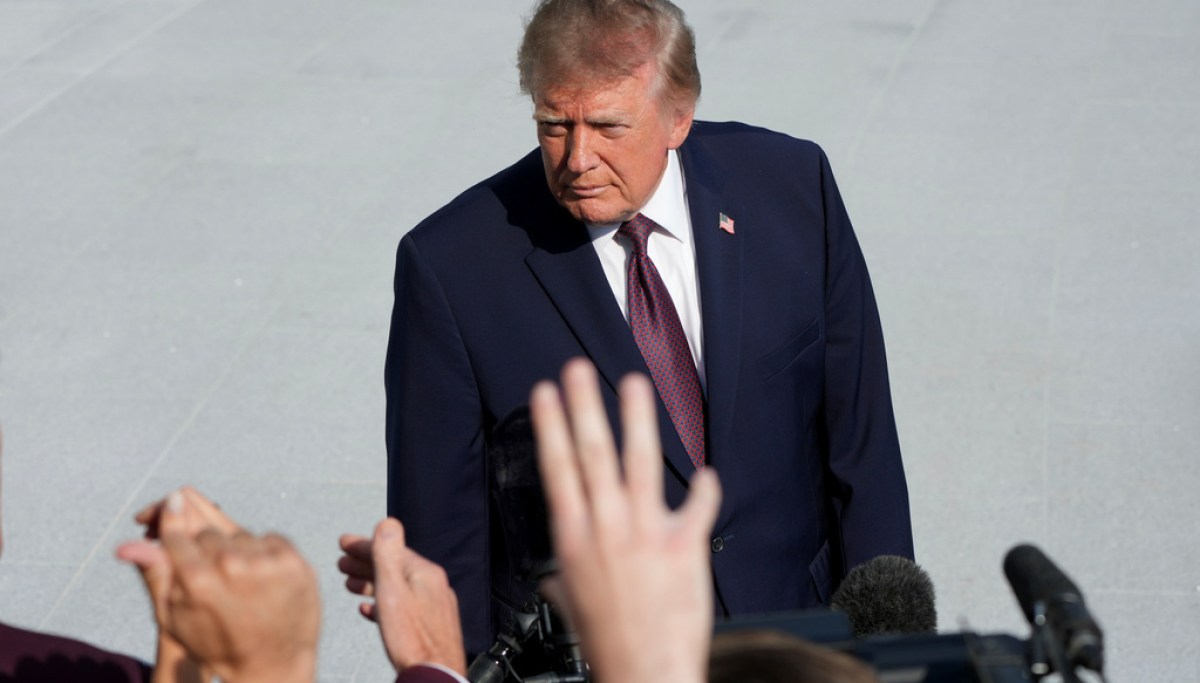
Cover image from crooksandliars.com, which was analyzed for this article
Over 80 Democrats demand Trump's removal via 25th Amendment citing his Iran threats and 'civilization' rhetoric; some governors echo concerns for national security. Bipartisan voices invoke it amid ceasefire fragility and midterm fears. Republicans dismiss as partisan attacks.
PoliticalOS
Thursday, April 9, 2026 — Politics
Democratic calls for the 25th Amendment have intensified amid a fragile Iran ceasefire, but the Constitution makes removal nearly impossible without Republican cooperation that is not forthcoming. The conflict itself began as a response to Tehran's nuclear breakout and threats, not presidential whim. Voters will likely decide the ultimate check on executive power in the November midterms.
What outlets missed
Most coverage omitted that the February 28 strikes were a direct response to Iran's enrichment of uranium to near-bomb-grade levels and explicit missile threats against Israel, which killed Supreme Leader Khamenei. Reports also downplayed the conditional nature of Trump's warnings, which were tied to specific deadlines for reopening the Strait of Hormuz rather than blanket genocidal declarations. The fragile ceasefire's actual terms received little scrutiny: Iran retained leverage over the strait and gained offers of sanctions relief, undercutting claims of total victory or total failure. Finally, varying counts of Democratic support (dozens to over 80) were presented without noting the absence of any formal 25th Amendment petition with measurable Cabinet or Republican backing, and governors' statements were rarely quoted directly.
A fragile two-week ceasefire between the United States and Iran has done little to calm domestic fears over how the president manages national security. More than 70 Democratic lawmakers, joined by a handful of governors, now publicly urge invocation of the 25th Amendment, arguing President Trump's threats, shifting deadlines and unilateral military decisions have left the country exposed. The calls come six weeks after the conflict began and amid uncertainty whether the pause will hold beyond its mid-April expiration.
The fighting started Feb. 28, 2026, when U.S. and Israeli strikes killed Iran's Supreme Leader Ali Khamenei and senior Islamic Revolutionary Guard Corps commanders. TIME, BBC and Reuters reported the action responded to Iran's enrichment of uranium to near-weapons grade levels and its missile threats against Israel. No public intelligence dossier on an imminent attack was released at the time. Trump ordered the operation without prior congressional approval, citing his authority as commander in chief.
Since then the president has alternated between maximalist demands and pragmatic adjustments. He set an 8 p.m. deadline for Iran to reopen the Strait of Hormuz to international shipping or face unspecified "Armageddon." In one social media post he warned that "a whole civilization will die tonight" if Tehran failed to comply. A month earlier he had called for "unconditional surrender." On April 8 he announced the ceasefire, declared victory, and floated possible sanctions relief. Iran, for its part, said it retained effective control of the strait and continued to monetize passage through it. By Wednesday it had briefly closed the route again in response to Israeli strikes.
Democrats cite this pattern as evidence of dangerous volatility. Rep. John Larson, D-Conn., told reporters Trump has "blown past every requirement" for continued service and has grown "more unstable by the day." At least 88 House Democrats and two senators have signed letters or posted statements calling for the 25th Amendment, according to tallies compiled by NBC and The Wall Street Journal; some put the number closer to 70. A smaller group, including Rep. Yassamin Ansari, has also floated impeachment articles against both Trump and Defense Secretary Pete Hegseth, accusing them of usurping Congress's war powers and risking war crimes. Several Democratic governors have echoed national-security worries in separate statements.
Republican leaders dismiss the effort as election-year theater. They note the 25th Amendment requires the vice president and a majority of the Cabinet to declare the president unable to discharge his duties, an unlikely step inside an administration stocked with loyalists. Impeachment equally faces long odds: Republicans hold majorities in both chambers, and conviction demands two-thirds of the Senate. GOP lawmakers instead credit Trump with forcing Iran back to negotiations after years of unchecked nuclear progress.
The constitutional architects designed removal mechanisms to guard against exactly this kind of impasse, yet they could not foresee sustained partisan polarization. Democrats acknowledge the near-certainty of failure but say the public pressure itself matters. Many point to off-year election results Tuesday that showed voters punishing Republican candidates in districts hit hard by the conflict's economic ripple effects. That leaves the ultimate check where it began: the 2026 midterms, still seven months away.
Where the ceasefire stands at any given hour remains unclear. The White House has said only the president holds the full picture. Iran continues to possess its enriched uranium stockpile. Global shipping insurers have raised rates through the Persian Gulf. And both sides claim they prevailed. The single unresolved question is whether institutional guardrails can still function once one party views the president as unfit and the other views criticism as treason.
Left-leaning outlets portrayed Trump's Iran policy as the erratic behavior of an unfit leader whose rhetoric alone justified removal, often omitting the nuclear and missile provocations that preceded U.S. strikes. Right-leaning coverage emphasized military leverage gained, de-escalation through deadlines, and dismissed Democratic statements as cynical midterm positioning. The result is two parallel realities: one in which the president endangers civilization, the other in which he alone can deliver a durable deal with a rogue regime.
Behind the Coverage
latimes.com
Most biased
crooksandliars.com
Least biased
What each outlet got wrong
latimes.com
Framed Trump as an 'unchecked mad king' using an unverified quote from spokesperson Karoline Leavitt: 'Only the President knows where things stand and what he will do,' presented as evidence of opaque 'governance under Trump these days,' alongside hyperbolic labels like 'threatening Iran with genocide,' 'war crimes by the United States,' and 'genocidal apocalypse.' Also cited an unverified Trump post demanding 'UNCONDITIONAL SURRENDER!' to highlight flip-flops.
Our version: The neutral version uses verified tallies from NBC and WSJ for Democrat numbers, describes threats factually as tied to deadlines without moral hyperbole, and provides balanced context on the ceasefire and Iran's actions.
crooksandliars.com
Fabricated formal impeachment actions, claiming Rep. John Larson 'has filed 13 articles of impeachment' against Trump for 'genocidal threats,' 'murder, war crimes and piracy' in Venezuela, and that Rep. Yassamin Ansari plans to impeach Hegseth for 'bombing a girls’ school in Minab, Iran'; inflated calls to '88 (so far) Democratic members of Congress.'
Our version: The neutral version accurately notes a 'smaller group, including Rep. Yassamin Ansari, has also floated impeachment articles' without claiming filings or unverified incidents, and cites verified tallies of 'at least 88 House Democrats and two senators' or 'closer to 70' from NBC and WSJ.
Facts outlets left out
The fighting started Feb. 28, 2026, when U.S. and Israeli strikes killed Iran's Supreme Leader Ali Khamenei and senior IRGC commanders in response to Iran's uranium enrichment to near-weapons grade and missile threats against Israel.
Omitted by: latimes.com, crooksandliars.com
Trump's threats were conditional, tied to Iran's deadline for reopening the Strait of Hormuz, such as warning 'a whole civilization will die tonight' if unmet.
Omitted by: crooksandliars.com
Democrat calls vary by source, with NBC and WSJ tallying at least 88 House members and two senators or closer to 70 via letters and statements, not a unified 88 formal demands.
Omitted by: crooksandliars.com
Framing tricks we caught
Hyperbolic labeling
“latimes.com calls Trump an 'unchecked mad king' reigning with 'cray-cray blather,' 'mentally unstable,' and threats of 'genocidal apocalypse,' citing fringe critics like Alex Jones.”
Neutral alternative: Neutral version describes Democrats citing Trump's 'dangerous volatility' with specific examples like shifting deadlines, without personal attacks or unverified fringe sources.
Fabricated formal actions
“crooksandliars.com presents unverified claims as fact: Rep. Larson 'has filed 13 articles of impeachment' and Ansari 'plans to file' against Hegseth for a nonexistent 'bombing a girls’ school.'”
Neutral alternative: Neutral version states some Democrats 'floated impeachment articles' based on verified statements, avoiding claims of actual filings.
Loaded headline
“latimes.com title: 'Column: We're stuck with an unchecked mad king until January,' priming readers for apocalyptic unchecked power narrative.”
Neutral alternative: Neutral rewrite uses no headline but leads with factual context of the ceasefire and Democrat arguments without dramatic labels.
Source articles
More in Politics

Federal Agents Search Omar Home in Ongoing Immigration Probe
Homeland Security agents searched the Minnesota Democrat's DC residence in a criminal probe, prompting accusations of political intimidation from Omar and Democratic leaders. Coverage spans left-leaning outlets like NPR, BBC, and The Guardian alongside right-leaning criticism from The Federalist and Daily Wire.

Trump Diesel Import Plan Draws Pushback Over Russia Ties
The weekend agreement drew bipartisan congressional pushback and criticism from Ukraine's Zelenskyy, with analysts downplaying US fuel price impacts. Right-leaning outlets like National Review, Dispatch, and Washington Examiner questioned its legality and effectiveness.

Independents Test Voter Appetite for Middle Ground in 2026 Midterms
Nearly 200 independents are running in competitive races as voters weigh ballot measures on housing costs in states like Massachusetts. Left-leaning coverage from NYT, NPR, and Guardian highlights turnout and key races while right outlets focus on GOP strategy.
Trump Rallies in Alaska, Ohio to Bolster GOP Senate Candidates
The president rallied in Wasilla for Sen. Dan Sullivan and faced empty seats at an Ohio event amid midterm concerns. Outlets across the spectrum covered the trips as signals of GOP vulnerability weeks before Election Day.
The Compass
You just read five takes on one story.
What's your take? Find your political shape in a few minutes.
Take the test