
DNC Defers Israel, AIPAC Votes as Lebanon Strikes Fuel Party Rift
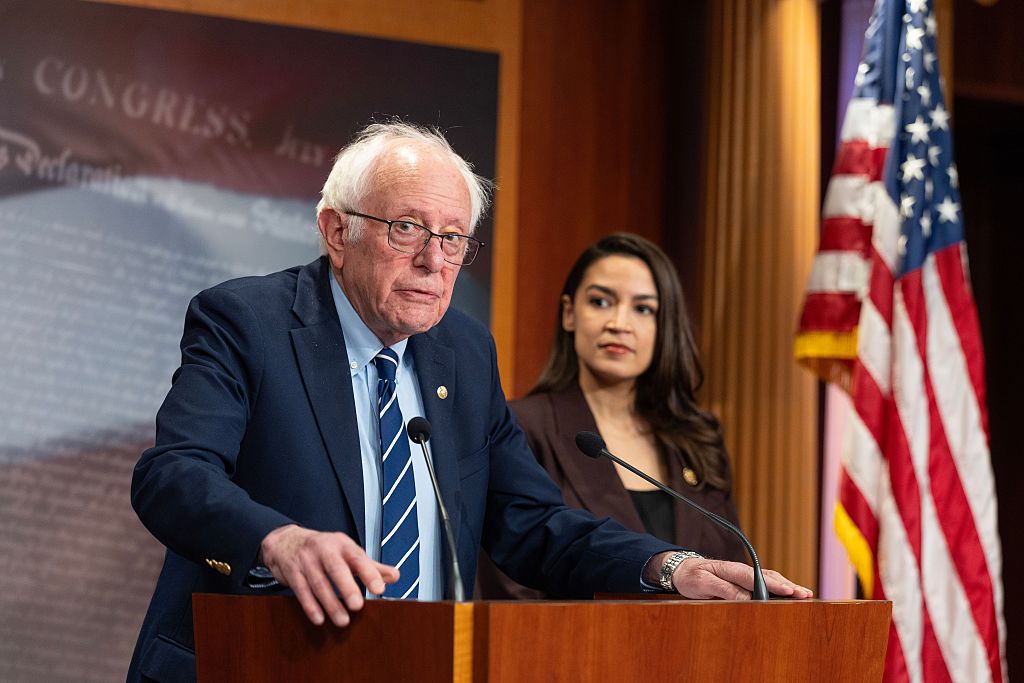
Cover image from jacobin.com, which was analyzed for this article
The Democratic National Committee debates resolutions on Israel and AIPAC as Israeli strikes on Lebanon kill hundreds, testing party unity. Progressives push criticism while moderates hesitate, punting major decisions. The meeting underscores internal divides on foreign policy.
PoliticalOS
Thursday, April 9, 2026 — Politics
Democratic voters' views on Israel have shifted markedly, with unfavorable ratings now between 57 and 80 percent in major polls, yet the party's leadership continues to defer major policy changes to an underpowered working group. This incrementalism persists even as Israeli strikes in Lebanon kill hundreds and tensions with Iran escalate. The unresolved tension is whether the DNC can reconcile its traditional alliance with Israel and its base's growing demands before the gap becomes a clear electoral liability in 2026.
What outlets missed
Most accounts underplayed the scale of the Lebanese casualty figures and displacement, citing only vague references to "strikes" without noting Lebanese authorities' count of more than 500 dead in the recent escalation or the humanitarian strain from mass displacement. Coverage also gave short shrift to explicit antisemitism concerns raised by Jewish Democratic figures, including Rep. Dan Goldman's warning of an "undercurrent of antisemitism" in the singling out of AIPAC. Specific 2024 spending data received uneven treatment: AIPAC's United Democracy Project directed more than $100 million into races, successfully backing the vast majority of targeted Democrats, yet few stories contextualized this against spending by other major Democratic-aligned PACs such as EMILY's List. Finally, the link between these party debates and the risk of a wider Iran-involved war remained largely unexplored, even though Israeli strikes on Iranian targets and Tehran's proxy responses directly raise the stakes for any shift in U.S. arms policy.
Hundreds of people have died in Lebanon under Israeli strikes, with the risk of direct conflict with Iran rising. For the Democratic National Committee, these events have crystallized a deeper internal crisis: a base that has turned sharply against unconditional support for Israel while party leaders remain wary of any decisive break with long-standing policy.
At meetings in New Orleans this week, DNC members confronted multiple resolutions on the Middle East. One condemned the influence of AIPAC and other dark-money groups in Democratic primaries. Others called for recognizing a Palestinian state and conditioning or pausing U.S. military aid to Israeli units implicated in humanitarian law violations. None received a clean vote. The AIPAC measure was rejected after members noted a broader dark-money resolution had already passed earlier in the session. The aid-related proposals were referred to the party's Middle East Working Group, now in its fourth meeting and still without a formalized agenda or clear authority.
This deferral is not new. Last summer in Minneapolis a proposed arms embargo failed outright. A call for unrestricted Gaza aid and a two-state solution passed only after DNC Chair Ken Martin withdrew his own version and substituted the creation of the working group itself. The pattern reveals the central tension: how does a party adapt to documented shifts in voter sentiment without fracturing its coalition or appearing to weaken a key ally amid active conflict?
Polling quantifies the change. A Pew Research survey released this week found 80 percent of Democrats and Democratic-leaning independents hold unfavorable views of Israel, up from 69 percent a year earlier and 53 percent in 2022. An NBC News poll from late February and early March put the negative figure at 57 percent, compared with 35 percent in the immediate aftermath of Hamas's October 7, 2023 attack.
James Zogby, a DNC member, Arab American Institute president and working-group participant, told reporters the party must recognize that Democrats, candidates and public opinion have all moved since even five years ago. Allison Minnerly, the Florida DNC member who introduced the AIPAC resolution, described corporate money in politics and opposition to further Middle East conflict as overwhelmingly popular positions. Halie Soifer, CEO of the Jewish Democratic Council of America, responded that prominent criticism of specific Israeli government actions does not equate to a wholesale rejection of Israel's security or right to exist as a Jewish state; she called the resolutions a distraction from domestic issues where Democrats have been gaining traction.
Divisions inside the working group itself mirror the larger party. Joe Salas, a California member, believes Gaza policy contributed to the 2024 presidential loss and hopes his resolution can guide the task force. Andrew Lachman, past president of the California Jewish Democrats and also a group member, warned against catchall resolutions that could preempt the commission's own work. He urged members to find ways to stand together against the wars rather than pursue this approach.
An anonymous DNC member told Politico that two prospective presidential candidates had placed direct calls expressing concern about how the party would position itself on Israel and AIPAC. The American Israel Public Affairs Committee and the DNC itself declined to comment. A pro-Palestinian group, IMEU Policy Project, circulated a memo warning that the growing gap between Democratic leadership and voters could become a liability in the 2026 midterms unless concrete action is taken.
The broader context has grown more volatile. Israeli operations against Hezbollah in Lebanon have, according to Lebanese health authorities, killed more than 500 people in the latest escalation, displacing hundreds of thousands and raising humanitarian alarms. Recent direct exchanges between Israel and Iran have heightened fears that U.S. policy choices could be tested in a wider regional war. These developments receive only glancing mention in most coverage of the DNC meeting.
By referring the most contentious measures to a still-nascent working group, the DNC has again chosen process over immediate pronouncement. Whether that process can produce consensus before electoral or military realities force sharper choices is the question the party has not yet answered.
Coverage stretches from progressive outlets portraying the resolutions as a long-overdue reckoning with shifting Democratic opinion and AIPAC's electoral power to centrist reporting that emphasizes procedural caution, internal pushback and the risk of distraction from winnable domestic issues. Pro-Israel outlets add a further pole by highlighting Jewish members' fears that targeting AIPAC reflects an antisemitic undercurrent. The result is less disagreement on basic events than on whether the party's hesitation represents prudent coalition management or a dangerous disconnect from its voters.
Behind the Coverage
politico.com
Most biased
politico.com
Most biased
theintercept.com
Least biased
What each outlet got wrong
politico.com
In the article 'The DNC is meeting — and Israel is at the forefront once again', Politico used source stacking with four pro-resolution voices (anonymous DNC member, Zogby, Minnerly, Salas/IMEU memo) versus two pro-Israel voices (Soifer, Lachman), mildly exaggerating progressive leverage, as in Zogby's quote: 'Public opinion has shifted. Democrats have clearly shifted. Candidates have shifted. And we’re not where we were five years ago even.'
Our version: The neutral version balances quotes from both sides equally, including Zogby, Minnerly, Soifer, Salas, and Lachman, while contextualizing them within the party's procedural deferrals and broader conflict.
politico.com
In the article 'DNC punts on the big Israel questions', Politico employed loaded language like 'punting' to frame DNC actions as evasive weakness, stating 'Democrats are, once again, punting on what to do about Israel' and 'DNC punts on the big Israel questions', while relying on unverified claims of specific Thursday votes and one-sided quotes from Minnerly: 'Democrats overwhelmingly want a party that stands for human rights and against increased conflict.'
Our version: The neutral version factually reports outcomes as 'rejected after members noted a broader dark-money resolution had already passed' and 'referred to the party's Middle East Working Group' without pejorative terms.
Facts outlets left out
AIPAC's bipartisan spending, with United Democracy Project spending ~$100M+ in 2024 cycle backing 80%+ of targeted Democrats and candidates across parties (OpenSecrets.org data)
Omitted by: politico.com
Comparable lobby spending like EMILY's List at $80M+ on 2024 Democratic primaries, with no similar DNC resolution targeting it
Omitted by: politico.com
Israeli strikes in Lebanon killed hundreds (over 500 per Lebanese health authorities), displacing hundreds of thousands, amid direct Israel-Iran exchanges raising wider war fears
Omitted by: politico.com
Framing tricks we caught
Source stacking
“Four pro-resolution sources (e.g., Zogby: 'Public opinion has shifted...'; Minnerly on 'winning issues') vs. two pro-Israel in 'The DNC is meeting — and Israel is at the forefront once again'”
Neutral alternative: Neutral version quotes equally from critics (Zogby, Minnerly, Salas) and defenders (Soifer, Lachman) to reflect divisions without imbalance.
Loaded language
“'Punts' used in title and body twice in 'DNC punts on the big Israel questions', implying evasion: 'Democrats are, once again, punting on what to do about Israel'”
Neutral alternative: Neutral version uses precise procedural terms like 'rejected' and 'referred to the working group'.
Primacy effect
“Opens first article with anonymous source on 'direct calls about the resolutions from two presidential aspirants', signaling establishment concern before progressive quotes”
Neutral alternative: Neutral version leads with conflict context and DNC crisis, integrating aspirants' calls later without leading emphasis.
Source articles
More in Politics

Federal Agents Search Omar Home in Ongoing Immigration Probe
Homeland Security agents searched the Minnesota Democrat's DC residence in a criminal probe, prompting accusations of political intimidation from Omar and Democratic leaders. Coverage spans left-leaning outlets like NPR, BBC, and The Guardian alongside right-leaning criticism from The Federalist and Daily Wire.

Trump Diesel Import Plan Draws Pushback Over Russia Ties
The weekend agreement drew bipartisan congressional pushback and criticism from Ukraine's Zelenskyy, with analysts downplaying US fuel price impacts. Right-leaning outlets like National Review, Dispatch, and Washington Examiner questioned its legality and effectiveness.

Independents Test Voter Appetite for Middle Ground in 2026 Midterms
Nearly 200 independents are running in competitive races as voters weigh ballot measures on housing costs in states like Massachusetts. Left-leaning coverage from NYT, NPR, and Guardian highlights turnout and key races while right outlets focus on GOP strategy.
Trump Rallies in Alaska, Ohio to Bolster GOP Senate Candidates
The president rallied in Wasilla for Sen. Dan Sullivan and faced empty seats at an Ohio event amid midterm concerns. Outlets across the spectrum covered the trips as signals of GOP vulnerability weeks before Election Day.
The Compass
You just read five takes on one story.
What's your take? Find your political shape in a few minutes.
Take the test