
DOJ Sues Connecticut Sanctuary Cities as Enforcement, Arrests and Detention Conditions Spark Debate
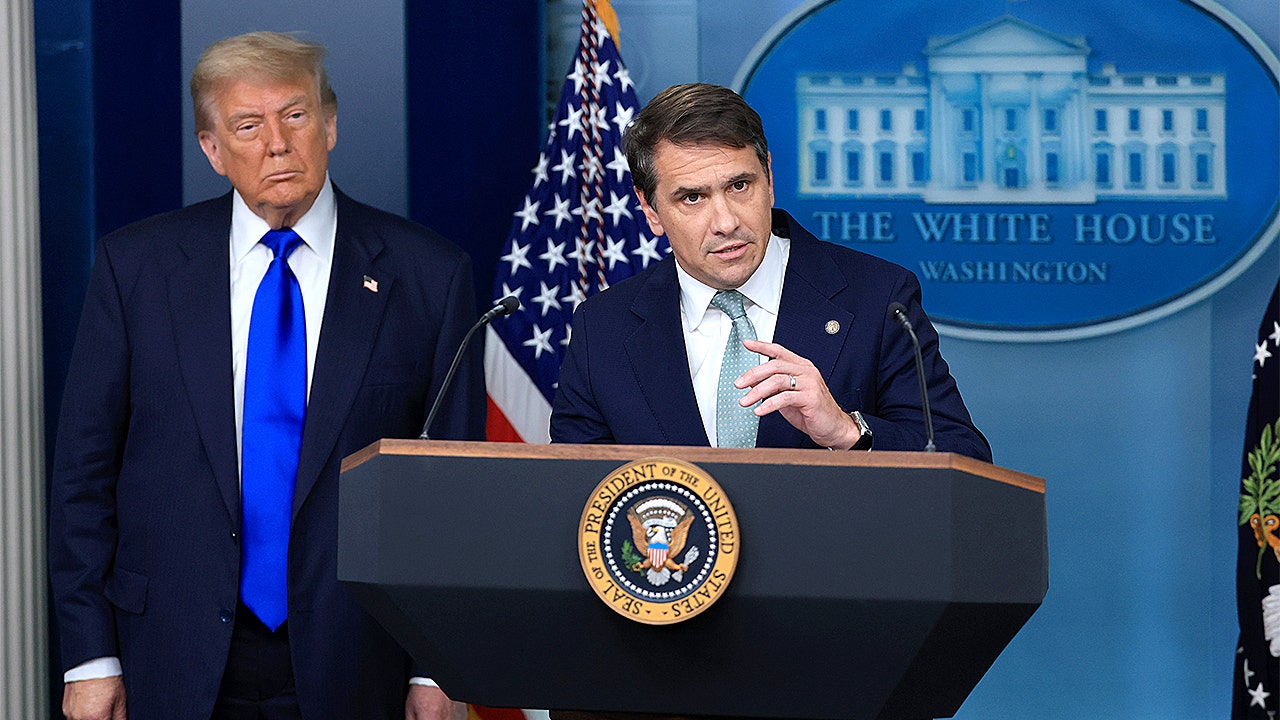
Cover image from foxnews.com, which was analyzed for this article
The DOJ sued Connecticut cities over sanctuary policies defying federal immigration enforcement, amid mass arrests criticized for low violent crime rates. ICE detention conditions draw outcry, while task forces target immigrants. Stories highlight enforcement stats and human rights concerns.
PoliticalOS
Wednesday, April 15, 2026 — Politics
The Trump administration is aggressively testing the limits of federal immigration power through lawsuits against sanctuary jurisdictions, multi-agency crime task forces that include immigration enforcement, and rapid expansion of detention capacity. While officials cite concrete drops in certain crimes and large numbers of arrests and weapons seizures, independent verification of some key statistics remains incomplete and local communities report chilled cooperation, economic disruption and genuine fear. The central unresolved issue is whether these tactics ultimately enhance safety or erode the trust necessary for effective policing in diverse neighborhoods.
What outlets missed
Most coverage omitted that Connecticut's Trust Act, as amended in 2025, explicitly requires honoring ICE detainers for serious felonies, judicial warrants or terror watchlist matches, undercutting blanket claims of total non-cooperation. Outlets also underplayed the March 2026 federal court dismissal of a near-identical DOJ suit against Colorado and Denver, which ruled states cannot be compelled to use their resources for federal immigration enforcement. On the Memphis task force, few reports balanced immigrant arrest data with specific metrics on 44 homicide arrests, more than 6,400 firearms violations and recovery of 123 missing children. Coverage of Camp East Montana rarely noted ICE's replacement of the original contractor in March 2026 or the facility's explicitly temporary design, framing problems as systemic rather than transitional. Finally, pre-existing crime declines in Memphis since 2023 were sometimes mentioned but seldom integrated with the task force's warrant-heavy arrest profile.
Immigrant communities across the U.S. report growing fear of detention and family separation even as the Trump administration points to falling crime rates in targeted cities and insists its policies restore order. At the center of the tension sits a simple question: Can federal immigration enforcement override local rules designed to build community trust without undermining public safety?
The Justice Department filed suit April 14, 2026, against Connecticut, Gov. Ned Lamont, Attorney General William Tong, the city of New Haven and Mayor Justin Elicker. The complaint alleges that the state's Trust Act and New Haven's executive order limiting cooperation with immigration authorities violate federal law, are preempted by the Supremacy Clause and have allowed dangerous criminals to be released into communities. Assistant Attorney General Brett Shumate called the policies "open defiance" of federal authority. Connecticut officials counter that their laws do not block federal enforcement, prioritize serious crime and respect constitutional limits on commandeering state resources. Lamont's office noted the Trust Act requires compliance with ICE detainers for serious felonies, a detail the DOJ complaint acknowledges but argues is insufficient. A similar DOJ suit against Colorado and Denver was dismissed by a federal judge on March 31, 2026; that precedent could not be independently verified as controlling in the Connecticut case.
The lawsuit forms one front in a broader enforcement push. In Memphis, a multi-agency Safe Task Force launched last fall has made more than 5,200 arrests. A ProPublica and MLK50 analysis of daily reports from October 2025 through early February 2026 found more than 800 of those involved people deemed unlawfully present; only 2 percent of the immigration-related arrests included violent crime charges. Four out of five such arrests followed traffic stops for minor violations. Those figures could not be independently verified by other outlets. Administration officials, including a White House spokesperson, credit the task force with a more than 30 percent drop in homicides, aggravated assaults and sexual assaults, plus recovery of hundreds of illegal firearms and execution of more than 1,800 warrants. Memphis Police Department data shows violent crime had already been declining since 2023 and reached a 25-year low before the federal surge began. Criminologists contacted by multiple outlets said further study is required to isolate the task force's effect.
Meanwhile, conditions inside a large temporary ICE detention facility in the Texas desert have drawn sharp criticism. Camp East Montana, a soft-sided tent complex on Fort Bliss with capacity for 5,000 and an average daily population near 2,500, opened last summer. Detainees and advocates described constant dust, temperature extremes, limited medical access, lack of sunlight and serious illnesses. One confirmed death occurred at the site in January 2026; claims of two additional deaths there and specific disease outbreaks including tuberculosis, Covid and measles appeared in The Guardian but were not corroborated by other reporting. An internal ICE inspection in February identified 22 deficiencies related to use of force, medical care and other standards, though the facility received an acceptable rating overall. DHS rejected the most serious allegations, stating detainees receive three meals daily, full medical services, water and opportunities for family contact, and denied claims of denied sunlight or unsafe exposure. The agency also replaced the original operator in March 2026 and indicated the camp was always intended as short-term; those remedial steps received limited attention in some coverage. Environmental concerns about generator emissions and proximity to possibly contaminated soil were raised by advocates and academics but disputed by base officials, who said the location is not on a documented hazardous site.
Reactions split along predictable lines. New Haven's mayor called the federal complaint misleading and vowed to fight it. Tong labeled the suit baseless and a waste of resources. Memphis Mayor Paul Young, a Democrat, welcomed the crime reduction but distanced himself from the immigration component, saying the city's growing Hispanic population has contributed to economic vitality. Immigrant advocates and pastors in Memphis reported reduced church attendance, halved school participation in some periods, plummeting business sales and families preparing contingency plans for children. Federal officials maintain the operations target violent offenders and protect all residents, including those in high-crime neighborhoods.
Unresolved questions remain. Courts must still decide whether state and local limits on immigration cooperation cross into unconstitutional obstruction. Data gaps persist on exactly how many individuals with serious criminal records were released under the challenged Connecticut policies. The net impact of expanded ICE capacity on both border security and humanitarian standards is still being measured. What is clear is that the administration's approach has produced measurable enforcement numbers, visible community anxiety and fresh legal battles that will shape immigration policy for years.
More in Politics

Federal Agents Search Omar Home in Ongoing Immigration Probe
Homeland Security agents searched the Minnesota Democrat's DC residence in a criminal probe, prompting accusations of political intimidation from Omar and Democratic leaders. Coverage spans left-leaning outlets like NPR, BBC, and The Guardian alongside right-leaning criticism from The Federalist and Daily Wire.

Trump Diesel Import Plan Draws Pushback Over Russia Ties
The weekend agreement drew bipartisan congressional pushback and criticism from Ukraine's Zelenskyy, with analysts downplaying US fuel price impacts. Right-leaning outlets like National Review, Dispatch, and Washington Examiner questioned its legality and effectiveness.

Independents Test Voter Appetite for Middle Ground in 2026 Midterms
Nearly 200 independents are running in competitive races as voters weigh ballot measures on housing costs in states like Massachusetts. Left-leaning coverage from NYT, NPR, and Guardian highlights turnout and key races while right outlets focus on GOP strategy.
Trump Rallies in Alaska, Ohio to Bolster GOP Senate Candidates
The president rallied in Wasilla for Sen. Dan Sullivan and faced empty seats at an Ohio event amid midterm concerns. Outlets across the spectrum covered the trips as signals of GOP vulnerability weeks before Election Day.
The Compass
You just read five takes on one story.
What's your take? Find your political shape in a few minutes.
Take the test