
DOJ Sues Connecticut Sanctuary Cities as Enforcement, Arrests and Detention Conditions Spark Debate
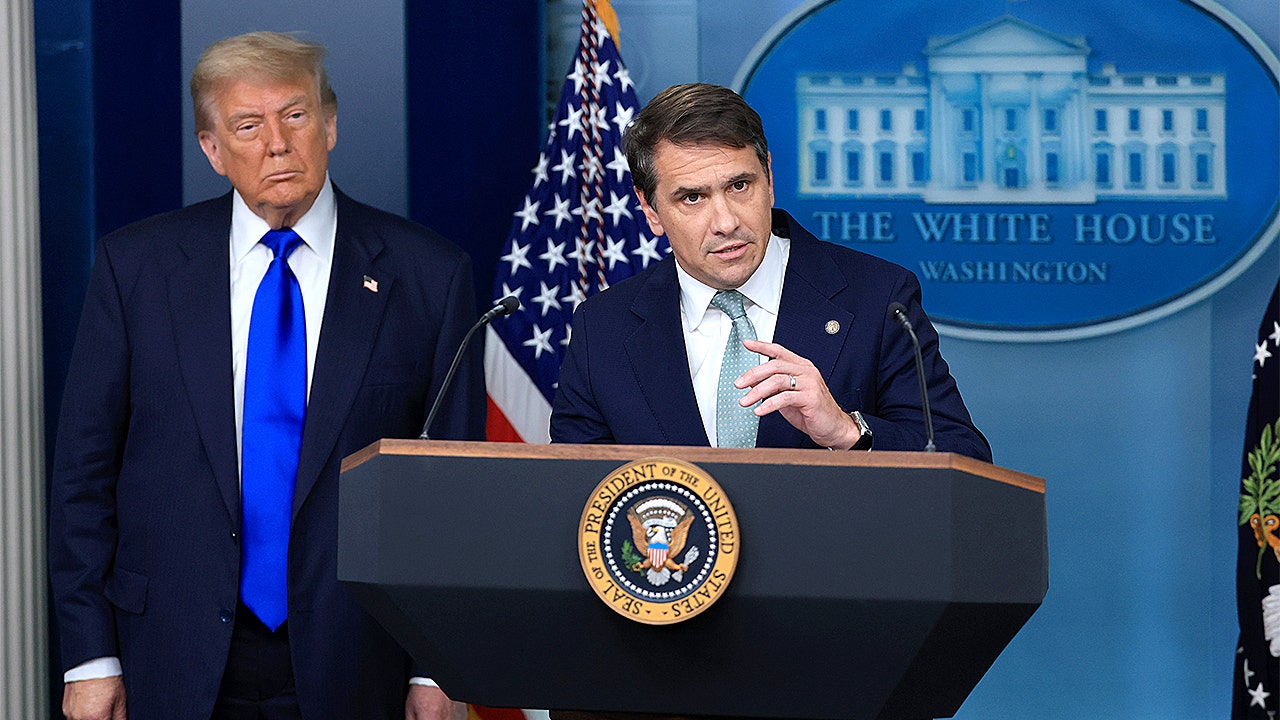
Cover image from foxnews.com, which was analyzed for this article
The DOJ sued Connecticut cities over sanctuary policies defying federal immigration enforcement, amid mass arrests criticized for low violent crime rates. ICE detention conditions draw outcry, while task forces target immigrants. Stories highlight enforcement stats and human rights concerns.
PoliticalOS
Wednesday, April 15, 2026 — Politics
The Trump administration is aggressively testing the limits of federal immigration power through lawsuits against sanctuary jurisdictions, multi-agency crime task forces that include immigration enforcement, and rapid expansion of detention capacity. While officials cite concrete drops in certain crimes and large numbers of arrests and weapons seizures, independent verification of some key statistics remains incomplete and local communities report chilled cooperation, economic disruption and genuine fear. The central unresolved issue is whether these tactics ultimately enhance safety or erode the trust necessary for effective policing in diverse neighborhoods.
What outlets missed
Most coverage omitted that Connecticut's Trust Act, as amended in 2025, explicitly requires honoring ICE detainers for serious felonies, judicial warrants or terror watchlist matches, undercutting blanket claims of total non-cooperation. Outlets also underplayed the March 2026 federal court dismissal of a near-identical DOJ suit against Colorado and Denver, which ruled states cannot be compelled to use their resources for federal immigration enforcement. On the Memphis task force, few reports balanced immigrant arrest data with specific metrics on 44 homicide arrests, more than 6,400 firearms violations and recovery of 123 missing children. Coverage of Camp East Montana rarely noted ICE's replacement of the original contractor in March 2026 or the facility's explicitly temporary design, framing problems as systemic rather than transitional. Finally, pre-existing crime declines in Memphis since 2023 were sometimes mentioned but seldom integrated with the task force's warrant-heavy arrest profile.
Trump Administration Immigration Enforcement Arrests Hundreds in Memphis as Sanctuary Policies Face Legal Reckoning
Federal task forces deployed by the Trump administration in Memphis have arrested more than 800 illegal immigrants in recent months, exposing the scale of unlawful presence in communities already strained by crime and disorder. Records reviewed by multiple outlets show the Memphis Safe Task Force conducted over 5,200 arrests in its first four months, with immigration violations forming a significant portion. Only about 2 percent involved violent crimes, according to an analysis by ProPublica, but the bulk targeted nonviolent offenses that nevertheless erode quality of life for law-abiding residents.
The operation was ordered to restore order in a city long plagued by violence. While overall crime has declined since 2023 and reached a 25-year low before the surge began, supporters argue the task force prevents backsliding by removing individuals who should not be in the country to begin with. Many of the immigration arrests, roughly four out of five, stemmed from routine traffic stops, a standard procedure that critics of lax enforcement have long demanded. When local or federal officers encounter someone without legal status during a lawful stop, immigration consequences follow. That reality has created fear in certain neighborhoods, but it also demonstrates that enforcement is finally treating illegal entry as the crime it is under federal law.
One Honduran national who sells shoes from a street stand described living in constant vigilance after watching agents detain several people near his location last fall and winter. The man, who entered the United States illegally seven years ago after leaving Honduras, saw two Guatemalans arrested in a parking lot, a Mexican taco truck operator taken into custody, and his own 19-year-old nephew detained following a traffic stop. The nephew remains in a Tennessee detention center. Similar accounts have circulated among vendors and workers who lack authorization to remain, many of whom fled difficult conditions abroad only to establish new unauthorized lives here. Federal authorities maintain that repeated violations of American sovereignty cannot be overlooked simply because the individuals involved have avoided the most serious offenses.
The Memphis effort reflects a broader push by the Trump administration to prioritize enforcement where local leaders have failed. That approach is colliding with entrenched resistance in blue strongholds. On the same day details of the Memphis arrests circulated, the Department of Justice filed suit against Connecticut and the city of New Haven, accusing them of maintaining sanctuary policies that amount to open defiance of federal immigration law. The complaint, which names Governor Ned Lamont, Attorney General William Tong, New Haven Mayor Justin Elicker and the city itself, targets the state’s Trust Act and related measures that restrict cooperation with Immigration and Customs Enforcement.
Justice Department officials say these policies have directly contributed to the release of dangerous criminals back into communities. Assistant Attorney General Brett Shumate described the sanctuary approach as having imposed real costs on Connecticut residents for years. The lawsuit argues that state and local rules are preempted by the Supremacy Clause of the Constitution and that intentional obstruction of federal officers endangers public safety. New Haven officials rejected the claims, insisting their policies do not block federal enforcement and promising to fight the suit. Yet the Justice Department presented evidence that such measures have repeatedly shielded individuals with serious criminal histories from removal.
These legal battles occur against the backdrop of expanded detention capacity needed to handle the consequences of years of porous borders. A large tent facility at Fort Bliss in Texas, known as Camp East Montana, now holds thousands of immigration detainees and has become the largest such center in the country. Capacity stands at 5,000 with an average daily population exceeding 2,500. Reports from some released detainees describe dusty conditions, constant cold air from industrial cooling units, leaking tarps and widespread coughing. Venezuelan nationals and others have used terms like psychological torture when speaking to sympathetic media outlets.
Environmental complaints have also surfaced, with critics claiming generator-powered operations in the desert consume excessive energy. Administration officials counter that temporary facilities were a necessary response to the massive influx encouraged by prior open-border policies. Processing and removal require space. Conditions, while spartan, provide food, shelter and medical care to people who entered the country unlawfully. The real scandal, enforcement advocates maintain, remains the decade-long failure to control the border that produced this backlog in the first place. Flying detainees across states and housing them temporarily is an expensive consequence of earlier neglect, not an excuse to abandon enforcement.
The Memphis arrests and the Connecticut lawsuit illustrate two sides of the same policy debate. One side highlights stories of nervous street vendors and chilly detention tents. The other emphasizes that illegal immigrants who accumulate any criminal record, traffic or otherwise, have no right to remain and that sanctuary rules endanger American neighborhoods by design. President Trump’s directives have made clear which priority guides this administration: enforcement of existing law and protection of citizens who never consented to the costs of unchecked migration.
Local Memphis residents watching the task force operate have reported mixed reactions. Some business owners welcome fewer unauthorized vendors competing with licensed operators. Others worry the emphasis on immigration distracts from domestic criminals. Federal records, however, show the operation has removed hundreds who were never supposed to be here, many with records of theft, drug possession or repeated violations that burden local jails and courts. In an era when violent crime statistics are sometimes massaged through selective charging, removing illegal immigrants at the first lawful opportunity represents a return to basic order.
Connecticut’s fight against the Justice Department may prove instructive. If federal courts uphold the administration’s position, similar sanctuary arrangements in other states could fall. That would accelerate cooperation between local police and immigration authorities, likely producing more arrests like those seen in Memphis. The street vendor who fears for his family understands the stakes. So do the communities that have absorbed the consequences of policies that treated borders as suggestions. The current surge in enforcement is an overdue correction, one that places the interests of American citizens first.
You just read America First's take. Want to read what actually happened?
More in Politics

Federal Agents Search Omar Home in Ongoing Immigration Probe
Homeland Security agents searched the Minnesota Democrat's DC residence in a criminal probe, prompting accusations of political intimidation from Omar and Democratic leaders. Coverage spans left-leaning outlets like NPR, BBC, and The Guardian alongside right-leaning criticism from The Federalist and Daily Wire.

Trump Diesel Import Plan Draws Pushback Over Russia Ties
The weekend agreement drew bipartisan congressional pushback and criticism from Ukraine's Zelenskyy, with analysts downplaying US fuel price impacts. Right-leaning outlets like National Review, Dispatch, and Washington Examiner questioned its legality and effectiveness.

Independents Test Voter Appetite for Middle Ground in 2026 Midterms
Nearly 200 independents are running in competitive races as voters weigh ballot measures on housing costs in states like Massachusetts. Left-leaning coverage from NYT, NPR, and Guardian highlights turnout and key races while right outlets focus on GOP strategy.

Trump Rallies in Alaska, Ohio to Bolster GOP Senate Candidates
The president rallied in Wasilla for Sen. Dan Sullivan and faced empty seats at an Ohio event amid midterm concerns. Outlets across the spectrum covered the trips as signals of GOP vulnerability weeks before Election Day.
The Compass
You just read five takes on one story.
What's your take? Find your political shape in a few minutes.
Take the test