
Swalwell Resigns Congress After Sexual Misconduct Allegations
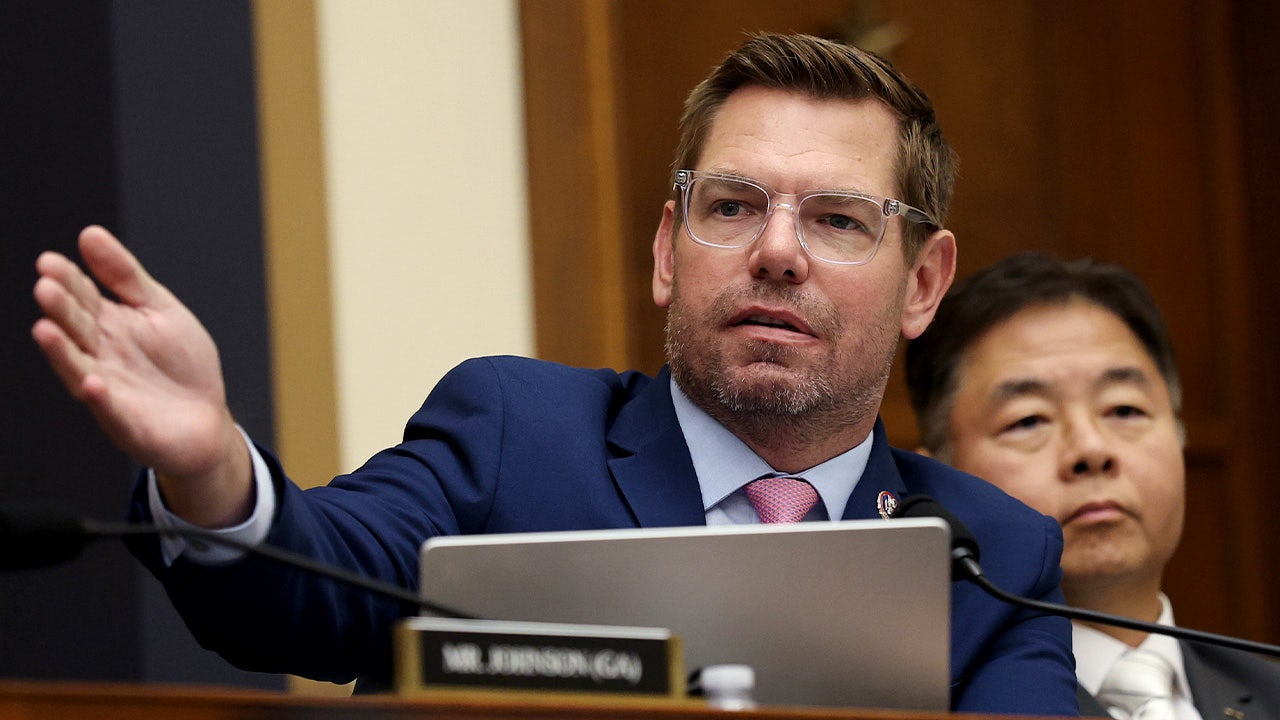
Cover image from foxnews.com, which was analyzed for this article
Accusers detailed assaults by Rep. Swalwell in a CBS interview, fearing reprisal. GOP rivals exploit the claims to question his fitness. The scandal intensifies scrutiny on his lightweight career.
PoliticalOS
Tuesday, April 14, 2026 — Politics
Multiple women have accused Rep. Eric Swalwell of sexual misconduct, prompting his rapid exit from Congress and the California governor's race in April 2026. He denies the most serious claims while acknowledging past misjudgments, and a House Ethics Committee probe is underway. The single most important reality is that long-circulating rumors became public allegations with enough political force to end a career, yet many specifics remain unverified across outlets and full evidence will emerge only through formal review.
What outlets missed
Most outlets underplayed or omitted Swalwell's explicit vow to fight the allegations with evidence, framing his exit solely as an admission rather than a contested decision. The formal opening of the House Ethics Committee probe, confirmed by AP, WTOP and Reuters, received minimal detail despite offering the primary institutional avenue for reviewed findings. Coverage also largely ignored the broader context of simultaneous expulsion discussions involving Republican members facing their own allegations, which several outlets noted only in passing. Specific claims of a Manhattan DA investigation appeared exclusively in one report and could not be independently verified. Finally, the precise mechanics of how accusers connected via an influencer and social media in just 11 days were downplayed, leaving the organic spread of the story underexplored.
A California congressman's bid for higher office ended in days. Multiple women accused Rep. Eric Swalwell of sexual misconduct. He dropped his campaign for governor and resigned his House seat on April 14, 2026. The claims, detailed in a CBS News interview, described assaults, unsolicited explicit messages and encounters where women said they were too intoxicated to consent. Accusers said they had feared professional reprisal. One told CBS she felt physically ill at the prospect of Swalwell gaining more power.
The timeline accelerated quickly. Allegations first gained traction through social media posts and a San Francisco Chronicle report focusing on a former staffer. Within 11 days, multiple women had come forward, according to one participant in the CBS segment. They connected through an influencer who posted a video after being contacted by a new accuser. That influencer told CBS more than 30 women eventually reached out with claims ranging from harassment to assault. Two named accusers, Ally Sammarco and Annika Albrecht, described professional overtures that turned flirtatious via Snapchat. Both said they viewed the exchanges as mentorship opportunities at first. One recalled receiving an explicit photo. Another described an invitation to a hotel room whose intent seemed clear. They denied any coordination with political rivals.
Swalwell rejected the core accusations. His statement called the most serious claims "flat out false" and politically motivated. He acknowledged past "mistakes in judgment" without specifying them and said he did not want to distract from congressional duties. The resignation followed bipartisan pressure. California Democratic Party Chairman Rusty Hicks described the allegations as deeply disturbing. Sen. Elizabeth Warren said she was glad Swalwell would be gone and that those in power must face accountability. House Speaker Nancy Pelosi indicated the decision to step down was Swalwell's own and called it smart. Republicans, including Rep. Andy Ogles, discussed the case alongside separate misconduct claims against GOP members, raising the possibility of paired expulsion votes that ultimately did not materialize.
Andrew Yang, who ran against Swalwell in the 2020 Democratic presidential primary, published a Substack post that coincided with the unfolding events. Yang called Swalwell's career "lightweight," arguing he lacked the vision, intellect or conviction required for higher office. He recounted a 2019 debate moment in which Swalwell challenged then-candidate Joe Biden to "pass the torch," only for Biden to confront him privately. Yang described Swalwell as a reliable cable news partisan after dropping out and said his presidential ambitions had been "in way over his head." He likened the trajectory to Icarus flying too close to the sun. Yang noted that rumors of sexual impropriety had circulated as an "open secret" in Democratic circles in Washington and California, though such characterizations could not be independently verified beyond his account.
A central tension remains unresolved. The women say Swalwell acted as though he was untouchable after years without public consequences, including his 2020 presidential run. Swalwell maintains the claims are false. The House Ethics Committee opened a formal investigation on the same day as the resignation announcement, according to reports from WTOP, AP and Reuters. That probe's status and any timeline for findings have not been detailed publicly. Some coverage mentioned a possible Manhattan District Attorney's Office inquiry stemming from an alleged incident in New York; that detail appeared only in the CBS report and could not be corroborated elsewhere. Swalwell's prior public statements urging support for sexual assault survivors during the 2018 Kavanaugh hearings also surfaced in some accounts, though specific tweets cited by one outlet could not be independently verified in archives.
Reactions compressed into a clear pattern. Democrats who once backed Swalwell distanced themselves within hours. Republicans treated the scandal as validation of long-held criticisms of his seriousness. California political observers noted the sudden vacuum in the gubernatorial primary, potentially benefiting candidates such as Katie Porter. Few outlets explored the whisper networks that allegedly existed on Capitol Hill warning women to avoid Swalwell; those claims surfaced in the CBS interviews but lacked named corroborators. The speed of his exit, one day after suspending the governor's race, left open questions about whether institutional protections had delayed accountability or whether the allegations represented a coordinated political hit, as Swalwell suggested. No charges have been filed. The Ethics Committee process offers the nearest mechanism for formal findings.
What happened matters beyond one politician. It tests whether Congress can police its own after years of high-profile misconduct cases on both sides of the aisle. It also highlights the power of social media and direct accuser testimony to force outcomes faster than traditional reporting. Swalwell had built a national profile through consistent television appearances and sharp partisan rhetoric. That profile made the fall visible. Yet the full evidentiary record remains incomplete. Accusers described a pattern spanning years and multiple contexts, from campaign events to college visits. Swalwell's team has signaled intent to present counter-evidence. Readers seeking finality will wait for the Ethics Committee or any law enforcement developments that can be verified across sources.
More in Politics

Federal Agents Search Omar Home in Ongoing Immigration Probe
Homeland Security agents searched the Minnesota Democrat's DC residence in a criminal probe, prompting accusations of political intimidation from Omar and Democratic leaders. Coverage spans left-leaning outlets like NPR, BBC, and The Guardian alongside right-leaning criticism from The Federalist and Daily Wire.

Trump Diesel Import Plan Draws Pushback Over Russia Ties
The weekend agreement drew bipartisan congressional pushback and criticism from Ukraine's Zelenskyy, with analysts downplaying US fuel price impacts. Right-leaning outlets like National Review, Dispatch, and Washington Examiner questioned its legality and effectiveness.

Independents Test Voter Appetite for Middle Ground in 2026 Midterms
Nearly 200 independents are running in competitive races as voters weigh ballot measures on housing costs in states like Massachusetts. Left-leaning coverage from NYT, NPR, and Guardian highlights turnout and key races while right outlets focus on GOP strategy.
Trump Rallies in Alaska, Ohio to Bolster GOP Senate Candidates
The president rallied in Wasilla for Sen. Dan Sullivan and faced empty seats at an Ohio event amid midterm concerns. Outlets across the spectrum covered the trips as signals of GOP vulnerability weeks before Election Day.
The Compass
You just read five takes on one story.
What's your take? Find your political shape in a few minutes.
Take the test