
Swalwell Resigns Congress After Sexual Misconduct Allegations
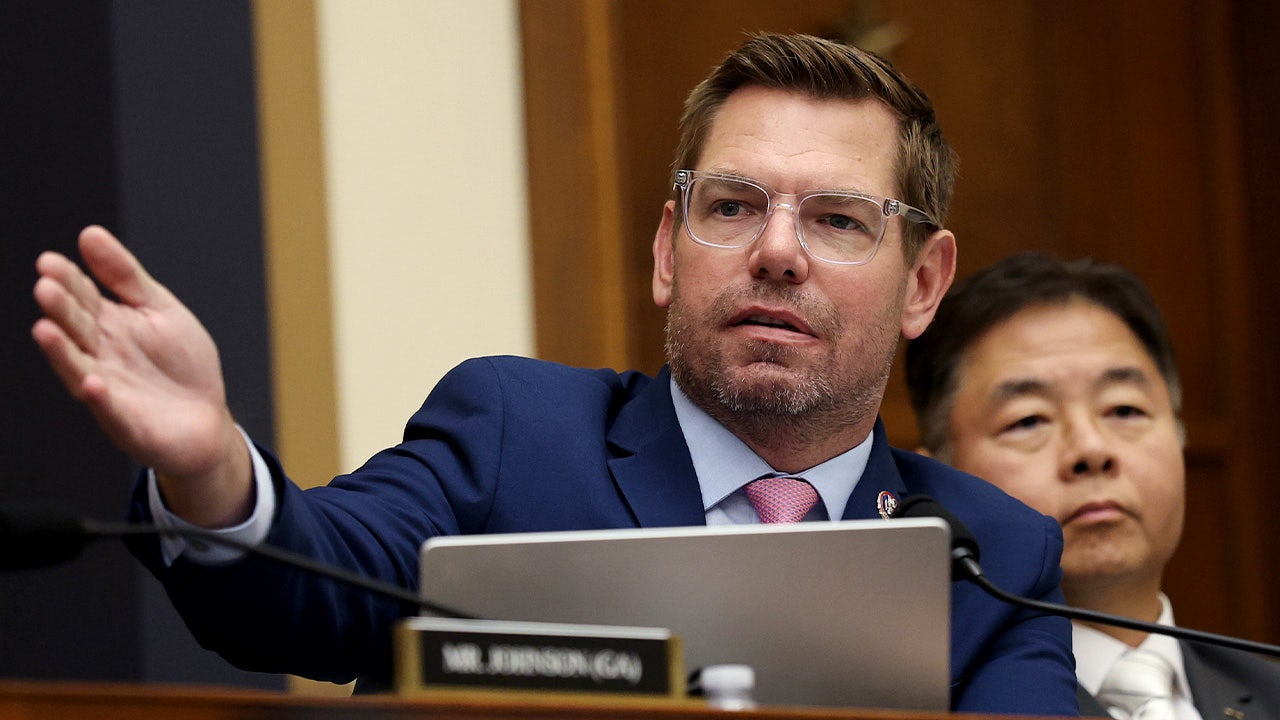
Cover image from foxnews.com, which was analyzed for this article
Accusers detailed assaults by Rep. Swalwell in a CBS interview, fearing reprisal. GOP rivals exploit the claims to question his fitness. The scandal intensifies scrutiny on his lightweight career.
PoliticalOS
Tuesday, April 14, 2026 — Politics
Multiple women have accused Rep. Eric Swalwell of sexual misconduct, prompting his rapid exit from Congress and the California governor's race in April 2026. He denies the most serious claims while acknowledging past misjudgments, and a House Ethics Committee probe is underway. The single most important reality is that long-circulating rumors became public allegations with enough political force to end a career, yet many specifics remain unverified across outlets and full evidence will emerge only through formal review.
What outlets missed
Most outlets underplayed or omitted Swalwell's explicit vow to fight the allegations with evidence, framing his exit solely as an admission rather than a contested decision. The formal opening of the House Ethics Committee probe, confirmed by AP, WTOP and Reuters, received minimal detail despite offering the primary institutional avenue for reviewed findings. Coverage also largely ignored the broader context of simultaneous expulsion discussions involving Republican members facing their own allegations, which several outlets noted only in passing. Specific claims of a Manhattan DA investigation appeared exclusively in one report and could not be independently verified. Finally, the precise mechanics of how accusers connected via an influencer and social media in just 11 days were downplayed, leaving the organic spread of the story underexplored.
Swalwell Resigns From Congress as Sexual Assault Allegations Reveal Decades of Protected Misconduct
Eric Swalwell's political career collapsed this week under the weight of accusations from multiple women who say the California Democrat sexually assaulted them and exploited his power in ways that were apparently an open secret in Washington. On Monday the congressman announced he was resigning his House seat and ending his bid for governor, claiming the allegations were false and politically motivated. The swift exit came after a former staffer accused him of engaging in sexual activity with her while she was too intoxicated to consent. Other women have come forward with claims of unsolicited explicit messages, nude photos, and aggressive behavior toward young females.
The timing is hard to ignore. Swalwell built much of his public brand on demanding that America "believe survivors" during the Brett Kavanaugh confirmation hearings. In 2018 he tweeted that Christine Blasey Ford's description of an alleged assault "rang of truth" and that details like her memory of a one-piece bathing suit were "clearly burned in her memory" and "a fact only a survivor would remember." He urged supporters to "Support survivors. Believe survivors. We are with you." Now that the accusations are aimed at one of their own, prominent Democrats have been largely silent. Few have called for investigations or expressed anything resembling the moral outrage they directed at Republicans.
Andrew Yang, who ran against Swalwell in the crowded 2020 Democratic presidential primary, delivered one of the more cutting assessments. Yang described his former rival as a "lightweight" who lacked intellectual depth or genuine policy convictions. He recalled Swalwell's short-lived presidential campaign moment challenging Joe Biden to "pass the torch," only for Biden to grab him by the lapels during a commercial break and tell him he wasn't going anywhere. Swalwell dropped out days later. After that, according to Yang, Swalwell became a reliable cable news soldier on MSNBC and CNN, repeating party talking points and growing his social media following rather than taking political risks. When Biden's age became a liability in 2024 and other Democrats tried to force a primary, Swalwell was nowhere to be found. Loyalty to the machine, Yang suggested, proved a better career path than principle.
Women who have accused Swalwell paint a picture of a man who believed he operated above accountability. Ally Sammarco, whose claims were first reported by CNN, told CBS News that Swalwell "thought he was untouchable." Annika Albrecht, speaking publicly for the first time, said justice would not be complete until Swalwell can no longer harm women and faces real consequences. Cheyenne Hunt, an influencer who has also come forward, joined them in expressing vindication at his downfall while noting that he only stepped aside because expulsion appeared inevitable. They described a pattern of behavior that allegedly stretched across years and involved staffers and others who felt powerless to speak out against a sitting congressman with national media allies.
What makes the story particularly galling is the admission from multiple journalists that they had heard these accounts for years but chose not to pursue them. In the days since the allegations gained traction, reporters have taken to social media to confess that Swalwell's reputation for infidelity, aggression toward young women, and misuse of power was common knowledge in Democratic circles. This protection racket allowed him to continue serving on the House Intelligence Committee and positioning himself as a leading voice against Donald Trump. The same press corps that spent years amplifying every unverified claim against Republicans suddenly discovered restraint when the accused was a telegenic Democrat who reliably attacked conservatives.
The resignation also raises uncomfortable questions about internal party dealing. Republican Rep. Andy Ogles suggested there may have been discussions of a trade involving expulsions on both sides of the aisle. Swalwell's exit removes one headache for Democrats heading into tough midterm battles, but it does not erase the stench of selective outrage. For years the party weaponized #MeToo against political opponents while shielding its own. Christine Blasey Ford received wall-to-wall coverage and solemn pledges of belief. Women accusing Eric Swalwell have faced a very different reception.
Swalwell's fall arrives at a moment when public trust in Congress is already near rock bottom. The man who once lectured the country about character and consent now leaves office under a cloud of alleged predation that his own former colleagues and the press helped obscure. His defenders insist the claims are a right-wing conspiracy, yet the accusers include former staffers and others with no obvious partisan axe to grind. Their accounts describe a politician who viewed his position as license rather than responsibility.
Democrats spent the better part of a decade portraying themselves as the party that finally believed women and held powerful men accountable. The Swalwell episode suggests that principle applied only when it was convenient. As more women step forward and the details of his conduct circulate beyond the protective bubble of partisan media, voters may wonder how many other untouchable figures remain shielded by the same machinery that finally failed to save Eric Swalwell. His resignation may end this particular scandal, but the pattern it reveals is unlikely to disappear with him.
You just read America First's take. Want to read what actually happened?
More in Politics
Trump at 32% Approval as Gas Prices Test GOP Midterm Hopes
NYT/Siena polling showed Trump's approval at historic lows around 32 percent with Democrats leading by double digits in key districts. Early voting has surged in battleground states.

Record Early Voting Hits Battlegrounds, Shifting Partisan Shares
AP analysis found hundreds of thousands more early ballots than in 2022 in states including Texas, Ohio, Kansas, Maine, and North Carolina, shifting partisan dynamics.
Trump Backs Marshall in Kansas Senate Race Tightened by Farm Costs
President Trump rallied in deep-red Kansas for GOP Sen. Roger Marshall in a competitive race, announcing an $8 billion farm fuel relief program amid high diesel prices. Democrats see an opening to end 94 years of GOP dominance in the state.

Trump Pauses Russia Sanctions Amid Ukraine Tensions and Missile Strikes
Trump waived sanctions on Russia and floated trilateral talks with Putin and Xi as part of ending the Ukraine war, while tensions rose with Zelenskyy over Starlink and arms. Bipartisan senators engaged Zelenskyy amid the shifts.
The Compass
You just read five takes on one story.
What's your take? Find your political shape in a few minutes.
Take the test