
Swalwell Resigns Congress After Sexual Misconduct Allegations
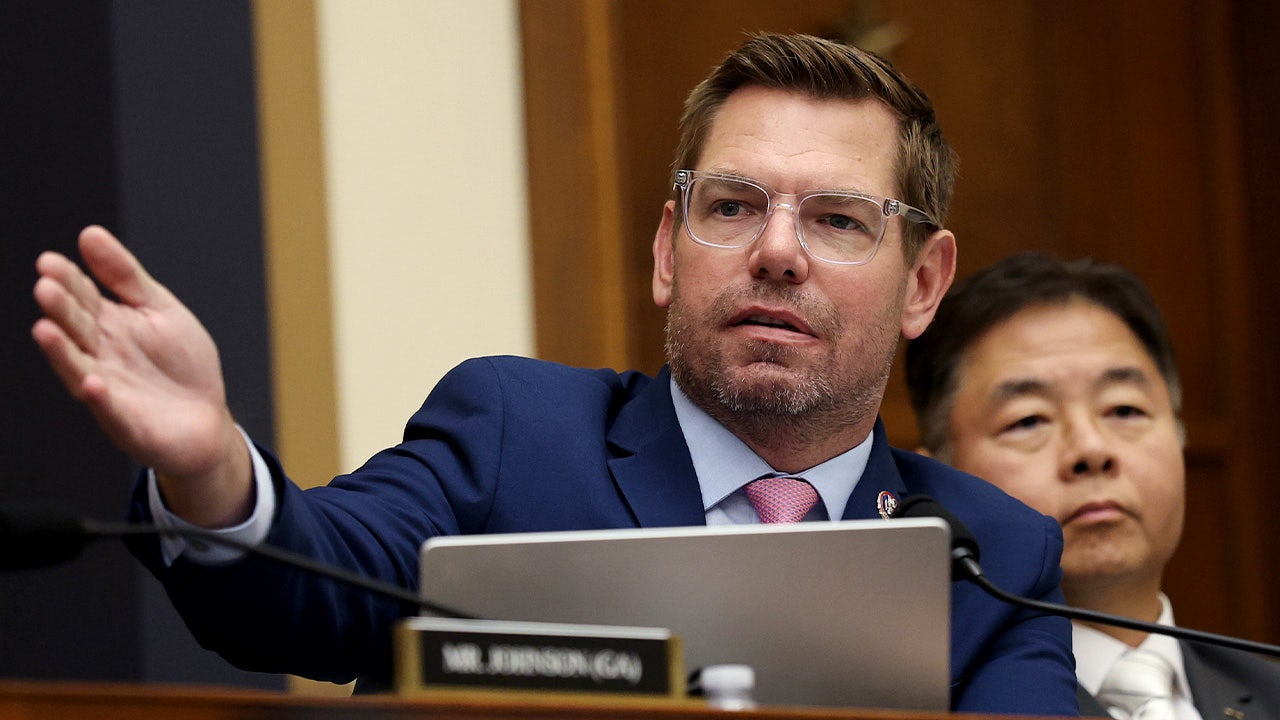
Cover image from foxnews.com, which was analyzed for this article
Accusers detailed assaults by Rep. Swalwell in a CBS interview, fearing reprisal. GOP rivals exploit the claims to question his fitness. The scandal intensifies scrutiny on his lightweight career.
PoliticalOS
Tuesday, April 14, 2026 — Politics
Multiple women have accused Rep. Eric Swalwell of sexual misconduct, prompting his rapid exit from Congress and the California governor's race in April 2026. He denies the most serious claims while acknowledging past misjudgments, and a House Ethics Committee probe is underway. The single most important reality is that long-circulating rumors became public allegations with enough political force to end a career, yet many specifics remain unverified across outlets and full evidence will emerge only through formal review.
What outlets missed
Most outlets underplayed or omitted Swalwell's explicit vow to fight the allegations with evidence, framing his exit solely as an admission rather than a contested decision. The formal opening of the House Ethics Committee probe, confirmed by AP, WTOP and Reuters, received minimal detail despite offering the primary institutional avenue for reviewed findings. Coverage also largely ignored the broader context of simultaneous expulsion discussions involving Republican members facing their own allegations, which several outlets noted only in passing. Specific claims of a Manhattan DA investigation appeared exclusively in one report and could not be independently verified. Finally, the precise mechanics of how accusers connected via an influencer and social media in just 11 days were downplayed, leaving the organic spread of the story underexplored.
Swalwell Resigns From Congress as Sexual Assault Accusers Demand Full Accountability
Rep. Eric Swalwell's two-decade career in Congress came to an abrupt end Monday as he announced his resignation hours after withdrawing from the California gubernatorial race, felled by allegations from multiple women who say he sexually assaulted them and exploited his power. The California Democrat, once a fixture on cable news and a vocal champion of the #MeToo movement, now faces the consequences of behavior that accusers describe as predatory and enabled by a political culture that protected him for years.
Two of the women who accused Swalwell of misconduct spoke publicly for the first time, telling CBS News they feel vindicated but far from satisfied. Ally Sammarco, whose allegations were first reported by CNN, said Swalwell was "pushed into a corner" and chose resignation "to save face." Annika Albrecht, coming forward now for the first time, was blunt about what real justice would require. "For me, justice won't be until he can't ever harm a woman ever again, and he has faced the consequences for the women that he has harmed," she said. Both women, along with influencer Cheyenne Hunt, described a man who "thought he was untouchable."
The allegations include claims of sexual activity with a former staffer while she was too intoxicated to consent, unwanted explicit messages, and the unsolicited sending of nude photographs. Swalwell has denied all of it, calling the claims "false" and suggesting they were timed to damage his gubernatorial ambitions. Yet the pattern described by multiple accusers echoes long-standing whispers in Washington that major news outlets now admit they had heard for years but did not pursue.
That silence is damning. As the story broke, some journalists took to social media to confess they had known about Swalwell's alleged aggression toward young women and staffers. The reluctance to report what was apparently an open secret raises familiar questions about how power protects itself in both parties, particularly when the offender aligns with the right ideological team. Democrats who spent years demanding that women be believed now find one of their own at the center of a classic #MeToo reckoning.
The hypocrisy is glaring. During the 2018 confirmation hearings for Supreme Court Justice Brett Kavanaugh, Swalwell repeatedly insisted that Christine Blasey Ford and other accusers deserved to be heard and believed. "Support survivors. Believe survivors. We are with you," he tweeted. He praised the credibility of Ford's testimony down to specific details only "a survivor would remember." Now that the accusations are directed at him, Swalwell's tone has shifted entirely to denial and claims of political warfare.
Andrew Yang, who competed against Swalwell in the crowded 2020 Democratic presidential primary, offered a harsh postmortem. The former candidate described Swalwell's career as "lightweight," saying he was neither "an intellect or deep policy thinker" but rather someone more interested in self-promotion than principle. Yang recounted how Swalwell challenged Joe Biden on generational change during a primary debate only to fold quickly after a private confrontation with the then-former vice president. After his presidential bid fizzled, Swalwell became a reliable cable news soldier, Yang said, reciting Democratic talking points while building his social media profile. When Biden's age became a liability in 2024 and other Democrats tried to force a primary, Swalwell was notably absent.
The resignation also comes amid quiet talk on Capitol Hill of possible backroom deals. Rep. Andy Ogles, a Republican, suggested there may have been discussions about trading votes on expulsions, pairing Swalwell's case with those of two GOP members. Few Democrats have publicly called for Swalwell to step down, a reluctance that stands in stark contrast to their rhetoric when the accused wore a different jersey.
Swalwell's fall arrives at a moment when the Democratic Party is already struggling with credibility on issues of integrity and institutional reform. For years he positioned himself as a fierce opponent of Donald Trump and a defender of progressive values, all while, according to his accusers, behaving in ways that mocked those very principles. The women who spoke to CBS News made clear they did not come forward lightly. Fear of retaliation and the knowledge that powerful men in Washington often survive such scandals kept many silent until the dam finally broke.
Whether Swalwell's resignation represents genuine accountability or merely damage control remains to be seen. The accusers say their fight is not over. They want more than a quiet exit from Congress. They want a system that no longer treats credible allegations against its own as inconvenient distractions to be managed. In an era when politicians of both parties lecture the public about morality while too often shielding their colleagues from scrutiny, Swalwell's downfall offers a rare, if bitter, reminder that eventually the stories catch up.
His departure leaves a vacuum in California's delegation and raises uncomfortable questions for a Democratic Party that spent the better part of a decade branding itself as the party that believes women, until belief became personally inconvenient. The accusers have been clear. They are watching to see whether this time the rhetoric will finally match the results.
You just read Progressive's take. Want to read what actually happened?
More in Politics

Federal Agents Search Omar Home in Ongoing Immigration Probe
Homeland Security agents searched the Minnesota Democrat's DC residence in a criminal probe, prompting accusations of political intimidation from Omar and Democratic leaders. Coverage spans left-leaning outlets like NPR, BBC, and The Guardian alongside right-leaning criticism from The Federalist and Daily Wire.

Trump Diesel Import Plan Draws Pushback Over Russia Ties
The weekend agreement drew bipartisan congressional pushback and criticism from Ukraine's Zelenskyy, with analysts downplaying US fuel price impacts. Right-leaning outlets like National Review, Dispatch, and Washington Examiner questioned its legality and effectiveness.

Independents Test Voter Appetite for Middle Ground in 2026 Midterms
Nearly 200 independents are running in competitive races as voters weigh ballot measures on housing costs in states like Massachusetts. Left-leaning coverage from NYT, NPR, and Guardian highlights turnout and key races while right outlets focus on GOP strategy.
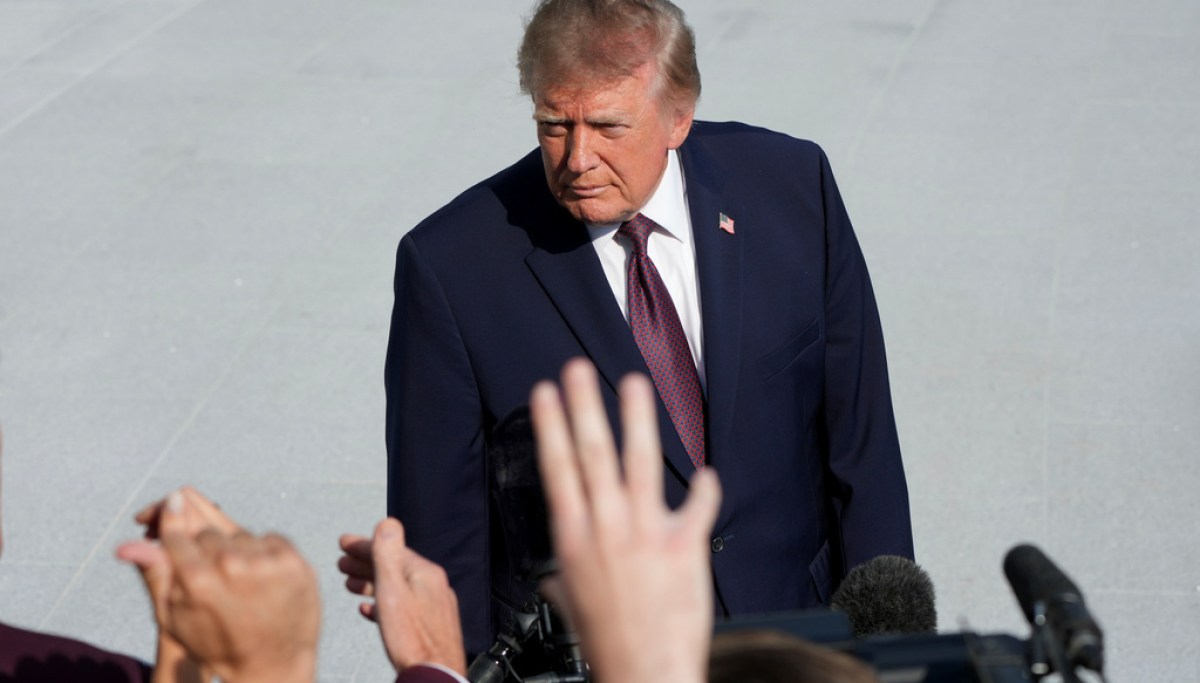
Trump Rallies in Alaska, Ohio to Bolster GOP Senate Candidates
The president rallied in Wasilla for Sen. Dan Sullivan and faced empty seats at an Ohio event amid midterm concerns. Outlets across the spectrum covered the trips as signals of GOP vulnerability weeks before Election Day.
The Compass
You just read five takes on one story.
What's your take? Find your political shape in a few minutes.
Take the test