
Swalwell Resigns From Congress as Sexual Assault Allegations Multiply
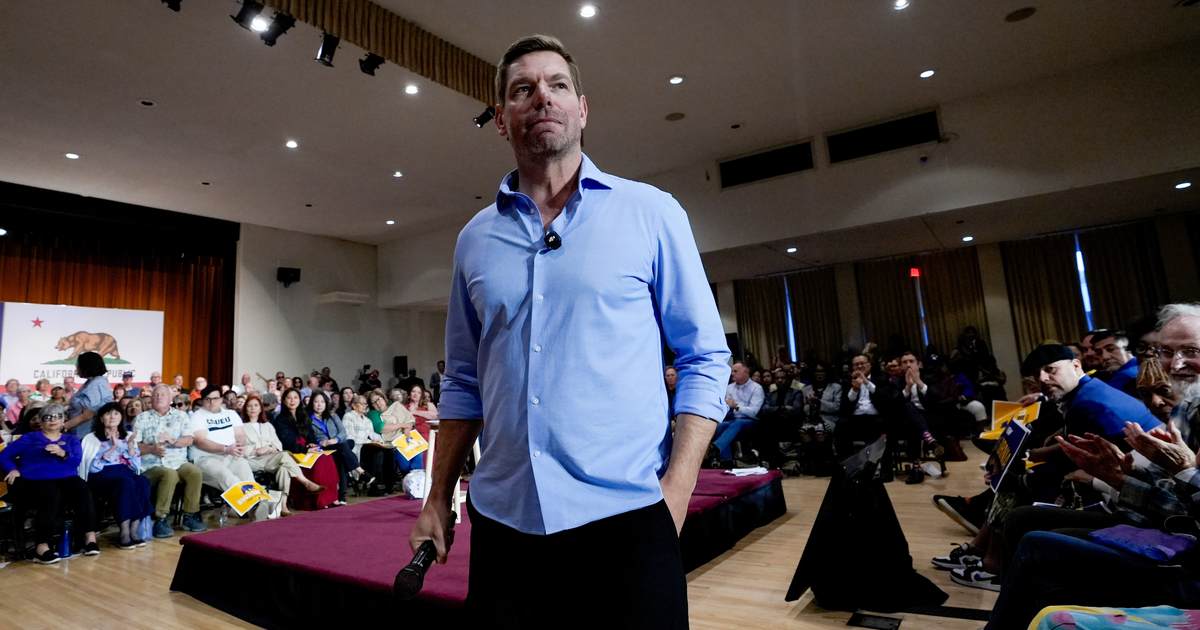
Cover image from townhall.com, which was analyzed for this article
Congressman Eric Swalwell resigned following new sexual misconduct claims, amid a toxic workplace culture in Congress. Kash Patel called for FBI questioning, while associates expressed regret over past associations. The scandal has prompted discussions on accountability in politics.
PoliticalOS
Wednesday, April 15, 2026 — Politics
Multiple women have made serious sexual assault claims against Eric Swalwell, prompting law enforcement reviews and his rapid exit from Congress and a competitive governor race, yet no charges have been filed and he maintains the most serious allegations are false. The episode reveals how quickly political support evaporates once claims gain traction in a post-#MeToo environment, while also exposing gaps in when and how such allegations previously received scrutiny. The central unresolved question is whether formal investigations will produce evidence that matches the public accounts or whether the resignation will stand as the final chapter.
What outlets missed
Most outlets underplayed that Swalwell's resignation automatically terminated the House Ethics Committee investigation, removing one avenue for formal findings. Coverage also gave short shrift to the exact mechanics of California's jungle primary and how Swalwell's exit altered the math for both parties in a race where Republicans had a plausible path to the top two. The absence of any charges after multiple law enforcement reviews received inconsistent emphasis, as did the fact that Polymarket odds reflect public sentiment rather than evidence. Finally, few stories fully reconciled the timeline: some allegations surfaced publicly only in recent days, yet rumors had circulated for years without prior formal action by Democratic gatekeepers or newsrooms that had regularly featured Swalwell as a commentator.
Eric Swalwell Resigns From Congress as Sexual Assault Allegations Mount and Former Allies Voice Regret
Eric Swalwell’s political career effectively ended this week after a cascade of sexual assault and rape allegations from five women destroyed his front-runner status in California’s gubernatorial race and forced his resignation from the House of Representatives. The swift collapse, which unfolded over roughly 48 hours, has left Democratic colleagues expressing betrayal, prompted an invitation from FBI Director Kash Patel for Swalwell to speak with investigators, and even spawned a cryptocurrency prediction market on whether he will be arrested by the end of May.
The allegations surfaced first in The San Francisco Chronicle, which reported claims by an unnamed former aide that Swalwell sexually assaulted her on two occasions. CNN soon followed with accounts from three additional women describing separate instances of misconduct. On Tuesday, Lonna Drewes, a former model and fashion software executive, held a news conference in which she accused Swalwell of raping and choking her in a West Hollywood hotel in 2018. The Los Angeles County Sheriff’s Department confirmed it has opened an investigation and will forward its findings to prosecutors. TIME has not independently verified the claims, and Swalwell has denied all of them.
In a statement on X, the California Democrat said he was “deeply sorry to my family, staff and constituents for mistakes in judgment I’ve made in my past” while insisting he would “fight the serious, false allegation made against me.” His attorney, Sara Azari, described the accusations as a “calculated and transparent political hit job” timed to damage his reputation and questioned why the claims had not emerged during Swalwell’s 2020 presidential bid or earlier in his congressional tenure.
The political fallout has been particularly painful for those closest to him. Arizona Sen. Ruben Gallego, whom Swalwell has called his best friend on Capitol Hill, spoke emotionally outside his Washington office, admitting he had heard rumors that Swalwell could be “flirty” with women but never confronted him. “I fell for it,” Gallego said, adding that Swalwell “became very good at being a predator” and “extremely proficient at lying to us, lying to his family, lying to his community.” Gallego said he began to discount the rumors after spending time with Swalwell’s wife and children, but now expressed regret for not pressing his friend earlier. “It hurts the fact that he hurt a lot of people,” he said, appearing at times to fight back tears. “And it pisses me off that now we all have to deal with all of his BS.”
The episode raises uncomfortable questions about how allegations of this nature travel through political networks. Multiple women described patterns of behavior that were apparently known enough to generate rumors yet not serious enough, in the eyes of some colleagues, to warrant action until the moment they became politically catastrophic. California Democrats had been growing alarmed at the prospect of a “jungle primary” in which the top two finishers advance regardless of party. With Swalwell as the strongest moderate Democrat in a fragmented field, there was genuine fear that two Republicans could advance to the general election. The sudden emergence of detailed reporting from both a liberal newspaper and a major cable network has fueled conservative claims that the timing was not coincidental.
Yet the seriousness of the accusations, particularly Drewes’ public account and the subsequent law enforcement response, cannot be dismissed as mere political theater. Victims of sexual misconduct in politics have long faced steep barriers to coming forward, including threats of legal action. Swalwell’s team has sent cease-and-desist letters to some accusers, a common tactic that often chills public testimony.
The involvement of federal authorities adds another layer. Hours after Swalwell announced his resignation, Patel, a Trump ally now serving as FBI director, posted on X inviting the former congressman to speak with the bureau. “@EricSwalwell has maintained that none of the allegations against him are true, and now that he’s resigned, we would welcome him to sit down with the FBI and share any information he has,” Patel wrote. He added that the door remains open to anyone with relevant information. Simultaneously, the prediction platform Polymarket began offering bets on whether Swalwell would face arrest by the end of May, turning a personal and legal crisis into a speculative financial instrument.
Swalwell’s departure creates a vacuum in California Democratic politics at a moment when the party can ill afford missteps. For years he positioned himself as a vocal critic of the Trump administration and a champion of institutional norms. The contrast between that public persona and the portrait now painted by multiple accusers has left even sympathetic observers unsettled. Gallego’s raw admission that he trusted a man who may have systematically deceived those around him captures a broader discomfort: how often personal behavior that falls short of criminality is tolerated in politics until the stakes become existential.
Whether these allegations will result in legal consequences remains uncertain. Investigations take time, and high-profile cases involving politicians often face intense scrutiny over credibility and motive. What is already clear is that Swalwell’s once-promising trajectory, which included a presidential bid and prominent role on the House Intelligence Committee, has ended in disgrace. The women who have come forward describe not only individual harm but a pattern that colleagues now acknowledge they should have examined more closely. In the aftermath, California Democrats must reckon with both the immediate electoral damage and the deeper institutional failures that allowed the situation to persist for so long.
You just read Liberal's take. Want to read what actually happened?
More in Politics

Federal Agents Search Omar Home in Ongoing Immigration Probe
Homeland Security agents searched the Minnesota Democrat's DC residence in a criminal probe, prompting accusations of political intimidation from Omar and Democratic leaders. Coverage spans left-leaning outlets like NPR, BBC, and The Guardian alongside right-leaning criticism from The Federalist and Daily Wire.

Trump Diesel Import Plan Draws Pushback Over Russia Ties
The weekend agreement drew bipartisan congressional pushback and criticism from Ukraine's Zelenskyy, with analysts downplaying US fuel price impacts. Right-leaning outlets like National Review, Dispatch, and Washington Examiner questioned its legality and effectiveness.

Independents Test Voter Appetite for Middle Ground in 2026 Midterms
Nearly 200 independents are running in competitive races as voters weigh ballot measures on housing costs in states like Massachusetts. Left-leaning coverage from NYT, NPR, and Guardian highlights turnout and key races while right outlets focus on GOP strategy.
Trump Rallies in Alaska, Ohio to Bolster GOP Senate Candidates
The president rallied in Wasilla for Sen. Dan Sullivan and faced empty seats at an Ohio event amid midterm concerns. Outlets across the spectrum covered the trips as signals of GOP vulnerability weeks before Election Day.
The Compass
You just read five takes on one story.
What's your take? Find your political shape in a few minutes.
Take the test