
Powell to Stay on Fed Board as Criticism Mounts Over Rates, Inflation
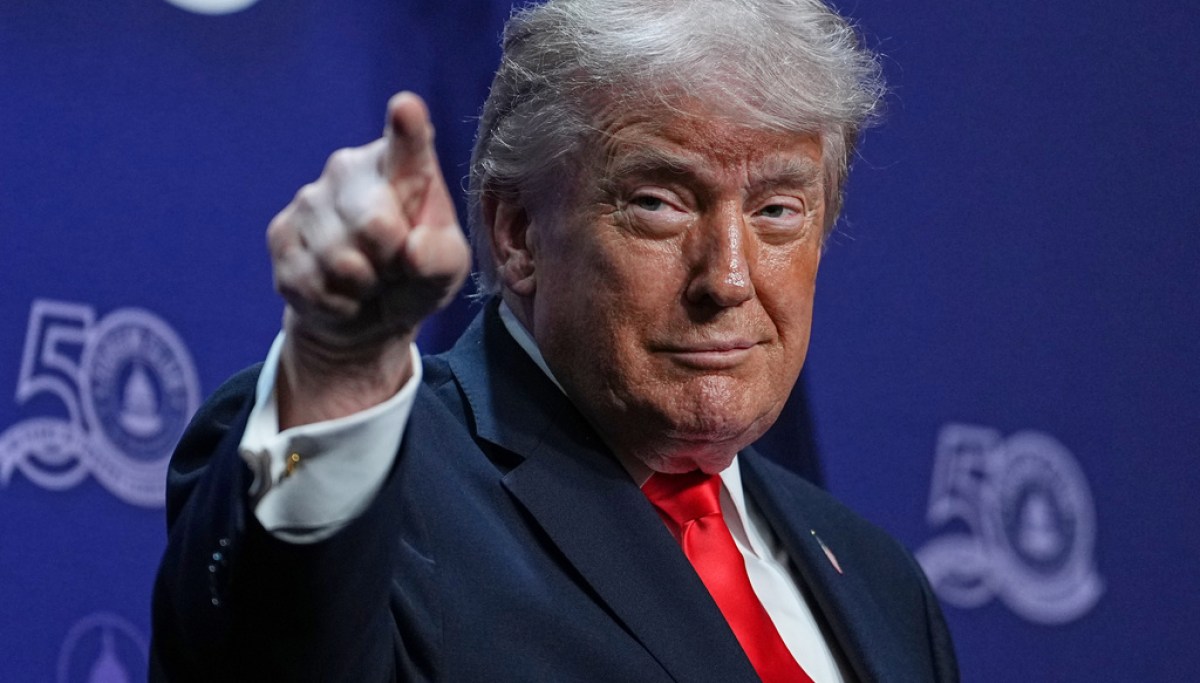
Cover image from washingtonexaminer.com, which was analyzed for this article
Criticism mounts against Fed Chair Powell with calls for his replacement as markets anticipate rate cuts to spur growth despite sticky inflation and rising energy costs. Incoming figures like Kevin Warsh eyed. Q1 GDP rose 2.0% but gas tops $4.
PoliticalOS
Tuesday, May 5, 2026 — Business
Jerome Powell will remain a Federal Reserve governor past his chairmanship to see through an inspector general review of building renovation costs, even as President Trump nominates Kevin Warsh to lead the central bank and political pressure grows for faster rate cuts. No criminal evidence has emerged from the probe, which a federal judge previously described as appearing aimed at influencing monetary policy. With gas above $4 a gallon and inflation still above target, the central unresolved question is whether the Fed can maintain operational independence while both parties debate relief measures and leadership change.
What outlets missed
Most outlets omitted that Powell himself requested the inspector general review of renovation costs in July 2025, well before the Pirro probe began. This undercuts narratives of purely external harassment. Coverage also gave short shrift to the precise legal status of the expired grand jury and the fact that no criminal evidence has been made public despite months of inquiry. Axios and others highlighted gas-tax relief mechanics but rarely connected rising energy costs to the Fed's rate dilemma or noted bipartisan governor skepticism toward tax holidays. Finally, unverified inflation batting-average statistics and disputed recession claims from opinion columns were presented without clear caveats or cross-checks against BEA and Fed data releases.
Powell Defies Trump Pressure by Staying on Federal Reserve Board
Federal Reserve Chair Jerome Powell signaled last week that he will not quietly exit the stage when his term ends on May 15, instead remaining on the central bank's board of governors through 2028. The decision comes as the Trump administration's efforts to exert influence over the independent institution show signs of strain but little sign of abatement, even as American families grapple with renewed pain at the pump and grocery store.
Powell's announcement followed President Donald Trump's decision to drop a lawsuit targeting the Fed over cost overruns on its headquarters renovation project, a gleaming new building critics have likened to an extravagant Taj Mahal located near the White House. The legal action had been widely viewed as an attempt to pressure the central bank into aligning with the president's economic preferences. Yet the threat of scrutiny has not fully dissipated. On Monday, U.S. Attorney for the District of Columbia Jeanine Pirro asked a federal judge to vacate earlier rulings that blocked key aspects of her criminal investigation into the renovation costs and Powell's congressional testimony. The move effectively drops plans to appeal those rulings to a higher court for now.
Chief Judge James Boasberg had quashed Pirro's subpoenas in March and upheld that decision in April, ruling that the probe lacked sufficient evidence of wrongdoing and appeared designed to apply political pressure on Powell to lower interest rates. Powell has said he will stay on the board until the legal cloud over the Fed is resolved with "transparency and finality." Pirro's office maintains the proceedings should continue, though no evidence of criminal conduct has been publicly presented since the investigation opened in November. The Fed declined to comment on the latest development.
This standoff occurs against a backdrop of persistent economic unease for working Americans. Gasoline prices have surged to an average of $4.48 per gallon, according to AAA, with further increases expected amid global supply disruptions. The jump of nearly $1.50 per gallon since earlier conflicts escalated has revived calls for a federal gas tax holiday. Prominent Democrats, including Texas Senate nominee James Talarico and Arizona Sen. Mark Kelly, have proposed suspending the 18.3-cent-per-gallon gasoline tax and the 24.3-cent diesel tax. Analysts at the Bipartisan Policy Center estimate such a move would lower retail prices by 9 to 14 percent, though suppliers would likely pocket some of the savings. The holiday would also reduce revenue for highway maintenance, a tradeoff that has stalled the idea in Congress in the past. Rapidan Energy Group puts the odds of passage at around 25 percent, not insignificant in the current political climate.
Conservative critics of Powell, including economist Stephen Moore, argue the Fed chair deserves to be shown the door regardless. Moore noted that Powell only hit the Fed's inflation target range of 1.8 to 2.2 percent once during his tenure, in February 2021. Inflation ran well above target for two-thirds of his time in office, peaking at 9 percent in the aftermath of the COVID-19 pandemic. Moore, a longtime Fed watcher, called Powell one of Trump's worst appointments and blamed loose monetary policy for the spike in prices that continues to burden household budgets on everything from food to rent. The Fed's initial assurances that inflation would prove "transitory" proved incorrect, lasting at high levels for roughly two years.
Yet this narrative conveniently omits context. Powell was first appointed by Trump himself. The inflation surge was driven by a complex mix of global supply chain breakdowns, massive pandemic-era spending under both the Trump and Biden administrations, and energy shocks. Powell did raise rates aggressively in 2018, nearly tipping the economy into recession, before pivoting during the pandemic. His recent policy has aimed to thread a delicate needle, though critics across the spectrum question whether the Fed has adequately prioritized Main Street over Wall Street.
The Fed drama fits a broader pattern of score-settling emanating from the White House. In Indiana, Trump is actively campaigning against Republican state senators who defied his push last year to redraw congressional maps in a way that would have netted the GOP two additional House seats. The state has nine congressional districts, seven currently held by Republicans. When 21 GOP senators joined Democrats to block the gerrymandering measure, Trump labeled the defectors "Republicans in Name Only" and vowed consequences.
On Tuesday, Hoosier voters will decide the fate of 10 state Senate seats, including eight held by Republicans who opposed the map change. Trump has endorsed primary challengers against seven of them: Sens. Dan Dernulc, Linda Rogers, Greg Walker, Greg Goode, Jim Buck, Travis Holdman, and Spencer Deery. Only Sen. Rick Niemeyer avoided the president's retribution list. Two other opponents of the plan, Sens. Eric Bassler and Kyle Walker, are not seeking reelection. Trump had warned via Truth Social that any vote against redistricting would trigger a "MAGA Primary" challenge.
Holdman, the state Senate majority caucus chairman, has defended his vote as a matter of principle. The episode reveals how far Trump's influence extends into state-level politics, prioritizing loyalty tests and map-rigging over other governance priorities. Gerrymandering efforts like this one undermine public trust in fair elections and entrench power rather than expand opportunity for working people.
Taken together, these developments paint a picture of a second Trump term focused heavily on consolidating control and pursuing vendettas, whether against a stubbornly independent Fed chair, dissenting members of his own party, or institutions that refuse to bend. While Powell's extended presence on the board may provide some institutional continuity, it also prolongs uncertainty at a time when clear economic leadership is needed. Rising fuel costs are not abstract; they hit truck drivers, commuters, and families already stretched thin by the inflationary aftermath of the pandemic.
Moore is correct that the Fed's track record on inflation has been uneven at best. Yet turning the central bank into another political football threatens its credibility and, by extension, the stability millions of Americans rely upon. As Pirro's investigation limps forward in modified form and Indiana voters render judgment on Trump's primary targets, the larger question remains whether these power plays will deliver relief to households or simply settle old scores at the expense of effective governance. Powell's decision to stay suggests he believes the threats to the Fed's independence are not yet "well and truly over." For now, the uncertainty continues.
You just read Progressive's take. Want to read what actually happened?
More in Business & Economy

AI Companies Weigh Early IPOs as Risks Mount
Nasdaq fell sharply amid concerns over AI spending sustainability and data center costs; Nvidia, Meta, and others were hit as Meta and Tesla reported earnings.

Stocks Rise on Earnings as Home Sales Hit Low
Major indices closed mixed to higher, led by healthcare and defensive stocks, as companies like Eli Lilly and UnitedHealth reported strong results. Pending home sales hit record lows.

US Stocks Mixed as Tech Rebounds on AI Optimism
The Dow slipped slightly while the S&P 500 and Nasdaq rose, led by Nvidia, AMD, and Intel gains on renewed AI sector confidence after prior drops. Broader market volatility tied to earnings and data center demand.

Trump Unveils $8 Billion Diesel Relief for Farmers
The Agriculture Department launched the program to offset record diesel prices for farmers, framed as economic aid and a midterm pitch in Kansas amid ongoing inflation and energy cost pressures.
The Compass
You just read five takes on one story.
What's your take? Find your political shape in a few minutes.
Take the test