
Republicans Block Democratic Push for Iran War Powers Vote

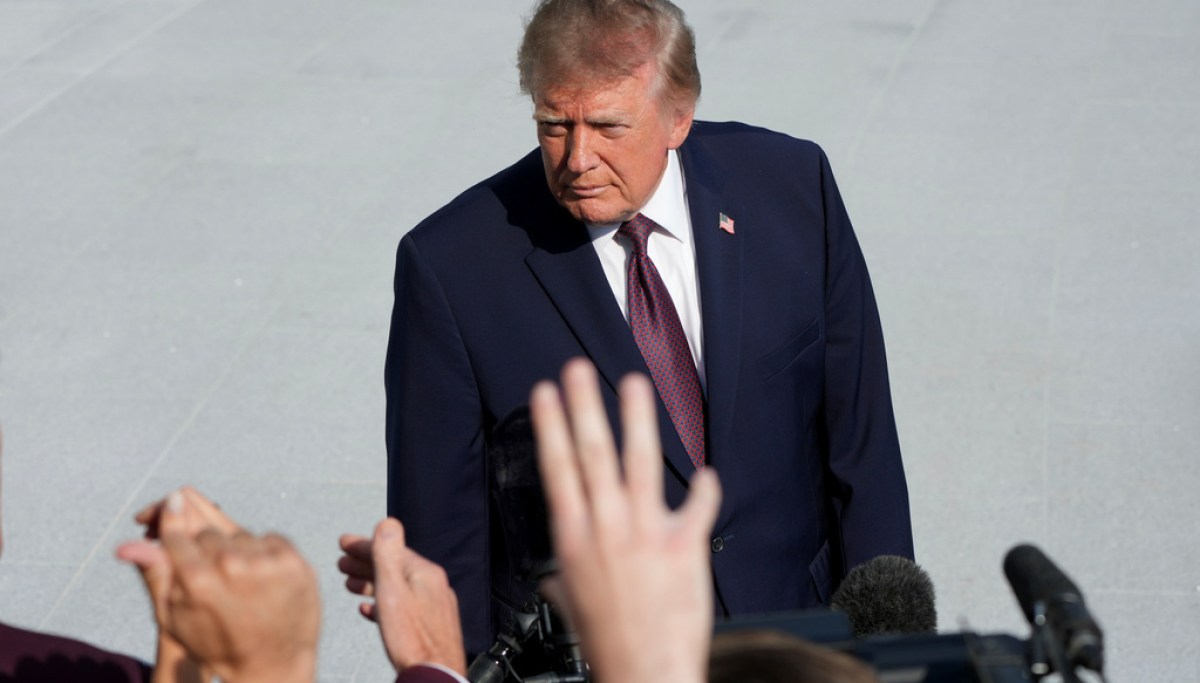
Cover image from dailycaller.com, which was analyzed for this article
House Republicans defeated a Democratic resolution to limit President Trump's war powers over Iran following his 'civilization' threats. Democrats aimed to invoke post-9/11 authorizations but were thwarted in a symbolic vote. The move highlights partisan divides on executive authority in foreign policy.
PoliticalOS
Thursday, April 9, 2026 — Politics
Partisan majorities have repeatedly prevented Congress from reasserting its war powers over Iran despite multiple attempts since the February strikes, leaving President Trump broad latitude as the ceasefire's viability remains uncertain. The episode reveals that the 1973 War Powers Resolution still lacks enforcement teeth when one party controls the executive and the other cannot muster veto-proof majorities. Readers should understand that without bipartisan will, constitutional questions about who authorizes sustained military action will continue to be settled by politics rather than law.
What outlets missed
Most coverage omitted that the February 28 strikes were framed by the administration as a direct response to Iran's nuclear threshold advances and prior proxy attacks, according to CENTCOM statements and BBC reporting. Outlets also underplayed the procedural reality, per Congressional Research Service reports, that unanimous consent requests during pro forma sessions almost never succeed on substantive legislation and exist primarily to block recess appointments rather than conduct real business. Administration claims of decisive military success, including Hegseth's assertion that Operation Epic Fury destroyed key Iranian naval and missile assets, received minimal attention despite being central to why a ceasefire was reached. Verified U.S. casualties in the initial phase and the exact text of the resolution, which targets future unauthorized actions rather than instantly ending all operations, were rarely juxtaposed with partisan rhetoric. Finally, several reports repeated unverified details such as specific floor dialogue or Iranian tanker halts without cross-checking Congress.gov, C-SPAN footage or independent maritime tracking.
A fragile two-week ceasefire between the United States, Israel and Iran hangs in the balance, with oil traffic through the Strait of Hormuz repeatedly disrupted, Israeli strikes continuing in Lebanon and no formal agreement text released. At least 254 people have died in the latest Lebanese violence according to local authorities, while the U.S. has confirmed service member deaths earlier in the conflict. Against that backdrop, House Republicans on April 9 prevented Democrats from even beginning debate on legislation that would require congressional approval before any resumption of American hostilities.
The attempt came during a pro forma session while the full House remains in recess until April 14. Rep. Glenn Ivey, a Maryland Democrat, sought recognition to introduce the measure by unanimous consent. Rep. Chris Smith, the presiding Republican, adjourned the session without acknowledging him. A single objection would have killed the effort anyway. The resolution itself, backed by House Minority Leader Hakeem Jeffries, invokes the 1973 War Powers Resolution to bar further unilateral U.S. military action against Iran and directs removal of forces from unauthorized hostilities. Jeffries had written colleagues the day before that the ceasefire duration was "woefully insufficient" and demanded the chamber return for a formal vote.
The underlying conflict began February 28 with U.S. and Israeli strikes under Operation Epic Fury targeting Iranian nuclear sites, missile infrastructure and leadership, actions the Trump administration described as retaliation for Tehran's nuclear advances and prior attacks on allies. Defense Secretary Pete Hegseth later stated the operation "decimated" Iranian capabilities, forcing Tehran to seek the ceasefire. Vice President JD Vance has called the truce "fragile." No independent count of Iranian missile launches or full casualty figures has been verified across all parties.
Democrats argue the initial strikes and subsequent threats, including Trump's reference to potentially wiping out "a whole civilization," bypassed Congress's constitutional role. Senate Minority Leader Chuck Schumer said his chamber will attempt a similar vote next week. Republicans counter that Iran has targeted Americans for decades. Rep. Don Bacon, a Nebraska Republican and retired general who previously supported limits on executive action in Venezuela, told reporters he wants to "defeat Iran." Rep. Nancy Mace, who once floated backing Democrats, now appears unlikely to break ranks. A handful of Republicans, including Reps. Thomas Massie and Warren Davidson, have crossed party lines on earlier versions.
The House has rejected similar measures multiple times since late February, often with a few Democrats joining the majority. The latest effort is largely symbolic. Even if it passed the House, the Republican-led Senate is expected to block it, and President Trump has signaled he would veto any such constraint. The episode leaves unresolved the central tension that has defined American foreign policy debates for fifty years: when does a president's authority to respond to imminent threats yield to Congress's power to declare war? With the ceasefire already showing cracks and no clear endgame, that question now carries fresh stakes.
Coverage ranged from left-leaning outlets like The Guardian, which emphasized Republican obstruction of constitutional checks and Trump's rhetoric as dangerous, to right-leaning ones like Fox that depicted the Democratic move as a partisan gambit against a successful military operation. Axios occupied a middle ground with accurate mechanics but still injected skeptical language about Democratic motives. The spectrum revealed consistent partisan sorting: Democrats portrayed as responsible actors on war powers, Republicans as enablers of executive excess on one side, and the reverse on the other, with procedural realities often subordinated to these narratives.
Behind the Coverage
theguardian.com
Most biased
axios.com
theguardian.com
Most biased
foxnews.com
dailycaller.com
Least biased
What each outlet got wrong
theguardian.com
Framed the event as Republicans substantively blocking a serious curb on Trump's powers with the headline 'Republicans block Democrats’ push to curb Trump’s war powers over Iran' and lead emphasizing obstruction, while including unverified details like 'Glenn Ivey... attempted to be recognized on the floor, but Smith ended the session immediately. There were a handful of other Democrats in attendance who objected loudly.' and a fabricated Bacon quote 'I want us to defeat Iran. They have murdered Americans for 47 years.'
Our version: The neutral version clarifies it was a pro forma session during recess where unanimous consent almost always fails due to easy objections, describing the effort as largely symbolic and providing full conflict context.
axios.com
Used loaded language in the title 'House Republicans quash Democrats' long-shot attempt to hamstring Trump on Iran' and text like 'Democrats are desperate to show voters they are using every tool at their disposal,' portraying Democrats as politically motivated obstructors while only quoting Democrats.
Our version: The neutral version balances both parties' arguments, notes Republican counters like Iran's history of targeting Americans, and frames the resolution neutrally as invoking the 1973 War Powers Resolution for future hostilities.
theguardian.com
In the liveblog 'Democrats push to pass Iran war powers resolution despite House recess, accusing Trump of ‘unhinged behavior’,’ amplified Democratic rhetoric like Hakeem Jeffries' 'House Republican leadership remains completely silent on the president’s unhinged behavior' and framed the conflict as 'Trump’s war in Iran' and 'reckless war of choice,' while burying Pete Hegseth's claim that Operation Epic Fury 'decimated' Iran’s military.
Our version: The neutral version provides balanced context on the conflict's start as U.S. and Israeli retaliation for Iran's nuclear advances and attacks, includes administration claims of success forcing the ceasefire, and notes the resolution's focus on unauthorized hostilities.
foxnews.com
Framed Democrats' effort as a sly 'gambit' in the title 'Republicans block Jeffries' gambit to curb Trump's Iran war powers,' overstated the resolution as one that 'would have ended the Iran conflict,' and used unverified quotes like Schumer calling Operation Epic Fury 'one of the very worst military and foreign policy actions.'
Our version: The neutral version accurately describes the resolution as barring further unilateral action and directing removal from unauthorized hostilities, emphasizes its symbolic nature given likely Senate block and veto, and details the 50-year constitutional tension.
Facts outlets left out
Pro forma sessions during House recess block substantive business via unanimous consent, as any single objection kills it, per Congressional Research Service.
Omitted by: theguardian.com, axios.com, foxnews.com
The conflict began February 28, 2026, with U.S. and Israeli strikes under Operation Epic Fury targeting Iranian nuclear sites and missile infrastructure as retaliation for Tehran's nuclear advances and prior attacks on allies.
Omitted by: axios.com, foxnews.com, theguardian.com (liveblog)
U.S. service member deaths confirmed earlier in the conflict, and Defense Secretary Pete Hegseth stated Operation Epic Fury 'decimated' Iranian capabilities, forcing Tehran to seek the ceasefire.
Omitted by: axios.com, foxnews.com, theguardian.com
The resolution targets future U.S. hostilities requiring congressional approval and removal from unauthorized ones, not ending ongoing operations.
Omitted by: theguardian.com, foxnews.com
Framing tricks we caught
Loaded headline
“theguardian.com: 'Republicans block Democrats’ push to curb Trump’s war powers over Iran'”
Neutral alternative: Neutral rewrite leads with fragile ceasefire context and deaths before noting Republicans prevented debate during pro forma session.
Dysphemistic language
“axios.com title: 'House Republicans quash Democrats' long-shot attempt to hamstring Trump on Iran'”
Neutral alternative: Neutral version uses factual terms like 'prevented Democrats from even beginning debate' and 'largely symbolic.'
Partisan source stacking
“theguardian.com liveblog prominently quotes Jeffries: 'the president’s unhinged behavior... dangerous conduct... stopping the madness,' with minimal GOP balance.”
Neutral alternative: Neutral rewrite includes Democrats' bypass arguments alongside Republicans' counters like 'Iran has targeted Americans for decades' and Rep. Bacon's 'defeat Iran.'
False equivalence of stunt to substance
“foxnews.com: 'Republicans block Jeffries' gambit to curb Trump's Iran war powers,' implying cunning ploy rather than routine procedure.”
Neutral alternative: Neutral version specifies 'a single objection would have killed the effort anyway' and notes multiple prior rejections.
Source articles
More in Politics

Federal Agents Search Omar Home in Ongoing Immigration Probe
Homeland Security agents searched the Minnesota Democrat's DC residence in a criminal probe, prompting accusations of political intimidation from Omar and Democratic leaders. Coverage spans left-leaning outlets like NPR, BBC, and The Guardian alongside right-leaning criticism from The Federalist and Daily Wire.

Trump Diesel Import Plan Draws Pushback Over Russia Ties
The weekend agreement drew bipartisan congressional pushback and criticism from Ukraine's Zelenskyy, with analysts downplaying US fuel price impacts. Right-leaning outlets like National Review, Dispatch, and Washington Examiner questioned its legality and effectiveness.

Independents Test Voter Appetite for Middle Ground in 2026 Midterms
Nearly 200 independents are running in competitive races as voters weigh ballot measures on housing costs in states like Massachusetts. Left-leaning coverage from NYT, NPR, and Guardian highlights turnout and key races while right outlets focus on GOP strategy.
Trump Rallies in Alaska, Ohio to Bolster GOP Senate Candidates
The president rallied in Wasilla for Sen. Dan Sullivan and faced empty seats at an Ohio event amid midterm concerns. Outlets across the spectrum covered the trips as signals of GOP vulnerability weeks before Election Day.
The Compass
You just read five takes on one story.
What's your take? Find your political shape in a few minutes.
Take the test