
Trump Attacks Former MAGA Allies Over Iran Policy Criticism
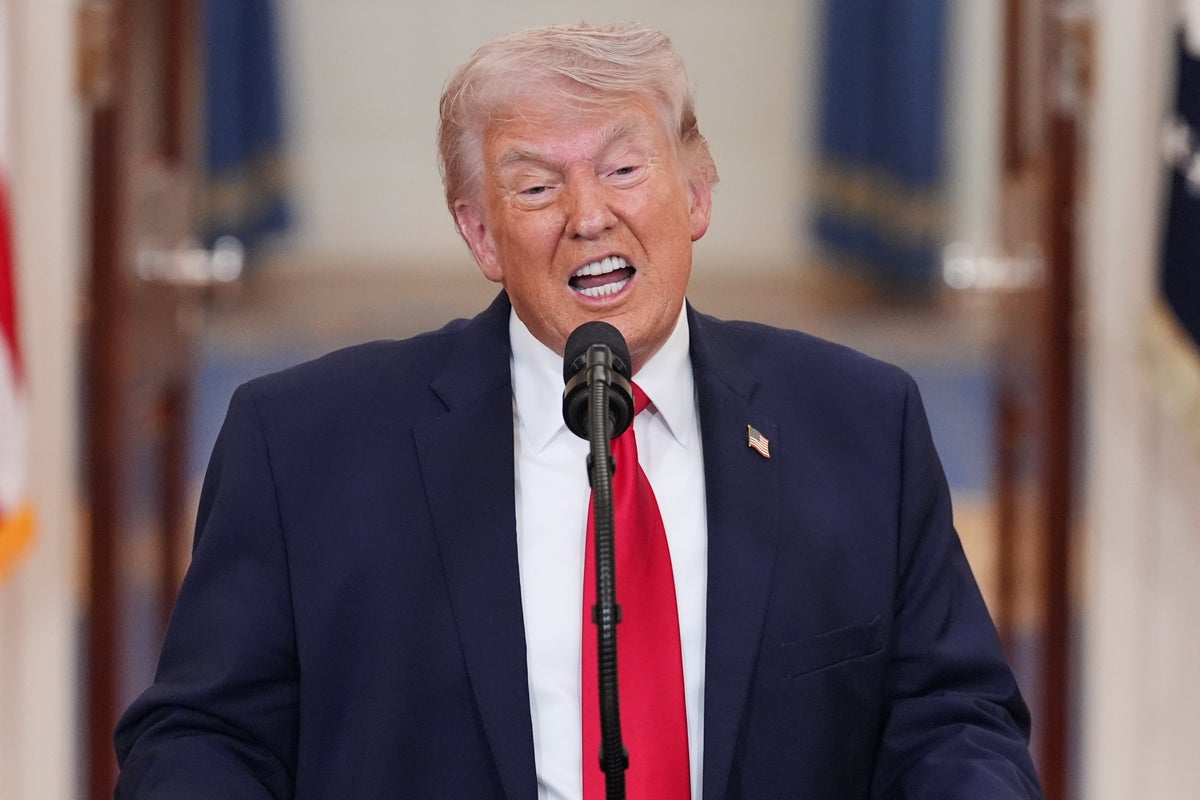
Cover image from independent.co.uk, which was analyzed for this article
Rep. Marjorie Taylor Greene publicly attacked Trump and Netanyahu on Iran strategy, exposing MAGA fractures, while Trump lashed out at critics like Tucker Carlson and MTG. The rifts highlight tensions within Republicans over war escalation and future direction. Outlets note growing disillusionment among Trump supporters.
PoliticalOS
Friday, April 10, 2026 — Politics
The public break between Trump and former allies like Tucker Carlson, Candace Owens and Marjorie Taylor Greene reveals genuine tensions inside the Republican coalition over the use of military force and adherence to campaign promises on avoiding new wars. Trump retains strong polling support among Republican voters and frames the critics as marginal, yet the episode—coming after a short conflict that ended in ceasefire—raises questions about the durability of the MAGA coalition on foreign policy. The most important reality is that these divisions exist at the elite level and have not yet translated into measurable erosion of Trump's base, but they signal competing visions for the party's future direction.
What outlets missed
Most coverage omitted that Marjorie Taylor Greene resigned from Congress on January 5, 2026, and was speaking as a private citizen rather than a current lawmaker with direct influence. Outlets underplayed the specific sequence of the Iran conflict, including its start after Iranian missile strikes on Israel and the assassination of Supreme Leader Khamenei, followed by a ceasefire agreement on April 8 just before Trump's post. Several reports treated critic statements such as Carlson calling threats "evil" or Owens labeling the administration "satanic" as fully verified without noting that exact phrasing could not be located in public records or primary sources. The mutual escalation was often framed as one-sided, with less attention to Owens and Jones explicitly calling for Trump's removal before his response. Finally, coverage gave limited context on the Strait of Hormuz shutdown as the immediate trigger for Trump's deadlines and threats, instead emphasizing personal insults over the underlying policy dispute.
Trump's Attacks on MAGA Allies Reveal Cracks in His Coalition as Iran War Backlash Grows
President Donald Trump unleashed a lengthy and deeply personal attack Thursday on several of his most prominent conservative supporters, calling them “low IQ” losers and suggesting they suffer from mental problems, as criticism of his administration’s war with Iran spreads from the right-wing media ecosystem into the president’s own online base. The outburst, posted on Truth Social, targeted Tucker Carlson, Megany Kelly, Candace Owens and Alex Jones, all of whom have denounced Trump’s rhetoric and decisions in the rapidly escalating conflict. It came hours after Rep. Marjorie Taylor Greene, once among his fiercest defenders in Congress, delivered a striking rebuke on CNN, declaring the president mentally unfit and urging those around him to intervene.
The episode marks an unusual fracture within the coalition that propelled Trump back to the White House. For years, these voices formed the core of an information environment that insulated Trump from conventional political consequences. Now, even they appear unsettled by his threats to “wipe out” Iranian civilization and his profane demands that Tehran reopen the Strait of Hormuz or face attacks on power plants and bridges. Trump’s Easter message warning that Iran would be “living in Hell” particularly appalled Carlson, who called the language “vile on every level” and urged aides to refuse orders that would harm civilians. Owens has gone further, labeling the administration “satanic” and calling for Congress to remove the “Mad King Trump.” Jones has invoked dementia.
Trump’s response was unfiltered. “They think it is wonderful for Iran, the Number One State Sponsor of Terror, to have a Nuclear Weapon — Because they have one thing in common, Low IQs,” he wrote. He described Carlson as someone who “should see a good psychiatrist,” called Owens “crazy,” and said Jones utters “some of the dumbest things.” Kelly, he complained, had once asked him “nastily” about his past insults toward Rosie O’Donnell. The 482-word post also took shots at the Wall Street Journal’s editorial board, signaling the breadth of his frustration.
The backlash from ordinary supporters was swift. On Truth Social itself, users who identified as three-time Trump voters expressed betrayal. One wrote that the president was “going against everyone that fought for him to win, just because of the Jeffrey Epstein files and being at war with Iran for Israel.” Another declared they were “hanging up my MAGA hat,” adding, “You had so much potential, Trump. Voted for you all three times, and I feel so betrayed.” A user named Misty Fields, claiming to have supported Trump in every election, asked why he now viewed his most loyal defenders as enemies.
Greene’s CNN appearance represented perhaps the most surprising rupture. Once a reliable amplifier of Trump’s grievances, she refused to engage with his insults, which included calling her “Marjorie ‘Traitor’ Brown” and suggesting she smelled. “You don’t respond to bullies and you don’t pay attention to people when they’re failing,” Greene said. “President Trump is failing right now. And so he’s the man that’s lashing out.” She added that he appeared mentally unfit and that advisers needed to restrain him before his decisions produced catastrophe.
This wave of conservative criticism arrives as the Iran conflict enters a dangerous phase. After weeks of escalation, Trump announced a two-week ceasefire Tuesday, yet his earlier statements threatening to obliterate Iranian society have reverberated. Foreign policy analysts have noted the administration’s shifting rationales and the risk that reflexive alignment with Israeli interests has pulled the United States into a wider regional war with unclear objectives. The closure of the Strait of Hormuz has already disrupted global energy markets, raising questions about the administration’s strategic competence.
What makes the current moment distinct is the nature of the dissent. Previous Trump controversies tended to produce defensive unity on the right. The Iran episode, by contrast, has prompted some longtime allies to question not merely policy but the president’s basic stability. Owens’s call for removal and Jones’s suggestion that Trump is in cognitive decline echo concerns once dismissed as partisan hysteria. Even Carlson, who built much of his audience by championing Trump-era grievances, now frames the president’s threats in moral terms.
Interviews with former administration officials and conservative operatives, granted anonymity to speak candidly, describe a White House increasingly consumed by grievance. One person familiar with internal discussions said Trump’s rage appears driven by a sense that the very personalities who helped create his political invulnerability are now treating him as a liability. Another noted that the president’s habit of viewing foreign policy through the lens of personal strength has collided with the complexities of managing a real war, producing threats that even battle-tested hawks find reckless.
The administration has not offered a detailed public explanation of its endgame in Iran. Officials have alternated between portraying the conflict as limited retaliation and hinting at regime-change ambitions, while Trump’s personal rhetoric has often outrun any coherent strategy. That gap appears to be fueling the erosion of support visible this week.
Whether the current dissent represents a temporary spasm or the beginning of a larger realignment remains unclear. Trump has survived past revolts from within his coalition by outlasting them or by forcing critics back into line through public humiliation. Yet the speed with which figures like Greene have pivoted to direct criticism of his mental fitness suggests the Iran war has touched a deeper nerve. For a president who has long claimed the unwavering loyalty of his base, the spectacle of longtime allies publicly discussing whether he needs to be restrained presents a new political reality.
Supporters who once celebrated Trump’s norm-breaking style now confront the consequences when that style collides with decisions about civilian casualties and regional stability. The president’s response has been characteristic: more personal invective, more insistence that critics are secretly sympathetic to terrorists. As the casualty reports from Iran mount and the economic effects ripple outward, the question is whether the coalition that elevated him can withstand the weight of governing in a genuinely perilous moment. For now, the fractures are widening in public view.
You just read Liberal's take. Want to read what actually happened?