
GOP States Enact Proof-of-Citizenship Voting Rules as Federal Bill Stalls
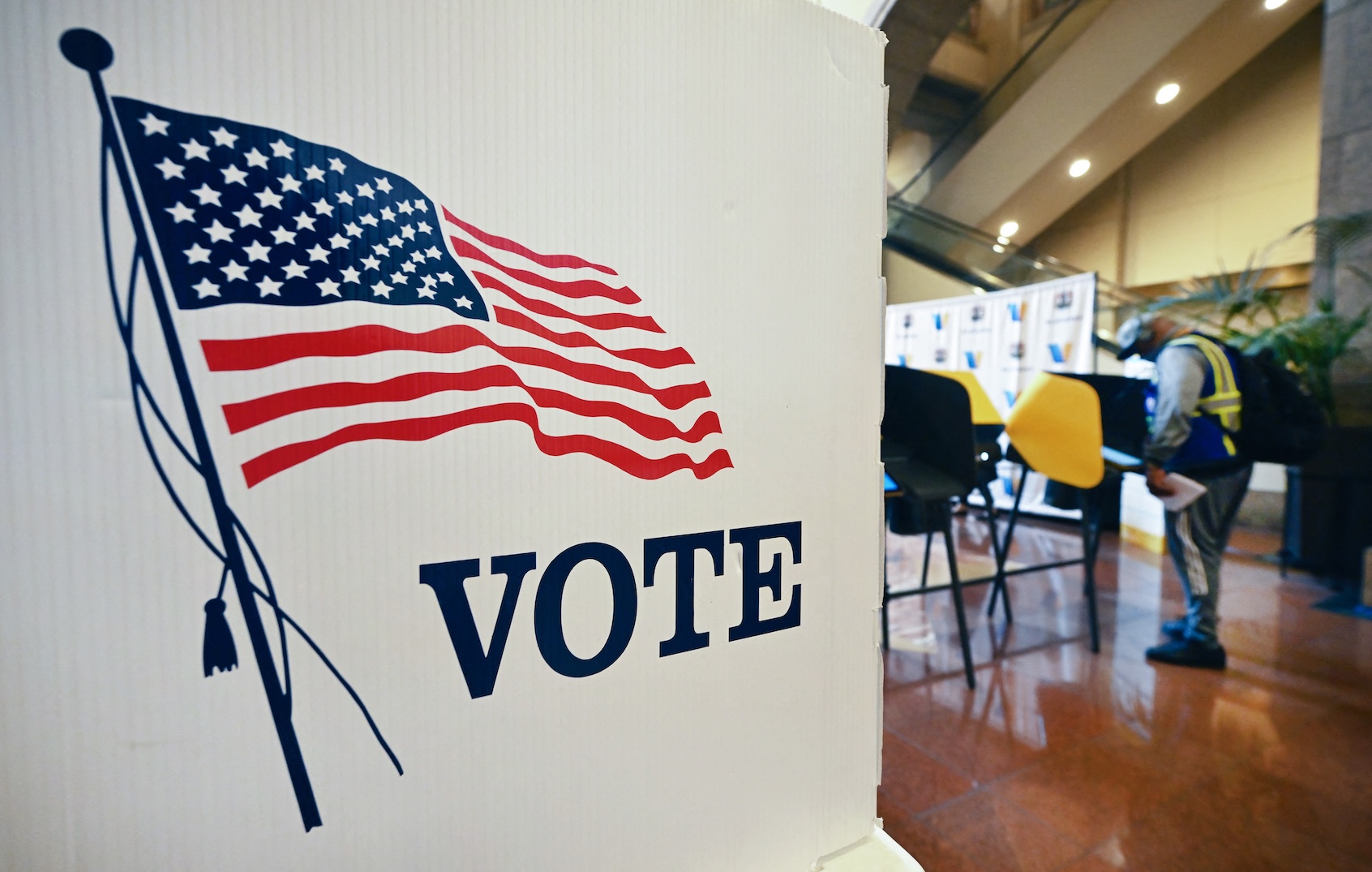
Cover image from salon.com, which was analyzed for this article
Republican-led states introduce voting restrictions modeled on Trump's SAVE America Act. Left-leaning outlets criticize as suppression, while right sees it as securing elections with national ID push. The effort aims to influence midterms.
PoliticalOS
Thursday, April 16, 2026 — Politics
Republican states are moving ahead with proof-of-citizenship requirements because the federal SAVE America Act is stalled, creating a patchwork of rules that will govern millions of registrations before the midterms. Noncitizen voting occurs but remains rare in prosecuted cases; database errors and documentary hurdles can also affect eligible citizens. The practical success or failure of these laws will ultimately be measured in how many legitimate voters are inadvertently blocked versus how many improper registrations are prevented.
What outlets missed
Most coverage omitted that all 49 states already require citizenship affirmations under penalty of perjury on registration forms, making the new laws incremental verification rather than entirely novel barriers. Outlets on both sides underplayed Arizona’s decade-plus experience with a bifurcated federal-only voter system, which the Supreme Court has upheld as a constitutional compromise that limits but does not eliminate access. Reporting also rarely noted the 99 prosecuted noncitizen voting cases catalogued by the Heritage Foundation since 2000 alongside state purge data, leaving readers without scale on either the problem or the error rates in database-driven removals. Finally, few pieces mentioned that DMV records, jury summons responses and REAL ID processes already collect much of the needed citizenship data, information that could reduce the practical burden if states integrated it more effectively.
New voting requirements in Republican-led states are set to change who can register and cast ballots before the midterms. The measures, modeled on the stalled SAVE America Act, demand documentary proof that a voter is a U.S. citizen. Supporters argue these steps close loopholes that let noncitizens slip onto rolls. Opponents counter that the rules create unnecessary obstacles for eligible Americans who lack easy access to passports or birth certificates.
At the center of the debate sits one stubborn contradiction: every state already requires applicants to affirm citizenship under penalty of perjury, yet federal rules tied to the 1993 National Voter Registration Act limit what proof election officials may demand upfront. A 2013 Supreme Court decision reinforced that states must accept the federal registration form with its simple checkbox. The SAVE America Act would have overridden parts of that framework for federal elections by mandating documents such as a birth certificate, passport or naturalization papers. With Senate Democrats blocking the legislation, GOP governors and legislatures in Florida, Mississippi, Utah, South Dakota and Tennessee have moved on their own.
Florida’s new law, set to take effect after the midterms, requires proof for new registrants, mandates database checks of existing rolls and tightens voter ID rules. Mississippi’s SHIELD Act, effective July 1, uses state and federal databases including the Department of Homeland Security’s Systematic Alien Verification for Entitlements system; those who cannot be confirmed must later produce documents. Utah and South Dakota enacted similar requirements in recent weeks, with Utah’s law activating May 6 ahead of its June primaries. Tennessee lawmakers sent a verification bill to the governor’s desk. Arizona, which has required proof since 2004, maintains a “federal-only” voter category for those who register via the national form without documents. The Supreme Court has allowed that workaround to stand. More states are studying it.
Proponents point to documented cases of noncitizens on voter rolls. One suburban Washington, D.C., county removed nearly 2,000 noncitizens over four years according to a Daily Wire analysis drawing on local records; that specific total could not be independently verified in other reporting, which cited 985 removals in a shorter recent period. Ohio, Texas and Virginia have each identified hundreds to thousands of potential noncitizens on rolls in recent purges, per state announcements. The Heritage Foundation’s database logs 99 prosecuted instances of suspected noncitizen voting nationwide since 2000. Conservative analysts argue even small numbers can matter in tight races and that the National Mail Voter Registration Form makes improper registration too easy: a single unchecked lie suffices.
Critics highlight the other side of the ledger. Roughly half of U.S. citizens lack a valid passport. Married women, transgender individuals and others who have changed names often face extra paperwork to match documents to current identification. The Brennan Center for Justice and Voting Rights Lab note that database checks have previously flagged naturalized citizens and eligible voters in error, as occurred in Texas. Arizona’s system has produced tens of thousands of federal-only registrants who can vote in congressional races but not state or local ones. Election administrators in multiple states warn that updating IT systems, training poll workers and notifying voters will cost millions and cannot be completed flawlessly before November. Lawsuits have already been filed in Florida by the League of Women Voters and the ACLU, citing risks to elderly Black voters and Puerto Ricans with older birth certificates.
Public opinion polls, including some commissioned by Rasmussen Reports, have shown support for proof-of-citizenship requirements exceeding 70 percent in certain samples, though wording varies and no survey exactly matching the “more than 80 percent” figure cited by SAVE Act supporters could be located across major poll aggregators. Congress itself voted unanimously in 2005 to require citizenship and identity proof for REAL ID driver’s licenses. Similar documentation is mandatory for most federal jobs and many public benefits. Yet voting carries unique constitutional weight. States retain primary authority over their own and presidential elections even as Congress sets rules for House and Senate contests.
The SAVE America Act remains pending in the Senate. President Trump issued a March 31 executive order directing agencies to compile citizenship lists and withhold funds from noncompliant localities; that order faces immediate legal challenges from Democratic attorneys general. Meanwhile, ballot measures to enshrine citizen-only voting in state constitutions will appear before voters this fall in Arkansas, Arizona, Kansas, South Dakota and Alaska. Michigan’s similar effort has stalled on signature verification.
How these converging state experiments play out will test whether added verification materially reduces illegal ballots without suppressing legal ones. Early data from states with long-standing rules show compliance is possible but not automatic. Purges based on imperfect database matches have triggered lawsuits under the National Voter Registration Act for removing eligible citizens too close to elections. The tension remains unresolved: a system that trusts self-attestation risks undetected noncitizen participation; one that demands hard-to-obtain documents risks turning away citizens who simply lack the right folder in the right drawer.
More in Politics

Federal Agents Search Omar Home in Ongoing Immigration Probe
Homeland Security agents searched the Minnesota Democrat's DC residence in a criminal probe, prompting accusations of political intimidation from Omar and Democratic leaders. Coverage spans left-leaning outlets like NPR, BBC, and The Guardian alongside right-leaning criticism from The Federalist and Daily Wire.

Trump Diesel Import Plan Draws Pushback Over Russia Ties
The weekend agreement drew bipartisan congressional pushback and criticism from Ukraine's Zelenskyy, with analysts downplaying US fuel price impacts. Right-leaning outlets like National Review, Dispatch, and Washington Examiner questioned its legality and effectiveness.

Independents Test Voter Appetite for Middle Ground in 2026 Midterms
Nearly 200 independents are running in competitive races as voters weigh ballot measures on housing costs in states like Massachusetts. Left-leaning coverage from NYT, NPR, and Guardian highlights turnout and key races while right outlets focus on GOP strategy.
Trump Rallies in Alaska, Ohio to Bolster GOP Senate Candidates
The president rallied in Wasilla for Sen. Dan Sullivan and faced empty seats at an Ohio event amid midterm concerns. Outlets across the spectrum covered the trips as signals of GOP vulnerability weeks before Election Day.
The Compass
You just read five takes on one story.
What's your take? Find your political shape in a few minutes.
Take the test