
GOP States Enact Proof-of-Citizenship Voting Rules as Federal Bill Stalls
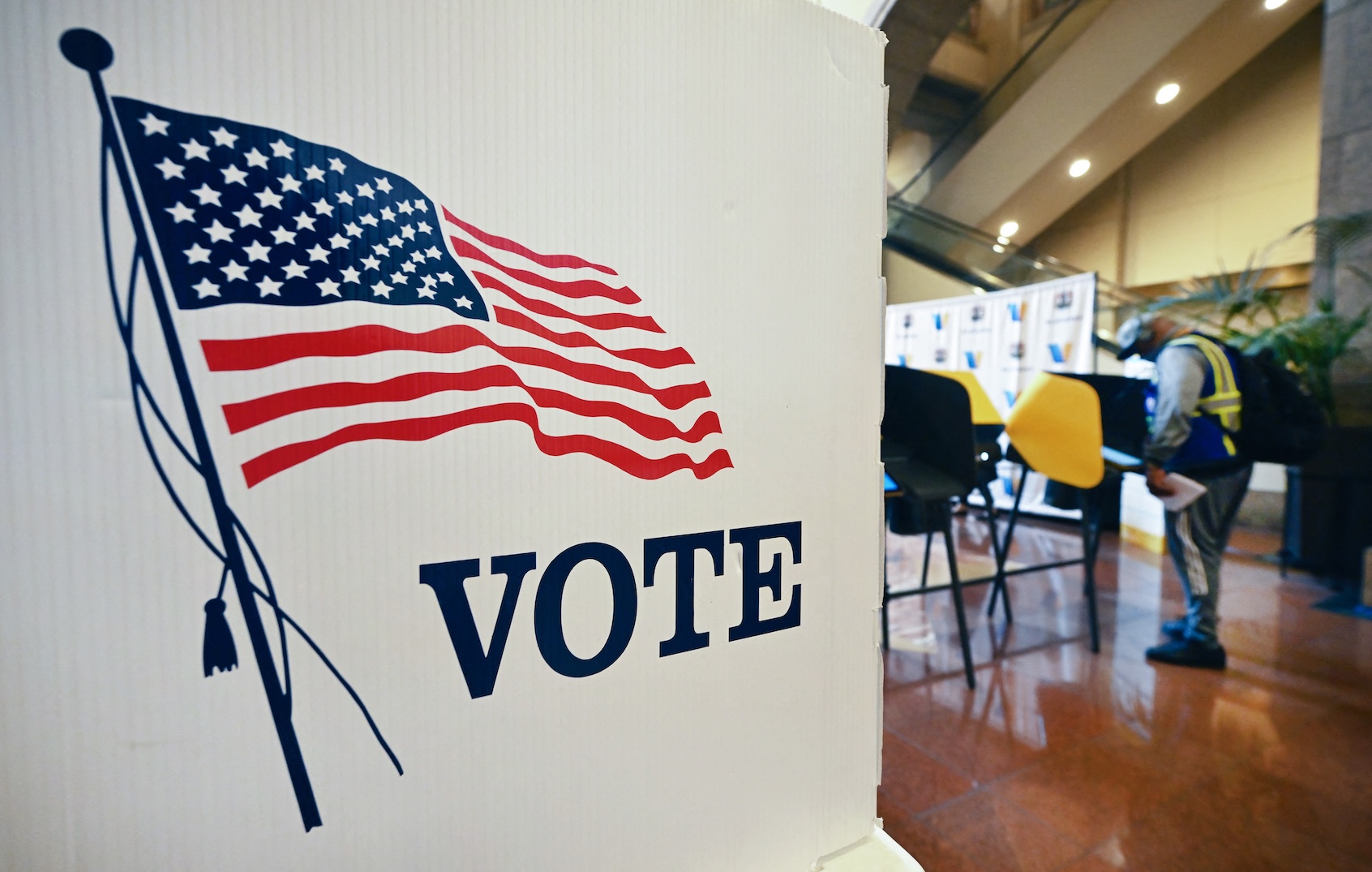
Cover image from salon.com, which was analyzed for this article
Republican-led states introduce voting restrictions modeled on Trump's SAVE America Act. Left-leaning outlets criticize as suppression, while right sees it as securing elections with national ID push. The effort aims to influence midterms.
PoliticalOS
Thursday, April 16, 2026 — Politics
Republican states are moving ahead with proof-of-citizenship requirements because the federal SAVE America Act is stalled, creating a patchwork of rules that will govern millions of registrations before the midterms. Noncitizen voting occurs but remains rare in prosecuted cases; database errors and documentary hurdles can also affect eligible citizens. The practical success or failure of these laws will ultimately be measured in how many legitimate voters are inadvertently blocked versus how many improper registrations are prevented.
What outlets missed
Most coverage omitted that all 49 states already require citizenship affirmations under penalty of perjury on registration forms, making the new laws incremental verification rather than entirely novel barriers. Outlets on both sides underplayed Arizona’s decade-plus experience with a bifurcated federal-only voter system, which the Supreme Court has upheld as a constitutional compromise that limits but does not eliminate access. Reporting also rarely noted the 99 prosecuted noncitizen voting cases catalogued by the Heritage Foundation since 2000 alongside state purge data, leaving readers without scale on either the problem or the error rates in database-driven removals. Finally, few pieces mentioned that DMV records, jury summons responses and REAL ID processes already collect much of the needed citizenship data, information that could reduce the practical burden if states integrated it more effectively.
States Pursue Voter Safeguards as Federal Election Bill Stalls in Senate
Republican-led state legislatures are advancing election integrity measures modeled on the SAVE America Act even as the federal legislation faces delays in Congress, highlighting a continued push to ensure only American citizens participate in elections amid documented cases of noncitizen registration.
The SAVE America Act, a priority for President Donald Trump, would require proof of citizenship and voter identification for federal elections. Public opinion data consistently shows these requirements enjoy strong support across party lines, with surveys indicating more than 70 percent of Americans, including majorities of Democrats, favor them. Yet the bill has languished in the Senate for weeks, with some GOP senators expressing caution about changing long-standing federal registration practices before the upcoming midterms.
That hesitation has not slowed action at the state level. Lawmakers in Florida, Mississippi, Utah and other Republican-controlled states have introduced bills that mirror key provisions of the federal legislation. These include systematic reviews of voter rolls to identify and remove ineligible registrants, such as noncitizens, and stronger verification standards for new registrations. Proponents argue these steps are essential to restore confidence in elections and prevent the dilution of lawful votes.
The case for reform rests on observable evidence. Over a four-year period, a single county in the suburbs of Washington, D.C., removed nearly 2,000 noncitizens from its voter rolls. Officials in Ohio, Texas and Virginia have identified thousands more noncitizens improperly registered, many of whom cast ballots in prior elections. Each illegal vote cancels the voice of a citizen, a reality that undermines the foundational principle of self-government.
Much of the problem traces to the National Voter Registration Act and the federal mail-in form it mandates. A 2013 Supreme Court interpretation required states to accept the form without demanding documentary proof of citizenship. An applicant need only check a box declaring they are a citizen. Verification, if it occurs at all, happens later through cross-checks that are often incomplete or delayed. As a practical matter, a noncitizen is one false statement away from legal registration. States have asked the U.S. Election Assistance Commission to revise the form to align with their own proof-of-citizenship requirements, but Democratic commissioners have resisted, at times disregarding executive directives aimed at resolving the conflict.
This bureaucratic inertia has left states to act on their own. Governors and legislators in red states view the situation as too urgent to await federal consensus. By cleaning rolls and tightening front-end verification, they seek to close loopholes that empirical data show have been exploited.
Critics of the state measures, including some Democratic lawmakers and advocacy groups, contend that aggressive roll maintenance could create obstacles for voters who have changed their names, particularly married women and transgender individuals. They argue that mismatches between current legal names and older registration records might trigger additional scrutiny or provisional ballots.
Such concerns, however, appear manageable in practice. Citizens who update their names through marriage, divorce or other legal processes already interact with motor vehicle offices, social security administrators and other government agencies that require documentation. Updating voter registration to match current legal identity is a comparable step, not an insurmountable barrier. The alternative, leaving known vulnerabilities unaddressed, carries a heavier cost: the erosion of electoral integrity that affects every participating citizen regardless of background.
The state-level momentum reflects a broader recognition that election administration cannot rely solely on honor-system declarations. Decades of motor-voter laws and expanded mail registration have increased access but also created opportunities for error and abuse. Requiring the same level of documentation that citizens must provide to obtain a passport, open a bank account or board an airplane is not an onerous demand; it is a basic safeguard consistent with how responsible institutions verify identity in other contexts.
Advocates for the SAVE America Act and its state counterparts emphasize that these reforms protect the franchise rather than restrict it. Lawful voters face no new burdens beyond what millions already satisfy when renewing drivers licenses or applying for government benefits. The individuals truly inconvenienced by stricter standards are those who cannot truthfully demonstrate citizenship, a group that should not be casting ballots in American elections.
Whether the federal legislation ultimately passes or succumbs to partisan gridlock, the state actions suggest reform will continue in piecemeal fashion. This decentralized approach aligns with the constitutional design that leaves most election mechanics to the states. It also underscores a growing impatience with a system that, in the words of one analyst, makes noncitizen voting as simple as checking a box and hoping no one verifies the claim.
As more states implement these changes, the results will provide additional data on their effects. Early evidence from states that have already strengthened verification indicates higher confidence among voters and minimal documented cases of eligible citizens being turned away. The pattern suggests that when policy is grounded in observable problems rather than abstract fears, practical solutions can strengthen democratic processes without sacrificing access.
The coming months will test whether Congress can overcome its hesitation or whether states will remain the primary drivers of election reform. Either way, the evidence of noncitizen registration makes clear that inaction carries its own risks to the integrity of the ballot. Americans across the political spectrum deserve a system that verifies eligibility as diligently as it expands opportunity.
You just read Conservative's take. Want to read what actually happened?
More in Politics

Federal Agents Search Omar Home in Ongoing Immigration Probe
Homeland Security agents searched the Minnesota Democrat's DC residence in a criminal probe, prompting accusations of political intimidation from Omar and Democratic leaders. Coverage spans left-leaning outlets like NPR, BBC, and The Guardian alongside right-leaning criticism from The Federalist and Daily Wire.

Trump Diesel Import Plan Draws Pushback Over Russia Ties
The weekend agreement drew bipartisan congressional pushback and criticism from Ukraine's Zelenskyy, with analysts downplaying US fuel price impacts. Right-leaning outlets like National Review, Dispatch, and Washington Examiner questioned its legality and effectiveness.

Independents Test Voter Appetite for Middle Ground in 2026 Midterms
Nearly 200 independents are running in competitive races as voters weigh ballot measures on housing costs in states like Massachusetts. Left-leaning coverage from NYT, NPR, and Guardian highlights turnout and key races while right outlets focus on GOP strategy.
Trump Rallies in Alaska, Ohio to Bolster GOP Senate Candidates
The president rallied in Wasilla for Sen. Dan Sullivan and faced empty seats at an Ohio event amid midterm concerns. Outlets across the spectrum covered the trips as signals of GOP vulnerability weeks before Election Day.
The Compass
You just read five takes on one story.
What's your take? Find your political shape in a few minutes.
Take the test