
GOP States Enact Proof-of-Citizenship Voting Rules as Federal Bill Stalls
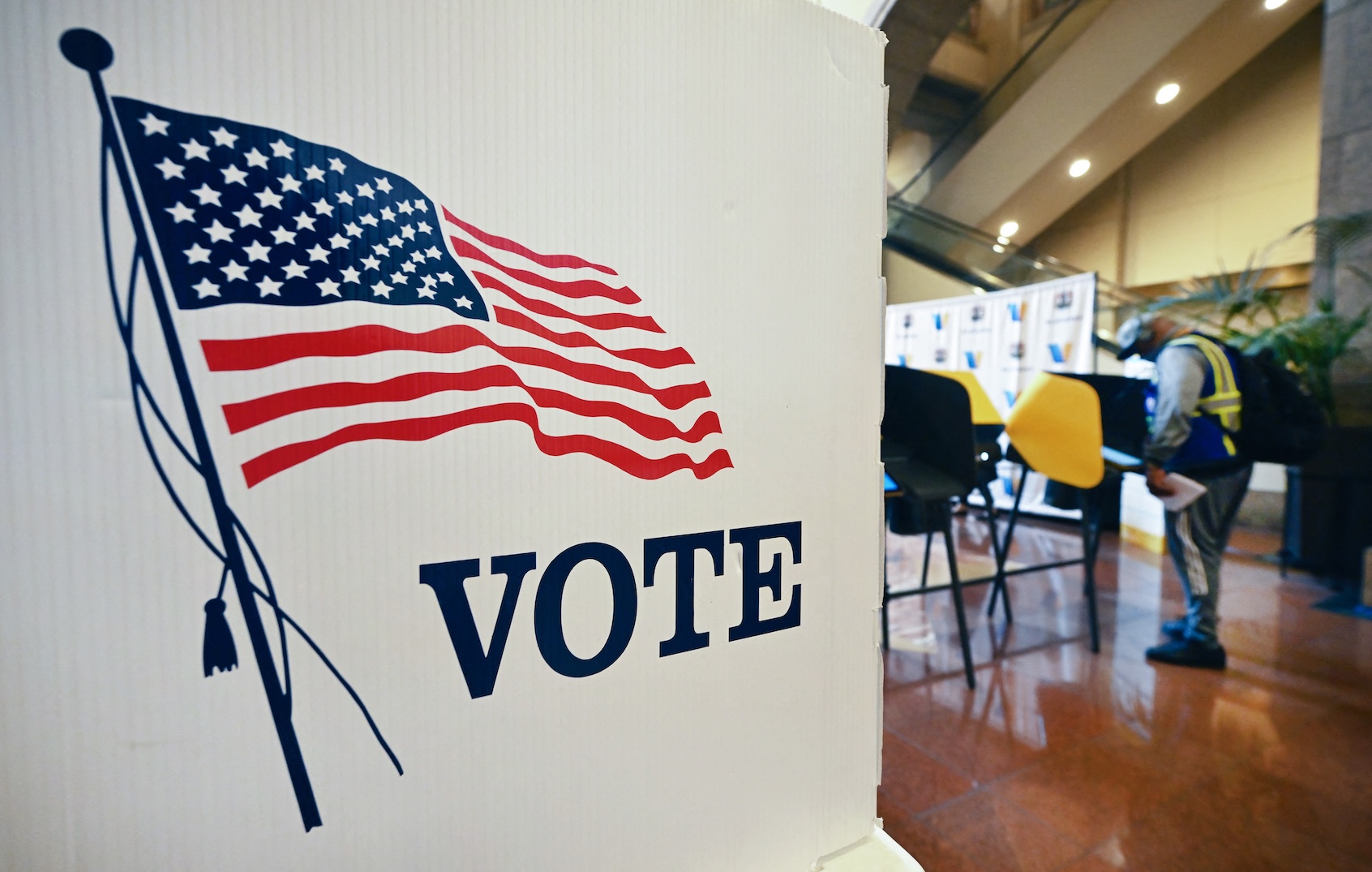
Cover image from salon.com, which was analyzed for this article
Republican-led states introduce voting restrictions modeled on Trump's SAVE America Act. Left-leaning outlets criticize as suppression, while right sees it as securing elections with national ID push. The effort aims to influence midterms.
PoliticalOS
Thursday, April 16, 2026 — Politics
Republican states are moving ahead with proof-of-citizenship requirements because the federal SAVE America Act is stalled, creating a patchwork of rules that will govern millions of registrations before the midterms. Noncitizen voting occurs but remains rare in prosecuted cases; database errors and documentary hurdles can also affect eligible citizens. The practical success or failure of these laws will ultimately be measured in how many legitimate voters are inadvertently blocked versus how many improper registrations are prevented.
What outlets missed
Most coverage omitted that all 49 states already require citizenship affirmations under penalty of perjury on registration forms, making the new laws incremental verification rather than entirely novel barriers. Outlets on both sides underplayed Arizona’s decade-plus experience with a bifurcated federal-only voter system, which the Supreme Court has upheld as a constitutional compromise that limits but does not eliminate access. Reporting also rarely noted the 99 prosecuted noncitizen voting cases catalogued by the Heritage Foundation since 2000 alongside state purge data, leaving readers without scale on either the problem or the error rates in database-driven removals. Finally, few pieces mentioned that DMV records, jury summons responses and REAL ID processes already collect much of the needed citizenship data, information that could reduce the practical burden if states integrated it more effectively.
Republican States Push Voting Crackdowns Modeled on Trump Legislation
Republican lawmakers in multiple states are advancing election measures drawn directly from President Donald Trump’s stalled SAVE America Act, raising fresh concerns about barriers that could disenfranchise married women, transgender people and anyone else whose legal name does not perfectly match records from years earlier. While the federal bill has languished in the Senate for weeks, with some GOP members wary of upending long-standing voter registration practices before the midterms, state legislatures controlled by Trump allies are not waiting for Washington.
The pattern is unmistakable. Florida, Mississippi and Utah have introduced or advanced bills that echo the federal legislation’s emphasis on aggressive voter-roll purges and stricter proof-of-citizenship requirements. These efforts come as conservative media outlets amplify isolated cases of noncitizen voting to argue the system is “fundamentally broken.” A single suburban county outside Washington, D.C., removed nearly 2,000 noncitizens from its rolls over four years, according to data cited by proponents. Ohio, Texas and Virginia have reported discovering additional instances in which noncitizens were registered, sometimes casting ballots that, in the words of conservative commentators, “canceled out the legal votes of Americans.”
Yet the scale of the problem remains hotly disputed. Voting rights organizations note that documented cases represent a tiny fraction of total ballots cast, while the new procedural hurdles could affect hundreds of thousands of eligible voters. The core target of many of these bills is the National Voter Registration Act’s federal mail-in form. A 2013 Supreme Court decision has been interpreted to bar states from demanding documentary proof of citizenship at the point of registration if an applicant simply checks a box affirming they are a citizen. Only afterward can officials attempt verification through cross-checks that are often unreliable. Democrats on the Election Assistance Commission have resisted changes to the form sought by Republican state officials, further frustrating GOP legislators who see the current process as an invitation to fraud.
The practical consequences extend beyond abstract debates about election integrity. Women who have taken their husband’s surname after marriage frequently maintain identification in their maiden name for professional or personal reasons. Transgender individuals updating gender markers or names on official documents can find themselves flagged during database sweeps. The same applies to people who have legally changed names for any number of legitimate reasons. These voters could face demands for additional paperwork, provisional ballots or outright rejection at the polls, all in the name of weeding out a problem whose documented scope is far narrower than the rhetoric suggests.
The SAVE America Act itself remains Trump’s signature election priority. It would impose proof-of-citizenship requirements for federal elections and tighten rules around mail voting and voter rolls. Senate Republicans have so far failed to muster the votes to overcome procedural obstacles, with some members expressing concern that radical changes so close to the midterms risk chaos or legal challenges. That hesitation has not slowed the states. GOP governors and legislative majorities appear intent on creating a de-facto national patchwork of restrictive rules that achieve many of the same goals without needing congressional approval.
This state-level acceleration fits a broader pattern visible since Trump returned to the White House. Conservative outlets such as The Federalist and Daily Wire have simultaneously celebrated supposed victories against what they call Big Tech and advertising “censorship,” even as they endorse voting changes that critics say amount to political gatekeeping. The Federal Trade Commission’s recent action against major ad agencies for allegedly colluding with disinformation watchdogs to demonetize right-leaning sites is being portrayed by those outlets as a triumph against viewpoint discrimination. Yet the same ecosystem now cheers voter-roll purges and identification mandates that independent analyses suggest would fall hardest on demographic groups that tend to vote Democratic.
Civil rights attorneys and election administrators in blue states warn that the new measures could trigger waves of litigation and confusion at polling places. They point out that existing laws already criminalize noncitizen voting and that states maintain mechanisms to remove ineligible voters. The rush to add extra layers of verification, they argue, is less about preventing fraud than about making the act of voting more onerous for certain communities.
For their part, Republican sponsors insist they are simply closing loopholes Democrats have exploited for years. They cite the National Mail Voter Registration Form’s reliance on self-attestation as an unacceptable vulnerability in an era of heightened migration and polarized politics. If the federal bill dies, they say, states have both the right and the duty to act.
Whether these state initiatives survive court challenges or produce measurable reductions in noncitizen voting remains to be seen. What is already clear is that the battle over who gets to cast a ballot, and how easy it is to do so, has moved decisively from Washington to state capitals. With midterms approaching, the practical effect may be longer lines, more rejected ballots and deepened distrust in the very system Republicans claim they are trying to protect. The rhetoric of election integrity continues to dominate conservative messaging, yet the policies being enacted risk making participation harder for millions of citizens whose only offense is that their paperwork does not match some algorithm’s idea of a perfect voter.
You just read Progressive's take. Want to read what actually happened?
More in Politics

Federal Agents Search Omar Home in Ongoing Immigration Probe
Homeland Security agents searched the Minnesota Democrat's DC residence in a criminal probe, prompting accusations of political intimidation from Omar and Democratic leaders. Coverage spans left-leaning outlets like NPR, BBC, and The Guardian alongside right-leaning criticism from The Federalist and Daily Wire.

Trump Diesel Import Plan Draws Pushback Over Russia Ties
The weekend agreement drew bipartisan congressional pushback and criticism from Ukraine's Zelenskyy, with analysts downplaying US fuel price impacts. Right-leaning outlets like National Review, Dispatch, and Washington Examiner questioned its legality and effectiveness.

Independents Test Voter Appetite for Middle Ground in 2026 Midterms
Nearly 200 independents are running in competitive races as voters weigh ballot measures on housing costs in states like Massachusetts. Left-leaning coverage from NYT, NPR, and Guardian highlights turnout and key races while right outlets focus on GOP strategy.
Trump Rallies in Alaska, Ohio to Bolster GOP Senate Candidates
The president rallied in Wasilla for Sen. Dan Sullivan and faced empty seats at an Ohio event amid midterm concerns. Outlets across the spectrum covered the trips as signals of GOP vulnerability weeks before Election Day.
The Compass
You just read five takes on one story.
What's your take? Find your political shape in a few minutes.
Take the test