
Harris Signals 2028 Run as Democrats Debate Electability and Identity
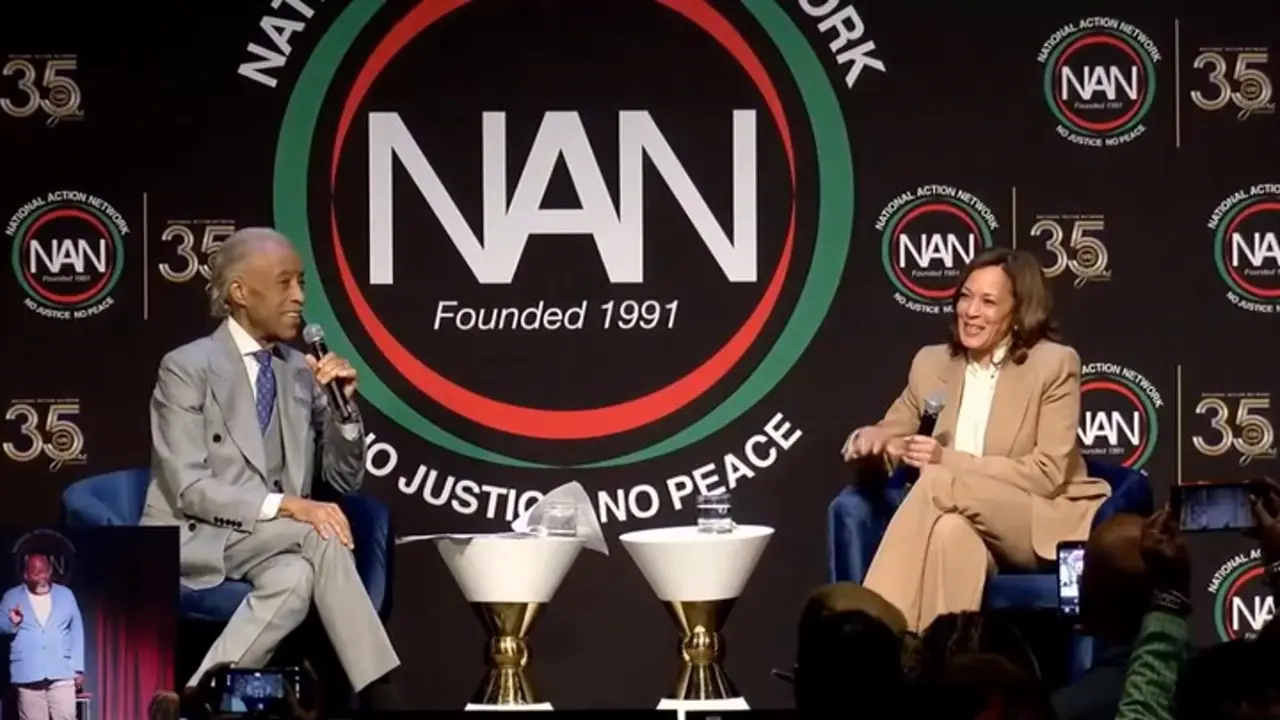
Cover image from independent.co.uk, which was analyzed for this article
Former VP Kamala Harris stated she's thinking about a 2028 White House bid at Rev. Al Sharpton's event, criticizing Trump's Iran war. She's among Democrats auditioning early for the post-Trump era. The field emerges as voters doubt outsider chances.
PoliticalOS
Saturday, April 11, 2026 — Politics
The Democratic Party's early 2028 maneuvering is already centered on whether identity barriers that contributors believe cost Harris votes in 2024 can be overcome or must be navigated by choosing a different profile of candidate. Harris retains energetic support from key Black voter groups at events like Sharpton's convention but faces open questions even from some supporters about timing and broader appeal. The unresolved tension between message, biography and raw electability will define the primary regardless of who ultimately runs.
What outlets missed
Most coverage omitted exit poll data showing Trump's Black voter support nearly doubled from 2020 to 2024, providing concrete evidence for the electability concerns rather than relying solely on anecdotal bigotry claims. Reporting on the Texas Senate primary downplayed or ignored the winner's documented moderate appeal and big-tent strategy that attracted independents and some Republicans, instead framing the result purely through race and gender. Full context on the Iran conflict was largely absent, including Iran's February 2026 Strait of Hormuz blockade and attacks on allies that preceded U.S. escalation. Outlets also underplayed Sharpton's history of controversies, such as the Tawana Brawley case, when describing his influence over the event and Black voters. Harris's direct "liar" attack on Trump during her speech and the playful hedging in her exact "I might, I'm thinking about it" phrasing were minimized or omitted in favor of cleaner narratives.
Democrats are confronting an uncomfortable reality one year after Kamala Harris lost decisively to Donald Trump: many voters, including some in the party's most loyal bloc, doubt the country will elect another Black woman to the White House. At Rev. Al Sharpton's National Action Network convention in New York this week, Harris offered her clearest signal yet that she is considering a second bid, telling the crowd she was "thinking about it" after chants of "run again!" erupted. The moment crystallized the central tension already shadowing the party's early 2028 positioning: whether to embrace candidates who expand the party's historic diversity or prioritize those who appear safest to skeptical swing voters.
The gathering, which drew a half-dozen prospective contenders, functioned as an unannounced shadow primary focused on Black voters who delivered overwhelming margins for Harris in 2024 yet watched Trump improve his performance with that demographic. Harris used her appearance to criticize Trump's decision to escalate conflict with Iran, describing his "America First" approach as akin to a mob boss dividing up global spheres of influence. "You take Eastern Europe," she said in a theatrical impression that drew laughs from the audience but later drew mockery online as cringeworthy. She emphasized her experience in the West Wing and Situation Room, meeting over 150 world leaders and forging alliances based on shared values between peoples rather than just heads of state. According to attendees quoted by CBS News and The Washington Post, the line on Iran and her broader critique of the Trump administration's moves on voting rights, DEI programs and immigration drew sustained applause.
Harris was not alone. Maryland Gov. Wes Moore, Arizona Sen. Ruben Gallego, Pennsylvania Gov. Josh Shapiro, Illinois Gov. JB Pritzker, former Transportation Secretary Pete Buttigieg and California Rep. Ro Khanna all appeared, fielding Sharpton's direct questions about 2028 intentions. None ruled out a run. Moore highlighted his improbable 2022 victory as a political newcomer. Gallego stressed that fixating on an "ideal character" risks overlooking talent. Buttigieg, whom Harris revealed in her recent book she passed over as running mate because she believed the country was not ready for both a woman of color and a gay man on the ticket, pushed back on identity barriers. "Politics is about the results we can get for people and not about these other things," he told Politico in a prior interview referenced at the event.
Yet interviews with roughly a dozen Black attendees, as reported by Politico, revealed persistent doubts. "I don’t think the country is ready for another different type of person," said 69-year-old Annette Wilcox. Aaliyah Payton, 30, said she believes the climate is not ready for a Black woman as president. Donna Carr, 60, called it "a man’s world." Justina Peña, 27, suggested it may be "too soon" for Harris to run again. These sentiments echoed the 2020 primary, when voters ultimately chose Joe Biden as the safer moderate option, and a recent Texas Democratic Senate primary where voters selected white seminarian James Talarico over Black Rep. Jasmine Crockett despite some admitting they preferred Crockett but feared she could not win a general election.
The convention occurred against documented shifts in voting patterns. Exit polls from NBC, AP and Pew showed Trump's support among Black voters rising to between 15 and 20 percent in 2024 from 8 to 12 percent in 2020, while Harris still captured roughly 83 percent. Black voter turnout stood at 62 percent, per Census and Pew data, slightly below 2020 levels but still higher than among Hispanics or Asians. Sharpton used the platform to warn that the Supreme Court is poised to further weaken the Voting Rights Act and that Trump's executive actions against certain DEI programs in federal contracting represent an attempt to freeze unequal conditions in place. Speakers including Pritzker described a broad assault on rights, with one attendee telling CBS News the country needed a period of "reparation" and "rebuilding."
Harris's four-day appearance generated the strongest audience response, according to multiple outlets, though other candidates received warm receptions when discussing civil rights rollbacks, immigration enforcement and economic disparities that hit Black communities hardest. Shapiro detailed his legal push to restore a Philadelphia slavery exhibit removed by the Trump administration. Khanna spoke of closing the generational wealth gap through inclusion in the AI revolution. The event's emphasis on coupling affordability arguments with civil rights agendas stood in contrast to the party's post-2024 focus on economic messaging alone.
Questions remain unresolved. No national 2028 polling specific to Black voter preferences on candidate race or gender has emerged. Whether Harris can overcome perceptions of her 2024 campaign's brevity and performance, or if the party will again default to a straight white male moderate, will shape the primary. For now, the convention made clear that the debate over what constitutes an electable Democrat is already underway, 30 months before the first votes.
More in Politics

Federal Agents Search Omar Home in Ongoing Immigration Probe
Homeland Security agents searched the Minnesota Democrat's DC residence in a criminal probe, prompting accusations of political intimidation from Omar and Democratic leaders. Coverage spans left-leaning outlets like NPR, BBC, and The Guardian alongside right-leaning criticism from The Federalist and Daily Wire.

Trump Diesel Import Plan Draws Pushback Over Russia Ties
The weekend agreement drew bipartisan congressional pushback and criticism from Ukraine's Zelenskyy, with analysts downplaying US fuel price impacts. Right-leaning outlets like National Review, Dispatch, and Washington Examiner questioned its legality and effectiveness.

Independents Test Voter Appetite for Middle Ground in 2026 Midterms
Nearly 200 independents are running in competitive races as voters weigh ballot measures on housing costs in states like Massachusetts. Left-leaning coverage from NYT, NPR, and Guardian highlights turnout and key races while right outlets focus on GOP strategy.
Trump Rallies in Alaska, Ohio to Bolster GOP Senate Candidates
The president rallied in Wasilla for Sen. Dan Sullivan and faced empty seats at an Ohio event amid midterm concerns. Outlets across the spectrum covered the trips as signals of GOP vulnerability weeks before Election Day.
The Compass
You just read five takes on one story.
What's your take? Find your political shape in a few minutes.
Take the test