
Warsh Pledges Fed Independence as Senators Probe Rates, Wealth and Powell Inquiry
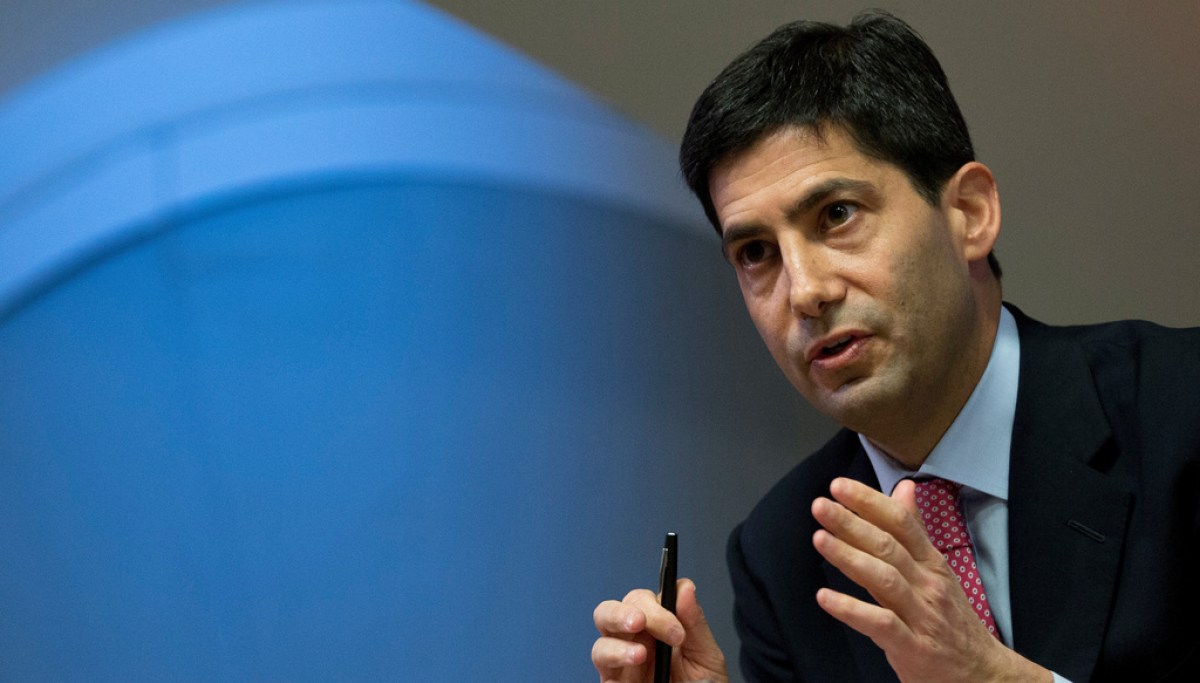
Cover image from washingtonexaminer.com, which was analyzed for this article
President Trump's pick Kevin Warsh, with a $226 million fortune, faced intense Senate scrutiny during his confirmation hearing for Federal Reserve chair amid economic strains from the Iran conflict. Questions centered on his plans for interest rates, Fed independence, and handling inflation. The hearing highlighted partisan divides over monetary policy direction.
PoliticalOS
Tuesday, April 21, 2026 — Business
Warsh's confirmation is not guaranteed in the short term because a single Republican senator's insistence on resolving the Powell probe could stall the committee vote despite the GOP majority. The nominee must persuade lawmakers he will defend data-driven monetary policy even as inflation has risen from the Iran conflict and the president who chose him has repeatedly called for lower rates. The most important fact is that the Fed chair does not set rates alone; any shift will require consensus on a divided FOMC, making credible independence more than rhetorical.
What outlets missed
Multiple outlets omitted or downplayed March 2026 federal court rulings that quashed DOJ subpoenas targeting Powell, describing the inquiry as having "zero evidence" of crime and labeling it pretextual; an appeal was noted but the decisions materially weakened the probe's immediate leverage. Few pieces fully reconciled Warsh's 2006-2011 meeting transcripts, which show consistent inflation concerns, with his more recent writings on AI-driven disinflation, leaving the evolution of his philosophy underscrutinized. Precise timing received short shrift: Trump nominated Warsh in late January, before the Iran conflict began February 28 and before the latest probe developments, yet many stories blurred that sequence. Uncorroborated personal allegations, such as any Jeffrey Epstein connection, appeared in one live blog but were absent from every other account and could not be independently verified. Finally, Powell's separate 14-year governor term runs until January 2028, providing continuity regardless of chair transition; that structural fact was rarely mentioned yet shapes the stakes of any delay.
Warsh Faces Senate Fire as Trump Takes on a Federal Reserve That Failed Working Americans
Kevin Warsh stepped into a packed Senate Banking Committee hearing Tuesday pledging to guard the Federal Reserve’s independence while making clear he understands the pain American families have felt from years of misguided policy and political games in Washington. President Trump’s choice to replace Jerome Powell by mid-May repeatedly told lawmakers that monetary policy must serve the nation’s interest free from short-term pressure but stopped short of the ritualistic defense of the status quo that has protected a central bank increasingly viewed as an unaccountable fourth branch of government.
The hearing unfolded against a backdrop of raw political combat. Every Democrat on the committee demanded a delay until federal investigations into Powell and Governor Lisa Cook wrap up. Republican Senator Thom Tillis of North Carolina went further vowing to block Warsh and any other Fed nominee until the Justice Department finishes its probe into Powell’s testimony about headquarters renovations. That investigation exploded into public view after Powell himself framed it as retaliation for resisting Trump’s calls for lower interest rates. To many Americans watching their grocery bills and mortgage payments the spectacle looked less like principled oversight and more like a ruling class circling the wagons.
Warsh’s personal finances drew the loudest scrutiny from the left. Financial disclosures show assets between 135 million and 226 million dollars placing him on track to become the wealthiest Fed chair in history. Much of the fortune stems from his marriage to an Estée Lauder heiress and investments that could theoretically benefit from the very interest rate decisions he would help shape. Democrats pressed him on potential conflicts and on past social connections that included the late Jeffrey Epstein. Warsh’s supporters noted the disclosures were properly filed and argued his real-world experience in markets gives him clearer vision than academics who have steered the Fed through repeated mistakes.
Those mistakes matter. Inflation spiked nearly a full percentage point after the United States and Iran went to war sending energy prices higher at the worst possible time. Families already squeezed by Biden-era price increases now face renewed pressure on everything from fuel to food. The Fed’s own track record inspires little confidence. It kept rates too low for too long inflating asset bubbles that benefited coastal elites then hiked them aggressively hammering workers and small businesses. Trump nominated Warsh precisely because the former Fed governor and Bush administration official has criticized the institution’s stale models and groupthink. In prepared remarks Warsh invoked Milton Friedman and praised practical insight over credentials insisting the Fed must not be run by pointy-headed economists poring over outdated data.
He also delivered the line likely to echo beyond the hearing room: monetary policy independence is largely up to the Fed itself. That statement walks a careful path. It reassures senators worried about presidential interference while signaling that a strong chair can resist political pressure from any direction including the White House. Former Fed officials who worked with Warsh described him as hawkish on inflation during his 2006 to 2011 tenure on the board. Yet the current environment of elevated prices and slowing growth may require different medicine. Warsh avoided specific rate promises as expected instead stressing analytic rigor and a focus on stable prices.
Republicans largely lined up behind the nominee. Senator Dave McCormick of Pennsylvania introduced him as a reformer with a heart for shaking up a stagnant institution. That framing aligns with Trump’s view that the Fed has become another Washington power center more interested in protecting its mystique than delivering results for Main Street. The president has called Powell a stubborn obstacle and renewed threats to remove him have only heightened the drama. Legal experts disagree on whether a president can fire a Fed chair but the public argument has exposed how rarely the central bank answers to the voters whose lives it shapes.
Warsh’s path to confirmation remains open though not automatic. Republicans hold the majority but Tillis’s objection could force a delay past Powell’s May 15 departure. National Economic Council Director Kevin Hassett predicted smooth sailing once procedural hurdles clear. For now the hearing served as a referendum on whether the Federal Reserve will continue as an insular priesthood or adapt to an economy that has left too many Americans behind.
The questions senators asked revealed the deeper tension. How much independence is really at stake when the Fed’s own decisions helped create the inflation crisis? Can a man of Warsh’s wealth truly understand the struggles of families living paycheck to paycheck? And will a new chair finally prioritize the cost of living over the demands of hedge funds and global finance?
Warsh presented himself as the man for that moment. Whether the Senate agrees may decide if the Federal Reserve begins serving the country that pays its bills or keeps operating as an elite club insulated from the consequences of its failures. The American people already know which outcome they prefer.
You just read America First's take. Want to read what actually happened?
More in Business & Economy

Stocks Rise on Earnings as Home Sales Hit Low
Major indices closed mixed to higher, led by healthcare and defensive stocks, as companies like Eli Lilly and UnitedHealth reported strong results. Pending home sales hit record lows.

US Stocks Mixed as Tech Rebounds on AI Optimism
The Dow slipped slightly while the S&P 500 and Nasdaq rose, led by Nvidia, AMD, and Intel gains on renewed AI sector confidence after prior drops. Broader market volatility tied to earnings and data center demand.

Trump Unveils $8 Billion Diesel Relief for Farmers
The Agriculture Department launched the program to offset record diesel prices for farmers, framed as economic aid and a midterm pitch in Kansas amid ongoing inflation and energy cost pressures.
CPI Rises to 3.7 Percent as Energy Costs Climb Amid Iran Conflict
Hotter-than-expected CPI figures fueled rate hike fears and contributed to sharp declines in AI and tech stocks. Left and right economic commentary debates Trump policies versus Fed actions.
The Compass
You just read five takes on one story.
What's your take? Find your political shape in a few minutes.
Take the test